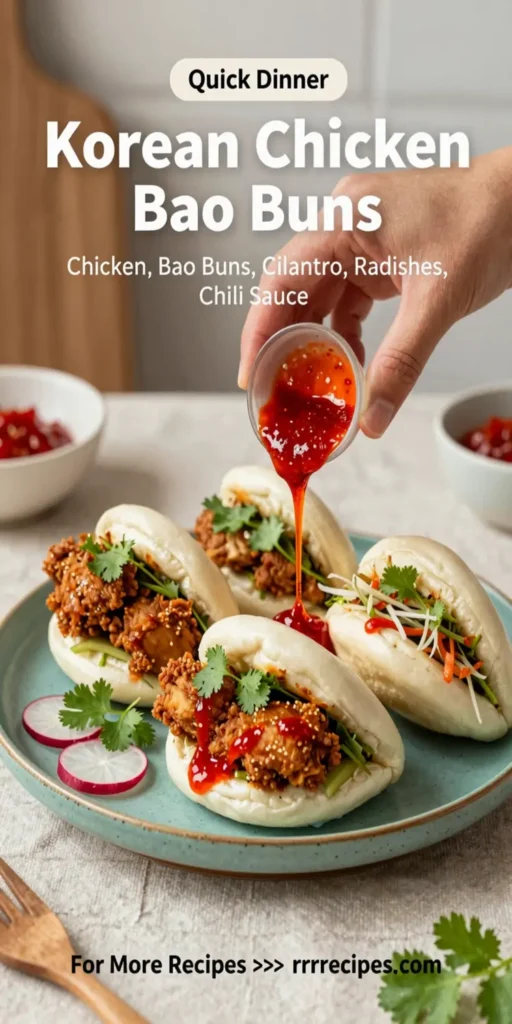
Prep time: 30 minutes
Cook time: 1 hour
Total time: 1 hour 30 minutes
Servings: 4
Korean Chicken Bao Buns are a delightful fusion of Korean flavors and soft, pillowy buns that transport your taste buds to the bustling streets of Seoul. These buns, filled with tender marinated chicken, are not only incredibly tasty but also versatile and fun to make. Perfect for busy parents looking to engage their kids in the kitchen or for beginners eager to impress guests, this dish is a crowd-pleaser that stands out for its unique flavors and textures.
What Is Korean Chicken Bao Buns?
Korean Chicken Bao Buns, also known as steamed buns or “Gua Bao,” originate from East Asian culinary traditions and are traditionally filled with various type of meats. In this version, we’re infusing the classic bao bun with Korean flair by marinating the chicken in a mixture of soy sauce, sesame oil, garlic, and gochujang, giving it a spicy and savory profile. The buns themselves are light, airy, and sweet, creating the perfect vessel for the rich filling.
Why You’ll Love This
There are myriad reasons to adore this dish. First off, the combination of the fluffy bao and the bold, spicy chicken creates a beautiful balance of flavors that’s simply irresistible. The recipe is incredibly forgiving, making it ideal for kitchen novices and seasoned cooks alike. Plus, bao buns can easily be made in batches and frozen, making them a fantastic option for meal prep. Whether stuffed as a quick lunch, served as appetizers for a party, or even enjoyed on a weeknight, Korean Chicken Bao Buns are the ultimate comfort food.
Ingredients You’ll Need
- Chicken Thighs (500g): Thighs are juicier than chicken breasts, ensuring tender meat after marinating and cooking.
- Korean Gochujang (2 tablespoons): This fermented chili paste adds a punch of heat and depth of flavor.
- Soy Sauce (3 tablespoons): Essential for seasoning and marinating the chicken, it provides a savory umami base.
- Sesame Oil (1 tablespoon): Adds nutty richness; a little goes a long way.
- Garlic (2 cloves, minced): Fresh garlic enhances flavor and aroma.
- Brown Sugar (1 tablespoon): A touch of sweetness balances the spice and salty notes.
- Bao Buns (8 pieces): Typically found in Asian grocery stores or homemade, these fluffy buns are the foundation of the dish.
- Vegetables for Topping (Cucumber, Carrots, and Cabbage): Thinly sliced veggies add crunch and freshness.
- Fresh Cilantro (for garnish): A sprinkle of cilantro brightens up the dish.
How to Make
- Prepare the Marinade: In a bowl, combine the gochujang, soy sauce, sesame oil, minced garlic, and brown sugar. Whisk everything together until well-blended, ensuring the sugar dissolves completely to infuse proper flavor into the chicken.
- Marinate the Chicken: Cut the chicken thighs into bite-sized pieces and add them to the marinade. Ensure that the chicken is thoroughly coated, then cover the bowl with plastic wrap and refrigerate for at least 30 minutes. This allows the flavors to meld and soak into the chicken.
- Cook the Chicken: Heat a large skillet over medium-high heat. Once hot, add the marinated chicken, reserving excess marinade for later. Stir-fry the chicken for about 8 to 10 minutes until cooked through and slightly caramelized. Pour in the remaining marinade and let it simmer for an additional 3 minutes until thickened.
- Steam the Bao Buns: While the chicken is cooking, set up a steamer pot filled with water and bring it to a boil. Place the bao buns in a steamer basket lined with parchment paper and steam for about 10 minutes until they are soft and fluffy.
- Assemble the Buns: Once the buns are ready, carefully open each bun and spoon in a generous amount of the cooked chicken. Top with your choice of sliced cucumbers, carrots, and cabbages for added crunch and freshness. Finish off with fresh cilantro on top.
- Serve: Serve your Korean Chicken Bao Buns immediately, allowing everyone to enjoy them while they’re warm. They can be accompanied by a side of dipping sauce or kimchi for added flavor.
Variations & Substitutions
Vegetarian Version: For a vegetarian twist, substitute the chicken with marinated tofu or tempeh. Use the same marinade for tofu, ensuring it absorbs the bold flavors, then grill or pan-fry until crispy. Use additional toppings like avocado or pickled veggies for the crunch and texture.
Spicy Version: If you crave more heat, consider adding sliced Thai bird chilis to the chicken during cooking. Alternatively, incorporate Sriracha or your preferred hot sauce into the marinade for a fiery kick. This will elevate the dish to spicy realms and leave heat lovers in bliss.
Fusion Flavor: To embrace different cultural influences, consider adding a fusion element by incorporating teriyaki sauce for a Japanese twist or even a touch of Indian spices like garam masala for a unique flavor combination. Topping with fresh mango salsa can also provide a refreshing, tropical contrast to the savory chicken.
Leftover Chicken: If you have leftover rotisserie chicken, you can easily adapt the recipe. Simply shred your chicken and toss it in the marinade for quick absorption. This simplifies the process, making it an efficient weeknight solution for busy families.
Common Mistakes to Avoid
One common mistake when making bao buns is not allowing them to steam long enough. If you remove them too early, they may be dense rather than fluffy. It’s crucial to ensure they cook thoroughly for the best texture.
Another pitfall is overcrowding the steamer, which can lead to uneven cooking. Make sure to steam in batches if you’re preparing many buns to ensure each one has enough space.
Lastly, not marinating the chicken long enough will result in bland flavor. Aim for at least 30 minutes, but longer is often better, as the flavors truly penetrate through the meat when allowed time.
Storage, Freezing & Reheating Tips
Leftover Korean Chicken Bao Buns can be stored in an airtight container in the refrigerator for up to 3 days. When storing, separate the buns and the filling to maintain their textures. To reheat, steam the buns lightly for about 5 minutes to restore their softness.
For freezing, place assembled buns in a single layer on a baking sheet lined with parchment paper. Freeze until solid, then transfer to a freezer-safe bag for up to 3 months. When ready to eat, steam from frozen for about 10-12 minutes.
Always ensure that chicken is heated to an internal temperature of 165°F (75°C) before consuming to adhere to food safety guidelines.
Frequently Asked Questions
Can I make bao buns from scratch?
Yes, making bao buns from scratch is certainly possible but requires a bit more effort and time. The dough consists of simple ingredients such as flour, yeast, sugar, and milk. Kneading and allowing it to rise is crucial for achieving that soft, fluffy texture.
What if I don’t have gochujang?
If you can’t find gochujang, you might use a combination of red chili paste and a bit of honey or brown sugar to replicate the sweet and spicy flavor profile. While it won’t be exactly the same, it can provide a suitable alternative.
Can I use chicken breast instead of thighs?
Absolutely! However, keep in mind that chicken breasts can dry out more quickly compared to thighs. To counteract this, consider marinating the breasts longer or slicing them into smaller pieces to maintain moisture throughout cooking.
How many bao buns will this recipe make?
This recipe typically makes about 8 bao buns, depending on the size of your buns and the amount of filling you include. You can easily double the recipe for larger gatherings or meal prep.
Can I make this recipe gluten-free?
Yes, to make this dish gluten-free, opt for gluten-free soy sauce or tamari as a substitute for regular soy sauce. Additionally, ensure that the bao buns you purchase or make are gluten-free. Many Asian grocery stores may carry suitable options.
Conclusion: Korean Chicken Bao Buns are more than just a meal; they’re an experience! With their rich flavors and fluffy textures, they’re bound to become a family favorite. Don’t hesitate to experiment with this adaptable recipe, and enjoy the culinary journey it takes you on. Happy cooking!