Prep time: 15 minutes
Cook time: 10 minutes
Total time: 25 minutes
Servings: 4
Spring is the season of rejuvenation, bringing a delightful array of fresh produce that can brighten up any meal. Incorporating seasonal ingredients not only enhances the flavor of your dishes but also provides numerous health benefits. This guide presents five delicious salad ideas that make the most of spring’s vibrant offerings. Each recipe showcases fresh vegetables, herbs, and dressings that are perfect for any occasion, whether you’re hosting a gathering or simply enjoying a meal at home. Get ready to explore the world of salads that tantalize your taste buds while nourishing your body.
What Is Spring Produce in Season: 5 Flavorful Salad Ideas?
Spring produce often includes an abundance of greens, radishes, asparagus, and peas. These ingredients are at their peak flavor and texture, making them ideal for salads. When you choose to create salads during this season, you embrace freshness and versatility, allowing you to mix and match ingredients to suit your palate.
Each of the salad recipes outlined here highlights seasonal produce and can easily be adapted to your preferences. The fresh herbs and vegetables not only enhance the taste but also provide various vitamins and nutrients that are essential during this time of year.
Why You’ll Love This
These salads are not just about taste; they focus on health and ease of preparation. You will find that they can be prepared quickly, making them perfect for busy weeknights or for meal prep purposes. By utilizing seasonal ingredients, you also support local farmers and reduce your carbon footprint, which is an important consideration for many households today.
What makes these salads truly enjoyable is the combination of flavors and textures that create a satisfying yet light dining experience. Each bite offers an explosion of freshness, whether it’s the crunch from radishes or the crispness of lettuce. These salads can serve as a light meal on their own or be paired with a protein, such as grilled chicken or shrimp.
Ingredients You’ll Need
Here’s a comprehensive list of ingredients for each salad idea, along with their measurements and descriptions:
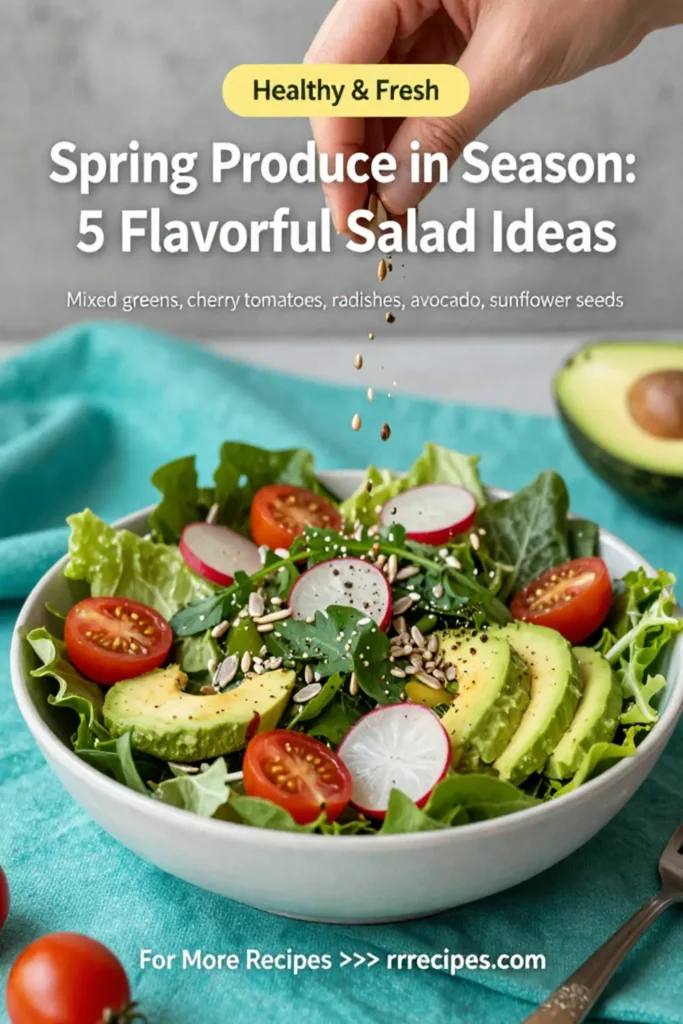
- Mixed Greens (6 cups): A mix of arugula and baby spinach adds a nutritious base with a peppery and slightly sweet flavor. These greens are packed with vitamins A and C.
- Radishes (1 cup, sliced): Radishes bring a crunchy texture with a sharp, spicy flavor which contrasts beautifully with the greens.
- Cherry Tomatoes (1 cup, halved): These juicy pieces add a burst of sweetness and a vibrant pop of color.
- Asparagus (1 cup, blanched and chopped): Asparagus offers a tender crunch and earthy taste, rich in vitamins K and E.
- Peas (1 cup, fresh or frozen): Sweet peas bring natural sweetness and a bright green color, enhancing both flavor and appearance.
- Cucumber (1, diced): Refreshingly crisp, cucumbers add hydration and a cooling element to the salad.
- Feta Cheese (½ cup, crumbled): Feta provides a tangy and creamy contrast, enhancing the overall flavor profile.
- Balsamic Vinaigrette (½ cup): A homemade or store-bought dressing that complements the fresh ingredients with its rich, slightly sweet flavor.

How to Make
- Start by preparing all your produce. Wash the mixed greens thoroughly under cold water to remove any dirt or grit. Spin them in a salad spinner until dry. A dry base helps the dressing adhere better to the greens.
- Next, slice the radishes and halve the cherry tomatoes. If using fresh peas, blanch them quickly in boiling water for about 1-2 minutes until tender but still bright green, then soak them in ice water to stop the cooking process.
- Blanch the asparagus by cooking it in boiling water for 3-4 minutes until it turns bright green and tender, then immediately transfer it to an ice bath. Once cooled, chop the asparagus into smaller pieces.
- In a large salad bowl, combine the washed mixed greens, radishes, cherry tomatoes, cucumber, asparagus, and peas. Toss gently to mix the ingredients without bruising the greens.
- Sprinkle the crumbled feta cheese over the salad. Feta adds a creamy texture that contrasts beautifully with the other crisp ingredients.
- Before serving, drizzle the balsamic vinaigrette over the salad. Toss gently to ensure that the dressing coats every ingredient evenly, allowing the flavors to meld.
Variations & Substitutions
Garden Fresh Variation: If you have a garden, consider adding in fresh herbs like basil or mint for an aromatic twist. Chopped herbs can elevate the flavor profile and add a wonderful freshness to any salad. You might also substitute grapefruit segments for a citrusy flavor, adding a lovely acidity that balances the richness of the feta.
Protein Power Variation: For those looking to add protein, diced grilled chicken or chickpeas work beautifully in these salads. Simply toss in about 1 cup of your protein choice to make the salad heartier. This is perfect for meal prep, providing a satisfying yet nutritious lunch option for busy days.
Vegan-Friendly Variation: To make this salad vegan, omit the feta and replace it with a vegan cheese alternative or avocado slices for creaminess. A tahini-based dressing could complement the freshness while adding healthy fats.
Dressing Delight Variation: Experiment with different dressings like a lemon vinaigrette or Greek yogurt dressing. Each dressing brings its unique flavor, making every salad feel different while utilizing the same ingredients.
Seasonal Fruit Variation: Incorporate seasonal fruits like strawberries or peaches during spring and summer for added sweetness. The juxtaposition of sweet fruits with savory components like feta or olives creates a delightful balance on the palate.
Common Mistakes to Avoid
Using soggy greens is a common issue. It’s essential to dry your greens thoroughly after washing. Soggy greens can make the salad unappetizing and dilute flavors. Always store your greens properly wrapped in paper towels to maintain their crispness.
Another mistake is over-dressing the salad. It’s easy to be generous with the dressing, but a little goes a long way. Start with a small amount and add more if needed, as it’s easier to add than to take away.
Don’t forget to taste as you go! Adjusting flavors with salt, pepper, or even the addition of a splash of lemon juice can turn a good salad into a great one.
Storage, Freezing & Reheating Tips
For optimal freshness, salads should be consumed soon after preparation. However, if you have leftovers, store the salad in an airtight container in the refrigerator. Keep the dressing separate until you’re ready to eat to prevent any wilting of greens.
While freezing salads is generally not recommended due to the degradation of textures, you can freeze extra ingredients like peas or asparagus separately. They can be thawed and added fresh to any future salads.
Reheating is not applicable for salads, but if you have leftover protein or grains, you can warm them up in the microwave or on the stovetop before adding them to a fresh salad.
Frequently Asked Questions
What types of greens are best for salads?
When making salads, opt for fresh, crisp greens like romaine, spinach, arugula, or mixed baby greens. Each type has its unique flavor and texture. For instance, arugula brings a peppery bite, while romaine offers crunch. Experiment to find your favorite combination!
How can I make salads more filling?
You can make salads more substantial by adding proteins like grilled chicken, tofu, or beans. Whole grains such as quinoa or farro also make great additions, providing fiber and additional nutrients. Toppings like seeds and nuts not only offer crunch but also healthy fats.
Can I prepare salads in advance?
You can prepare salad ingredients in advance but avoid adding dressing until you’re ready to serve. Keep components stored separately in airtight containers for freshness. This strategy is excellent for meal prep!
What makes a good salad dressing?
A good salad dressing balances flavors, should have acidity (like vinegar or citrus), fat (such as olive oil), and seasonings (salt, pepper, herbs). A well-made dressing complements the salad ingredients without overpowering them.
Are there any seasonal vegetables I should include in my salads?
Definitely! Seasonal vegetables like asparagus, peas, radishes, and cucumbers are perfect for spring salads. They are at their peak flavor and nutritional value during this time. Always try to choose local produce when possible for the best taste and freshness.
Conclusion:
Embracing seasonal produce in your salads not only elevates your dining experience but also connects you with the rhythm of nature. Spring offers a colorful palette of ingredients that are both nutritious and flavorful. By following these recipes and tips, you’ll create vibrant dishes that are sure to impress at any gathering or simply nourish your body at home. Enjoy exploring the different flavors, textures, and combinations that spring has to offer!