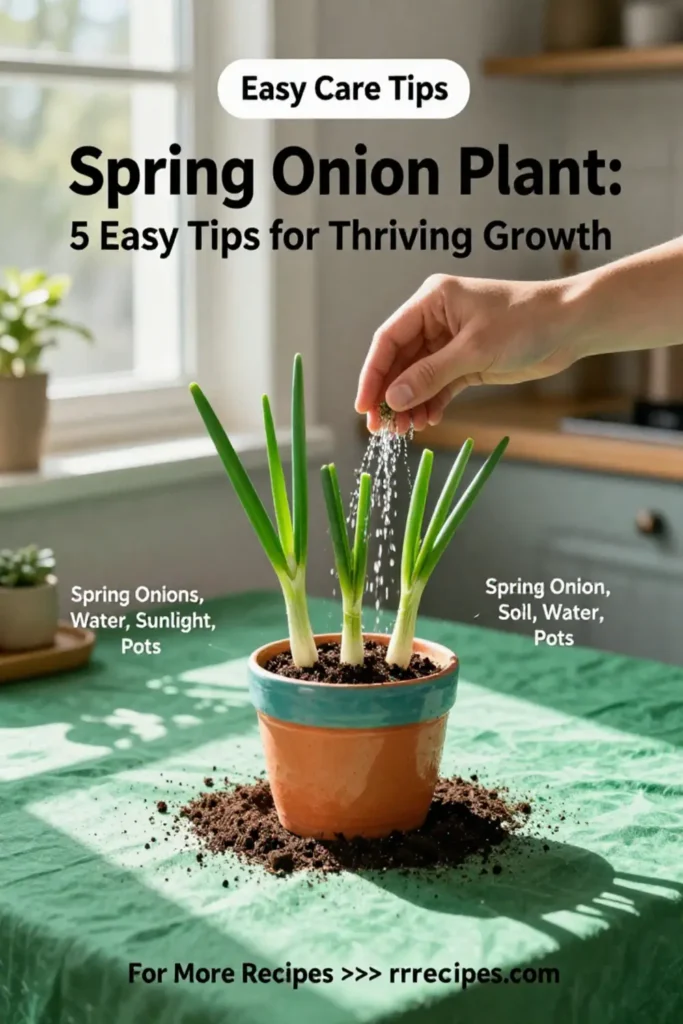
Prep time: 10 minutes
Cook time: 5 minutes
Total time: 15 minutes
Servings: 4 servings
Spring onions, also known as green onions or scallions, are not just garnishes or flavor enhancers. They are a delightful addition to many dishes and are surprisingly straightforward to grow. Whether you are an experienced gardener or a kitchen beginner, following a few simple tips can help your spring onion plants thrive.
What Is Spring Onion Plant: 5 Easy Tips for Thriving Growth?
Spring onions are versatile vegetables often used in salads, stir-fries, and as garnishes in a variety of dishes. They’re characterized by their long green tops and small white bulbs, both of which are edible. Growing spring onions can be rewarding, especially when you can harvest them fresh from your garden. They can be grown in pots or directly in the garden bed, making them perfect for any kind of space.
Why You’ll Love This
You’ll appreciate spring onions for their mild flavor, which can enhance your meals without overwhelming other ingredients. They are typically low-maintenance, requiring very little effort compared to other plants. Watching your spring onions grow not only provides you with fresh ingredients but also adds a pop of greenery to your space. Their quick growth means you won’t have to wait long before enjoying your fresh harvest. Plus, they are rich in vitamins and can contribute to a healthy diet, making this an enjoyable and nutritious gardening activity.
Ingredients You’ll Need
- Spring Onion Seeds or Bulbs: Look for healthy seeds or bulbs at your local gardening store. If planting from seed, ensure you select a reputable brand for better germination rates.
- Quality Soil: A well-draining potting mix is essential. This will help prevent waterlogging and root rot, ensuring your spring onions can absorb necessary nutrients.
- Fertilizer: A balanced fertilizer will provide your spring onion plants with the essential nutrients they need to grow healthy and strong. Look for options high in nitrogen for optimal growth.
- Water: Consistent moisture is crucial for spring onions. Aim to keep the soil damp but not soggy to promote healthy growth.
- Sunlight: Spring onions thrive in sunlight. Choose a location that receives at least 6 hours of sunlight daily for robust growth.

How to Make
- **Choosing the Right Location:** Select a sunny spot in your garden or on your balcony. Spring onions prefer well-drained soil with plenty of sunlight to thrive.
- **Preparing the Soil:** If you are planting in the ground, loosen the soil and mix in compost to enhance drainage and nutrients. If using pots, ensure they have drainage holes to prevent water accumulation.
- **Planting:** Sow the spring onion seeds about half an inch deep and a couple of inches apart. If using bulbs, plant them with the root side down and only cover the top part with soil.
- **Watering:** After planting, water the soil well to provide initial moisture. Continue to keep the soil damp throughout the growing period, especially during dry spells.
- **Fertilizing:** After a couple of weeks, apply a diluted balanced fertilizer. This will help strengthen the root system and encourage robust green tops.
- **Harvesting:** Once the spring onions reach about 6 inches tall, you can start harvesting. Gently pull or cut them off at the base, allowing the remaining onions to continue growing.
Variations & Substitutions
Container Growing: If space is limited, consider growing spring onions in pots. Use large containers to ensure enough room for their roots to spread. Ensure the pot has good drainage and fill it with nutrient-rich soil. Container-grown spring onions can also be placed indoors on sunny windowsills, providing fresh greens year-round.
Green Onion Re-growing: Save the white bulb ends of spring onions after using them in your dishes. Place the roots in a glass of water, ensuring the bulbs are submerged, and leave it on a sunny windowsill. Change the water regularly, and in just a few days, you will see new green shoots growing. This is a fantastic way to use what you already have while enjoying a sustainable gardening practice.
Common Mistakes to Avoid
Planting too deeply is a common error. If you bury the seeds or bulbs too deep, they may struggle to emerge. **Always ensure they are planted at the recommended depth.** Additionally, overwatering can lead to soggy soil, causing root rot. It’s vital to maintain consistent moisture, so check the soil before watering. Remember, spring onions love well-draining soil! **Do not neglect the need for sunlight.** Without adequate light, your plants will become leggy and weak.
Storage, Freezing & Reheating Tips
Fresh spring onions can be stored in the refrigerator for up to two weeks. Wrap them loosely in a damp paper towel and place them in a plastic bag to keep them fresh. For longer storage, consider freezing them. Slice the spring onions and place them in a freezer-safe bag, removing as much air as possible before sealing. When you need them, there’s no need to thaw; you can add them directly to your meals! Always keep a close eye on the freeze tag as spring onions can lose their crunchiness after freezing for an extended period.
Frequently Asked Questions
Can I grow spring onions indoors? Absolutely! Growing spring onions indoors is an excellent choice, especially during colder months. Use pots with good drainage and place them near a sunny window. Ensure you rotate the pots occasionally for even sunlight exposure.
How often should I water my spring onions? Watering frequency depends on your local climate and soil conditions. Generally, keeping the soil consistently moist is ideal. On average, watering 1-2 times a week is sufficient. Adjust based on weather conditions; more frequent watering may be necessary during hot or dry spells.
Are there any pests I should watch out for? Spring onions can attract pests like aphids and onion flies. Regularly check the undersides of the leaves for aphids and remove them with a gentle rinse of water. For onion flies, consider using companion planting techniques to dissuade them from your spring onions. Maintaining healthy plants is key to preventing infestations.
When is the best time to harvest spring onions? You can start harvesting once the spring onions reach about 6 inches in height. This usually takes around 8-10 weeks after planting. If left longer, the bulbs will grow larger, offering a different flavor profile—slightly stronger and sweeter.
What nutrients do spring onions provide? Spring onions are low in calories but rich in vitamins A, C, and K, among other nutrients. These vitamins contribute to healthy eyesight, promote good skin health, and play a crucial role in blood clotting. They can enhance your diet while adding flavor and freshness to your meals.
Conclusion:
Growing spring onions can be a delightful DIY project for anyone looking to enhance their culinary experiences. With just a bit of effort, you can enjoy fresh spring onions in salads, soups, and stir-fries. Follow these tips for thriving growth and enjoy your own home-grown ingredients right at your fingertips! Happy gardening!