Prep time: 15 minutes
Cook time: 20 minutes
Total time: 35 minutes
Servings: 4
Eating a plate of Mediterranean Vegetable Couscous is like taking your taste buds on a journey. Each grain of couscous is a tiny vehicle of flavor, ready to transport you to sunny markets, vibrant spices, and the heart of Mediterranean cuisine. Whether you’re an experienced home cook or just starting out, this dish offers a delightful balance of flavors and is exceptionally easy to prepare. You may find it becomes a staple in your meal rotation, especially because it can be customized to fit your personal preferences or dietary needs.
This recipe shines in its simplicity. Couscous, a tiny pasta originating from North Africa, is combined with a medley of fresh vegetables, aromatic herbs, and a splash of olive oil. It’s perfect for those busy weeknights when you want something nutritious that won’t take hours in the kitchen. By the end of this recipe, you will be equipped to create not only a stunning dish but a nutritious meal that serves as a canvas for your culinary creativity.
What Is Mediterranean Vegetable Couscous?
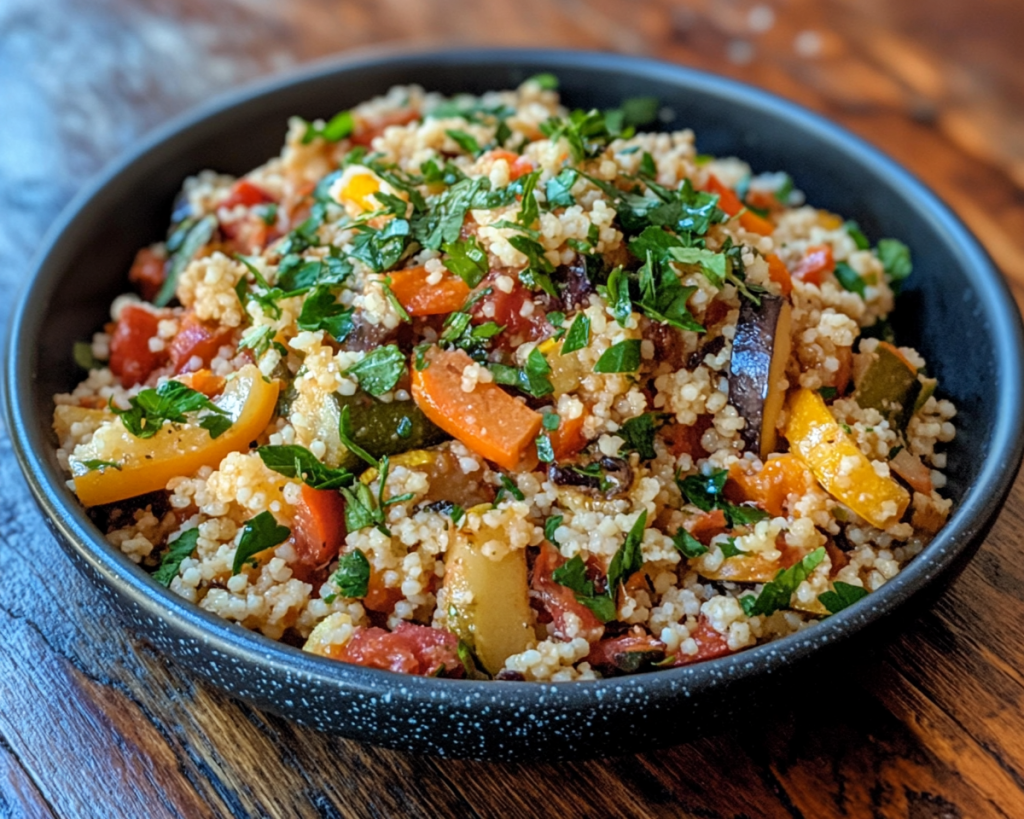
Mediterranean Vegetable Couscous is a colorful and flavorful dish that merges the wholesome goodness of couscous with the vibrant vegetables typical of Mediterranean cuisine. This dish often features ingredients such as bell peppers, zucchini, tomatoes, and olives, providing a rich tapestry of colors and flavors on your plate. The beauty of couscous lies in its ability to absorb the flavors of the ingredients around it. With each forkful, you’ll experience a delightful blend of textures; the soft couscous pairs beautifully with tender vegetables, creating a satisfying dish that feels both refreshing and comforting.
Originally from North Africa, couscous has made its way into various culinary traditions, adapting along the way. The Mediterranean iteration showcases ingredients common in countries like Italy, Greece, and Spain. Adding aromatic herbs such as basil, parsley, or thyme elevates the dish, giving it a fresh twist. Coupled with a drizzle of quality olive oil and a splash of lemon juice, the flavors explode in your mouth, offering an experience beyond mere sustenance.
Why You’ll Love This
You’ll adore this Mediterranean Vegetable Couscous for a multitude of reasons. First and foremost is its taste, which strikes a balance between freshness and heartiness. The assortment of vegetables adds layers of flavor while offering a range of nutrients like vitamins A and C, making it a healthy choice for any meal. Because it’s so versatile, you can easily adjust the recipe to fit your dietary needs, whether you are vegan, gluten-free, or simply looking to include more vegetables in your diet.
Another benefit is the ease with which you can whip it up. In just 35 minutes, you’ll have a dish that can serve as a main course or a side. This makes it perfect for busy parents rush to prepare dinner after a long day. **Store-bought couscous** cooks in a matter of minutes, meaning you can have a nutritious meal on the table quickly. Pair it with grilled chicken or fish for a complete meal or enjoy it as-is for a light lunch.
Lastly, when it comes to budget, you’ll be delighted to find that Mediterranean Vegetable Couscous is cost-effective. Many of the ingredients are pantry staples, and seasonal vegetables will make it even more affordable. Plus, you’ll likely have leftovers, making it useful for meal prep or a next-day lunch option.
Ingredients You’ll Need
- Couscous: The star ingredient, couscous, acts as a base that will soak up all the flavors. You can use traditional semolina couscous or opt for whole wheat for added fiber.
- Olive oil: A key ingredient in Mediterranean cooking, it adds richness and enhances the flavors of the vegetables.
- Vegetable broth: Using broth instead of water infuses extra flavor into the couscous.
- Bell peppers: These add sweetness and crunch to the dish. Feel free to mix colors—red, yellow, and green—for a visual feast!
- Zucchini: Sliced or diced, zucchini lends moisture and a mild flavor that complements the other ingredients.
- Cherry tomatoes: Their juiciness adds brightness, and you can roast them for added flavor.
- Red onion: For a bit of zest and crunchy texture.
- Leeks: These provide a subtle onion flavor that can elevate the dish.
- Feta cheese: Crumbled on top, it delivers a creamy and salty contrast to the vegetables.
- Fresh herbs: Basil, parsley, or mint will brighten the dish and enhance the Mediterranean flavors.
- Lemon juice: Just a squeeze adds acidity that balances the dish perfectly.
Each ingredient plays a specific role in creating a harmonious flavor profile. **Couscous** is the vehicle, **olive oil** provides richness, and the **vegetables** contribute crunch and a plethora of nutrients. You can easily modify the ingredients according to what you have on hand, making this dish incredibly adaptable.
How to Make
- Begin by boiling the vegetable broth in a medium saucepan. This is crucial; using broth instead of water will enhance the flavor of the couscous. Once boiling, add a pinch of salt and then pour in the couscous. Stir gently, then remove from heat. Cover the pot with a lid and let it sit for about 5 minutes. This steaming allows the couscous to absorb the broth fully, making it fluffy.
- While the couscous steams, prepare your vegetables. Chop the bell peppers, zucchini, and cherry tomatoes into bite-sized pieces. If using **red onion**, slice it thinly for easy incorporation into the dish. The key here is uniform-sized pieces to ensure even cooking. As you chop, feel free to mix and match your veggies based on what you prefer or have available.
- In a large skillet, heat about two tablespoons of olive oil over medium heat. Once the oil is shimmering, add the chopped onions and sauté for about 2-3 minutes until they start to soften. Incorporating the onions first lays the flavor foundation for the rest of the vegetables. Stir occasionally to make sure they don’t stick to the skillet.
- Add the bell peppers next, cooking for another 3-4 minutes. The colors brightening in the pan and their sweet aroma filling your kitchen are signs that you are on the right path. Continue stirring to ensure everything cooks evenly.
- Next, toss in the zucchini and cherry tomatoes. Sauté this mixture for an additional 5-7 minutes until the vegetables are tender but still retain some crunch. The tomatoes will begin to break down slightly, adding natural sweetness and moisture to the dish. As you cook, adjust the heat to prevent burning; you want to achieve a light caramelization.
- Once the vegetables are cooked, fluff the couscous with a fork to separate the grains. Add it directly into the skillet, mixing thoroughly to combine with the vegetable medley. The couscous will absorb the residual flavors in the pan, creating a cohesive dish. At this stage, you can also incorporate the fresh herbs and lemon juice.
- Lastly, remove the skillet from the heat and sprinkle crumbled feta cheese over the top. The warmth from the couscous will lightly melt the cheese, bringing a creamy element to every bite. Serve immediately while it’s still warm, or let it cool for a refreshing summer dish.
As you follow these steps, allow yourself to take in the vibrant colors and delightful aromas. This dish not only looks appealing but tastes incredible, with each bite delivering a burst of fresh vegetables and the aromatic taste of herbs and spices.
Variations & Substitutions
Vegan Variation: For a completely vegan take on this recipe, simply skip the feta cheese or substitute it with **vegan feta** options available in many grocery stores. You can also add **tofu** for an extra protein boost, and a sprinkle of nutritional yeast can bring in a cheesy flavor without any dairy.
Grilled Vegetable Couscous: Take it up a notch by grilling your vegetables instead of sautéing them. The smoky flavor from the grill will add a depth of taste that beautifully complements the couscous. Preheat the grill, and toss your chopped veggies in some olive oil, salt, and pepper before placing them on the grill.
Spicy Mediterranean Couscous: If you love a kick of heat, add a finely chopped **jalapeño** or some red pepper flakes as you sauté your vegetables. This variation is particularly enjoyable if you’re a fan of spicy food, enhancing the overall flavor dynamics of the dish. You may also consider pairing it with a spicy harissa sauce drizzled on top for an exotic flair.
Protein-Packed Couscous: For added protein, you can include **chickpeas** or **black beans** in your dish, making this a heartier meal. Rinse and drain canned beans to save time, or use dried beans that you’ve soaked and cooked beforehand, adding them to the skillet after the vegetables have been sautéed.
Seasonal Vegetable Couscous: Harness the seasonal fruits and vegetables available in your area. In the fall, you might want to incorporate roasted **butternut squash** or **sweet potatoes** to add sweetness and nutrition. During summer, add in fresh **peas** or **asparagus** to keep it light and refreshing.
Each of these variations adds unique flavors and nutrients, allowing you to explore Mediterranean cuisine in diverse ways.
Common Mistakes to Avoid
When making Mediterranean Vegetable Couscous, you might encounter a few pitfalls. One common mistake is using too much liquid. Couscous can quickly become mushy if you don’t balance the liquid-to-couscous ratio. Always follow the instructions on your couscous package, ensuring that the broth completely covers it, and beware of adding excess liquid during cooking.
Another mistake is not allowing the couscous enough time to rest after it has absorbed the broth. This **resting period** is critical for achieving that fluffy texture. Cover the pot while it sits to create steam, which will help with the cooking process.
Lastly, forgetting to season the dish properly can lead to bland results. Adding salt and pepper at various stages enhances the flavors of both the vegetables and couscous. Don’t hesitate to taste as you go, adjusting seasonings to your preference.
Storage, Freezing & Reheating Tips
Once you’ve made your Mediterranean Vegetable Couscous, you might have some leftovers. Store any uneaten portions in an airtight container in the refrigerator for up to 3 days. When reheating, add a splash of broth or water to regain the couscous’s moisture, preventing it from drying out. Warm it in the microwave or on the stovetop, stirring occasionally.
If you want to store your couscous for a longer period, you can freeze it. Let it cool completely before transferring it to a freezer-safe container. It can last for up to 3 months in the freezer. To reheat, thaw it overnight in the refrigerator, then warm it gently in a pan with a bit of liquid.
Food safety best practices are essential here. Make sure to cool your food quickly by spreading it out in a shallow container before refrigeration. Always check for any signs of spoilage before consuming leftovers, ensuring that all food stays fresh and appetizing.
Frequently Asked Questions
Can I make Mediterranean Vegetable Couscous ahead of time?
Absolutely! You can prepare the couscous and vegetables separately, storing them in the refrigerator for up to 3 days. Combine them just before serving. This makes it easy to enjoy a healthy meal, especially during busy weekdays.
What can I serve with Mediterranean Vegetable Couscous?
This dish pairs well with grilled meats or fish for a complete meal. You can also serve it alongside a fresh salad or a side of hummus for a Mediterranean-themed spread that’s sure to impress.
Is couscous gluten-free?
Traditional couscous is made from wheat and is not gluten-free. However, there are gluten-free alternatives, such as **quinoa** or **rice couscous**, that can be used for this recipe. Always check packaging labels if you have dietary restrictions.
Can I add dried herbs instead of fresh ones?
While fresh herbs definitely offer a bright flavor, you can use dried herbs if needed. Just keep in mind that dried herbs are more concentrated, so you’ll want to use about one-third the amount of dried herbs compared to fresh ones.
Is this recipe suitable for meal prep?
Yes! Mediterranean Vegetable Couscous is perfect for meal prep. Just portion it out into individual containers for grab-and-go meals throughout the week. You can customize each portion with different proteins or side dishes to keep things interesting.
Conclusion:
Mediterranean Vegetable Couscous is not just a dish; it’s a delightful experience filled with vibrant flavors, textures, and colors made easy for busy cooks. This recipe celebrates the beauty of Mediterranean cuisine while offering a canvas for your creativity, making it a versatile addition to your culinary repertoire. Whether you modify it for dietary preferences, incorporate seasonal vegetables, or enjoy it as is, this dish is sure to become a favorite in your household. So go ahead, give it a try, and don’t forget to share your results with friends and family! Happy cooking!