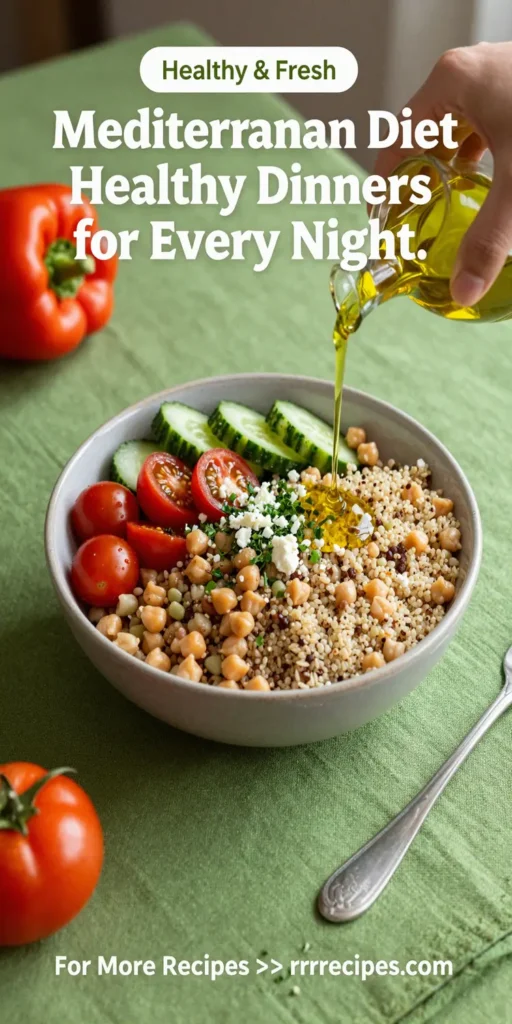
Prep time: 15 minutes
Cook time: 30 minutes
Total time: 45 minutes
Servings: 4
Mediterranean diets emphasize fresh ingredients, vibrant flavors, and nutrient-dense meals, making them an exciting choice for dinner any night of the week. In this guide, you will discover how to create delicious, healthy Mediterranean dinners that are not only satisfying but also easy to prepare. Perfect for busy parents or anyone looking to maintain a healthier lifestyle without sacrificing flavor, these recipes come packed with seasonal vegetables, lean proteins, and wholesome grains.
What Is Mediterranean Diet Healthy Dinners for Every Night?
The Mediterranean diet is inspired by the eating habits of countries along the Mediterranean Sea, including Greece, Italy, and Spain. This diet focuses on **whole foods** such as fruits, vegetables, whole grains, legumes, nuts, and seeds, with a moderate intake of fish and poultry. The Mediterranean way of eating celebrates seasonal ingredients and traditional cooking techniques, promoting overall health and well-being. The meals are generally low in processed foods and added sugars, making them perfect for anyone looking to eat clean and feel great.
Why You’ll Love This
There are countless reasons to embrace Mediterranean diet dinners, starting with their undeniable **health benefits**. Incorporating such meals into your weekly routine has been linked to lower risks of heart disease, better weight management, and improved mental health. Not only are these dishes good for your body, but they also tantalize your taste buds with bold flavors and varied textures. The **flexibility** of Mediterranean cuisine allows room for creativity, accommodating different dietary preferences and restrictions. Whether you are vegetarian, gluten-free, or simply looking for quick weeknight meals, these recipes have you covered, ensuring that you can enjoy nutritious dinners without the stress.
Ingredients You’ll Need
Here’s a list of ingredients that will bring your Mediterranean dinners to life. Each element plays a vital role in creating that signature Mediterranean flavor:
- Olive Oil: Essential for sautéing and dressing dishes, this healthy fat adds flavor and richness.
- Garlic: A must-have for nearly every Mediterranean recipe, garlic provides depth and aromatic quality.
- Lemon Juice: Fresh lemon juice brightens up flavors and adds a refreshing zing to dishes.
- Fresh Herbs: Basil, parsley, and oregano are popular in Mediterranean cooking, lending freshness and complexity.
- Proteins: Options like chicken, salmon, or chickpeas ensure a hearty meal while providing nutrients.
- Vegetables: Bell peppers, zucchini, and eggplant are great choices that lend color and nutrition.
- Whole Grains: Quinoa, farro, or brown rice serve as healthy bases that complement the meal.
- Feta Cheese: This briny cheese adds creaminess and a strong flavor; perfect for crumbling over salads.
How to Make
Creating your Mediterranean dinners is simpler than you might think. Follow these step-by-step instructions:
- Prepare the Ingredients: Start by gathering all your ingredients. Wash and chop fresh vegetables, mince garlic, and squeeze fresh lemon juice. Having everything prepared will make the cooking process smoother and quicker.
- Heat the Olive Oil: In a large skillet over medium heat, add about two tablespoons of olive oil. Allow it to heat until it shimmers, then add minced garlic. Sauté for about 1-2 minutes until fragrant, but be careful not to let it burn; burnt garlic can taste bitter.
- Add Vegetables: Once the garlic is ready, add your chopped vegetables to the skillet. Stir frequently, allowing them to soften and develop an enticing aroma. This usually takes about 5-7 minutes. You want them tender yet still slightly crisp.
- Incorporate Protein: Push the vegetables to one side of the skillet and add your chosen protein to the other side. Season it with salt, pepper, and any preferred herbs. Cook until the protein is fully cooked through, turning occasionally. For chicken, this may take about 10-12 minutes depending on thickness.
- Add Grains: Once the protein is cooked, stir in your pre-cooked whole grains. Allow everything to warm together and meld the flavors for about 2-3 minutes. This step brings together the richness of the olive oil, the brightness of the lemon, and the earthy flavors of the herbs.
- Finish & Serve: Once everything is heated through, remove from heat. Drizzle with additional lemon juice, sprinkle with crumbled feta, and garnish with fresh herbs. Serve your Mediterranean feast warm, perhaps alongside a simple side salad for balance.
Variations & Substitutions
Vegetarian Version: Swap out animal proteins for plant-based alternatives like tofu or additional legumes. Chickpeas or lentils are fantastic choices that will provide protein and fiber while keeping the dish light. Roasted vegetables also add a wonderful roasted flavor that complements the other vibrant ingredients.
Gluten-Free Version: If you’re aiming to keep this meal gluten-free, stick with quinoa or brown rice as they are naturally gluten-free grains. Ensure that the other ingredients you choose, such as sauces or condiments, are free from gluten-containing ingredients.
Seafood Lovers Variation: Incorporate seafood like shrimp or fish for a delicious twist. When using shrimp, sauté them until pink and opaque, adding a zesty lemon dressing for freshness. For a heartier dish, use items like salmon that can withstand the heat of sautéing while becoming beautifully crisp on the outside.
Low-Carb Variation: For a low-carb approach, consider substituting whole grains with spiralized vegetables such as zucchini noodles or cauliflower rice. These options retain the spirit of the dish while keeping it low in carbohydrates and calories.
Common Mistakes to Avoid
One common mistake is overcooking the vegetables. Overcooked vegetables lose their vibrant colors and crunchy textures, which can make the dish less appealing. To avoid this, add heartier vegetables first, like carrots or bell peppers, before adding softer options like zucchini.
Another mistake people often make is not seasoning adequately. Mediterranean dishes thrive on seasoning—don’t forget to taste and adjust as you go! A pinch of salt can always elevate the flavors.
Finally, be cautious with your cooking times, particularly with proteins. Each type of protein has a recommended cooking time; overcooking can make chicken dry or seafood tough. Use a meat thermometer to ensure the correct internal temperatures are reached for a juicy, safe meal.
Storage, Freezing & Reheating Tips
Leftovers from your Mediterranean dinner can be stored in an airtight container in the refrigerator for up to **three days**. When reheating, aim to do so gently on the stove with a little olive oil or in the microwave. This retains the original flavors and texture without making the food mushy.
If you want to **freeze** your meals, ensure they are cooled completely before sealing into freezer-safe containers. They can be frozen for up to **three months**. When ready to enjoy, thaw overnight in the refrigerator and reheat gently.
It’s advisable to **avoid reheating multiple times**; instead, consider portioning out your meals before storing them, ensuring easy access while preventing food from spoiling.
Frequently Asked Questions
What is a Mediterranean diet?
The Mediterranean diet is an eating pattern inspired by traditional cuisines from countries along the Mediterranean Sea. It emphasizes whole foods like fruits, vegetables, whole grains, legumes, and healthy fats, particularly olive oil. It is well-known for its health benefits, including heart health and weight management.
Can I include dairy in my Mediterranean meals?
Yes, dairy can be a part of the Mediterranean diet, with options such as Greek yogurt and cheeses like feta or mozzarella being common. These should be consumed in moderation, focusing on low-fat versions when possible for a healthier twist.
Is the Mediterranean diet suitable for everyone?
The Mediterranean diet is versatile and can be adapted to suit most dietary preferences and restrictions. However, individuals with specific allergies or conditions should consult with a healthcare provider or dietician to tailor these guidelines to their needs.
How can I add more variety to my Mediterranean meals?
To add variety, experiment with different grains, such as bulgur or farro, and rotate proteins like fish, chicken, and legumes. Incorporate a range of seasonal vegetables and rotate herbs to change flavors, ensuring you never get bored with your meals.
Are there simple recipes for beginners?
Absolutely! Many Mediterranean recipes are easy to follow and utilize accessible ingredients. Start with simple one-pan meals or salads, and gradually expand to more complex dishes as you gain confidence in the kitchen. The key is to enjoy the process and flavors!
Conclusion: Embracing the Mediterranean diet for your dinners can greatly enhance not only your culinary skills but also your overall well-being. By integrating fresh ingredients and bold flavors into your meals, you are not just cooking; you are cultivating a healthier lifestyle. Enjoy these recipes, and don’t hesitate to experiment with variations and substitutions to find what works best for you and your family. Happy cooking!