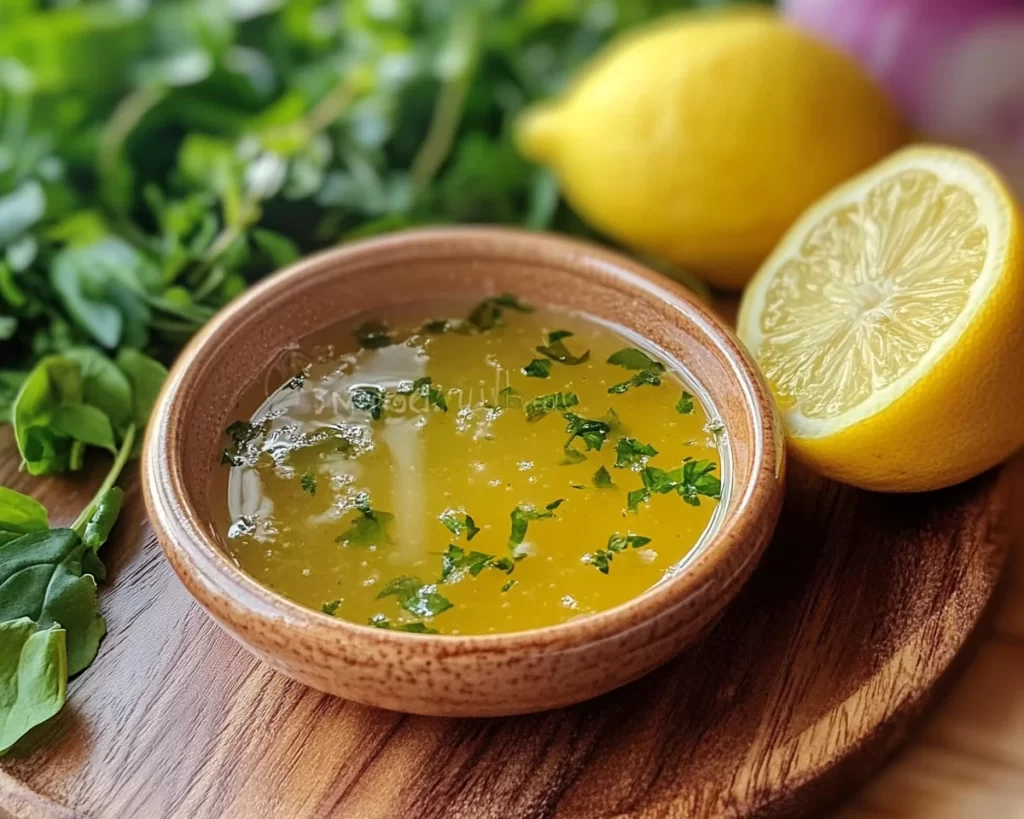
Prep time: 10 minutes
Cook time: 0 minutes
Total time: 10 minutes
Servings: 8 servings
Are you ready to elevate your salad game this spring? A bright and zesty Lemon Vinaigrette Dressing is the perfect way to bring your greens to life. Nothing compares to the refreshing tang of freshly squeezed lemon juice combined with the richness of high-quality olive oil. This dressing isn’t just a simple addition—it’s the star that transforms your salad from ordinary to extraordinary.
In this article, you’ll discover how to create a Lemon Vinaigrette Dressing that complements a wide variety of spring salads. You’ll learn about the key ingredients, step-by-step instructions, different variations, and tips for achieving the perfect balance of flavors.
What Is Lemon Vinaigrette Dressing for Spring Salads?
Lemon Vinaigrette Dressing is a classic culinary staple often used in salads, marinades, and even as a drizzle over roasted vegetables. The origins of vinaigrette date back centuries to France, where it was created as a way to enhance flavors while also preserving the freshness of ingredients. This particular take on vinaigrette, enriched by the vibrant acidity of lemons, offers a bright, tangy bite that dances on your taste buds.
The texture of this dressing is smooth and luxurious, created by emulsifying oil with either vinegar or citrus juice. In this case, the lemon juice acts as the star ingredient, providing a refreshing zing that cuts through the earthiness of greens. The flavors harmonize beautifully, creating a delightfully zesty and invigorating dressing that’s perfect for springtime fare.
When you ladle this dressing over crisp salads, freshly sliced vegetables, or even grilled proteins, you will find that it brings out the best in each ingredient. Whether you’re serving a classic garden salad or a quinoa salad with roasted vegetables, this dressing adapts seamlessly.
Why You’ll Love This
This Lemon Vinaigrette Dressing is a favorite for many reasons. First and foremost, the flavor—it’s bright, zesty, and brings a freshness that you just won’t find in store-bought options. You’ll notice that the tangy lemon complements and enhances the natural flavors of all the salad ingredients, making each bite a delightful experience.
Moreover, this vinaigrette is incredibly easy to make. With just a handful of ingredients, you’ll have a dressing ready in under **10 minutes**. It’s a lifesaver for busy parents and those who want to whip up healthy meals without spending all day in the kitchen. The cost is also entirely reasonable; you can make several servings for just a few dollars.
But perhaps the best thing about this dressing is its versatility. Yes, it’s fantastic on salads, but you can also use it as a marinade for chicken, seafood, or tofu, making it a multi-purpose kitchen hero. Just imagine grilled chicken drizzled with this zesty dressing—it’s a match made in culinary heaven!
Ingredients You’ll Need
To create this Lemon Vinaigrette Dressing, you will need the following ingredients:
- Freshly squeezed lemon juice: 1/4 cup. Fresh juice offers the best flavor. Bottled lemon juice tends to lack the brightness that fresh lemons provide.
- Extra virgin olive oil: 3/4 cup. This not only acts as a base but also adds richness and depth. You might substitute it with another oil, like avocado oil, if you wish.
- Dijon mustard: 1 teaspoon. This ingredient helps emulsify the dressing while adding a subtle depth of flavor that complements the acidity of the lemon.
- Honey or maple syrup: 1 teaspoon. This adds just a hint of sweetness, balancing the acidity and enhancing the overall profile.
- Salt: 1/2 teaspoon, or to taste. Essential for making the flavors pop.
- Freshly cracked black pepper: 1/4 teaspoon. A touch of pepper adds warmth and spice, balancing the brightness of the lemon.
Each ingredient plays an essential role in building the flavor profile of the dressing. For example, the lemon juice is the tangy backbone, while the olive oil provides a smooth finish. This recipe is adaptable, allowing for substitutions based on dietary preferences, such as using agave syrup instead of honey for a vegan-friendly dressing.
How to Make
Making your own Lemon Vinaigrette Dressing is simple and satisfying. Follow these step-by-step instructions for a delicious outcome:
- Gather all your ingredients. Having everything in front of you will streamline the process. Fresh lemons, high-quality extra virgin olive oil, Dijon mustard, and sweetener are essential for achieving the best flavor.
- Juice the lemons. Roll each lemon on the countertop with your palm to release more juice, then cut them in half and squeeze out the juice into a measuring cup. You should aim for about 1/4 cup of lemon juice, but feel free to adjust to your personal taste.
- Combine the lemon juice and Dijon mustard. In a mixing bowl or jar, combine the freshly squeezed lemon juice with the Dijon mustard. Whisk them together until fully blended. This mixture is essential for emulsification, ensuring the oil blends well with the vinegar or juice.
- Add the olive oil gradually. Slowly drizzle in the olive oil while whisking vigorously. If you’re using a jar, you can simply secure the lid and shake it well. The goal is to create an emulsion, causing the oil and lemon juice to combine into a creamy texture.
- Incorporate the sweetener. Next, add in the honey or maple syrup and whisk until smooth. This step is crucial for balancing the tartness of the lemon, providing just the right amount of sweetness.
- Season and taste. Finally, add salt and pepper to the mixture. Taste and adjust depending on your flavor preferences. If you feel the dressing needs more acidity, add a splash more lemon juice, or if it’s too tangy, a bit more oil will help tone it down. Once satisfied, it’s ready to be used!
You can serve this dressing immediately or store it for later. If you do decide to stash it in the fridge, just give it a quick shake before using, as separation is normal. Enjoy this lemon vinaigrette drizzled over fresh greens, roasted vegetables, or grilled proteins!
Variations & Substitutions
Herb-Infused Variation: For a vibrant twist, consider adding fresh herbs like basil, parsley, or dill. Chop the herbs finely and whisk them into the dressing once it’s mixed. This will not only change the flavor profile but also introduce wonderful aromas, elevating your salad to new heights. Herb-infused vinaigrettes are ideal for those looking to add more freshness to their dishes.
Garlic-Lemon Vinaigrette: If you love the pungency of garlic, add one or two minced cloves into your dressing mixture. Garlic adds a rich, savory note that beautifully contrasts with the acidity of the lemon. This variation pairs especially well with heartier salads, such as those containing chickpeas or grains.
Citrus Mix Variation: Instead of purely using lemon juice, consider mixing in some orange or lime juice for a more complex taste. This blend will create a sweet-tart flavor, delightful for summer salads. This variation is perfect for citrus lovers and can be even more refreshing, especially during warmer months.
Spice Up Your Dressing: For a kick, add a pinch of red pepper flakes or a few drops of hot sauce. This will create a vibrant dressing that pairs magnificently with spicy greens or grilled meats.
Nutty Variation: Adding a tablespoon of nut butter, like almond or tahini, turns the vinaigrette into a creamy sauce that’s great for drizzling over salads or using as a dip. Nut butters also come with added health benefits, offering a dose of protein and healthy fats.
These variations allow you to customize the vinaigrette according to your preferences or the season. Get creative!
Common Mistakes to Avoid
When making Lemon Vinaigrette Dressing, it’s easy to overlook a few key details that could lead to unsatisfying results. One common mistake is using bottled lemon juice instead of freshly squeezed. Bottled versions often contain preservatives and lack the bright flavor that fresh lemon juice provides, which is the hallmark of a delicious vinaigrette.
Another classic error is not properly emulsifying the oil and the acid. If you add the oil too quickly without whisking vigorously, you may end up with a split dressing. To prevent this issue, always add the oil gradually while whisking or shaking vigorously.
Additionally, many tend to overlook the importance of seasoning. A vinaigrette without salt and pepper can taste flat. Always taste your dressing before serving to see if it needs slight adjustments. A pinch of salt can enhance the flavors dramatically, making all the ingredients sing.
Lastly, failing to store properly can also be a pitfall. While you can keep this dressing in the fridge, be aware that it may separate. A quick shake or whisk before using will re-emulsify the ingredients.
Storage, Freezing & Reheating Tips
Understanding how to properly store your Lemon Vinaigrette Dressing is essential for maintaining its freshness and flavor. Store the dressing in an airtight container, like a jar or a bottle with a tight-fitting lid. It can typically last in the refrigerator for up to a week. However, since it’s made with fresh lemon juice, it’s best enjoyed fresh within the first few days.
If you find yourself with more dressing than you can use, consider pouring smaller portions into ice cube trays. Freeze it, and once solid, transfer the cubes into a sealed plastic bag. When you need a quick dressing, simply pop a cube out and let it thaw in the refrigerator or use it directly on warm salads.
It’s important to note that, while vinaigrette can freeze, the texture may change slightly. The oil may separate and need a good shake or whisk to emulsify again.
When reheating is necessary—though it’s generally not—warm it gently over low heat, being careful not to let it boil. You want to preserve the fresh flavors as much as possible!
Frequently Asked Questions
Can I use other acids instead of lemon juice?
Certainly! While lemon juice is a classic choice, other acids like balsamic vinegar, apple cider vinegar, or lime juice can also create delicious variations. Each will impart a unique flavor, so feel free to experiment based on your dish or personal preference!
How do I make this vinaigrette vegan-friendly?
To make this dressing vegan, simply replace honey with maple syrup or agave nectar. This will keep the sweet notes while ensuring the dressing aligns with a vegan lifestyle.
Is it necessary to use Dijon mustard?
While Dijon mustard plays a key role in emulsifying the dressing, you can omit it if you prefer. Just keep in mind that the texture may be thinner without it. If you want a quick substitute, yellow mustard can serve in a pinch.
How can I make this dressing thicker?
If you prefer a thicker vinaigrette, consider adding a small amount of Greek yogurt or pureed silken tofu. Blend these with the other ingredients until smooth for a creamy, thicker dressing that’s just as flavorful.
Can I use this dressing for meal prep? How long will it last?
Absolutely! This dressing is perfect for meal prep. Store it in the refrigerator, and it can typically last for up to one week. Just be sure to give it a good shake before using, as separation is normal.
Conclusion:
Lemon Vinaigrette Dressing is not just a condiment; it’s a culinary enhancement that brightens your salads and meals. With its fresh flavor, ease of preparation, and endless versatility, you’ll find yourself reaching for this dressing again and again. Don’t hesitate to customize it to your liking—your kitchen creations will shine with this zesty addition. Try it out, share it with friends, and experience the delightful zing that Lemon Vinaigrette Dressing brings to your spring salads! [Read also: Easy Dessert Recipes for Beginners]