Prep time: 20 minutes
Cook time: 1 hour
Total time: 1 hour 20 minutes
Servings: 4
Lamb curry is more than just a meal; it’s an aromatic experience that captures the essence of comfort food. With its rich spices and tender meat, this dish is perfect for gatherings or simply a cozy dinner at home. As you delve into this recipe, you’re likely to discover the beauty of cooking with lamb—its unique flavor pairs brilliantly with various spices, making it a favorite among food lovers. Plus, it’s a fantastic way to introduce yourself to the world of curries, whether you’re a busy parent looking for quick solutions or a kitchen beginner eager to impress your family.
What Is Lamb Curry?
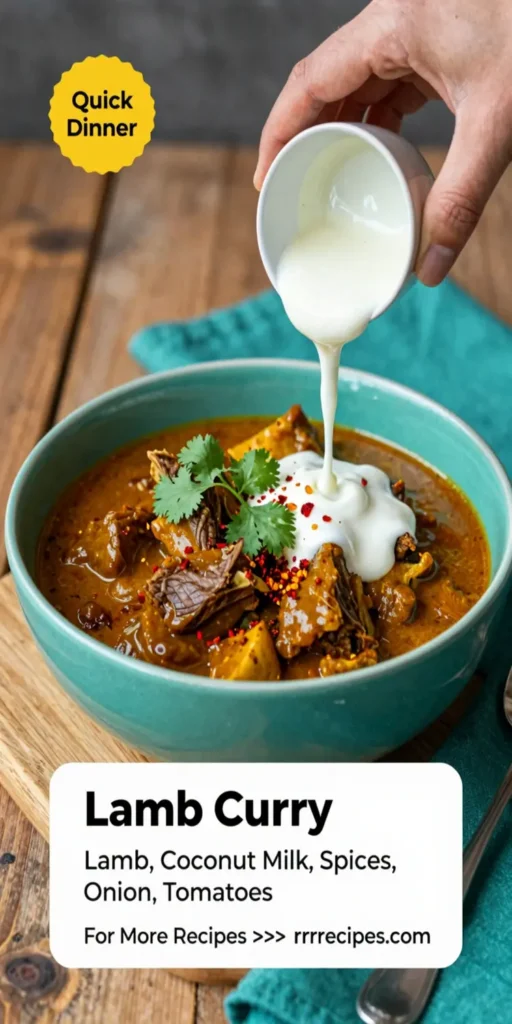
Lamb curry is a dish that originates from South Asian cuisine, where it is often made with tender pieces of lamb that are slowly cooked in a sauce made from a blend of spices, vegetables, and sometimes coconut milk or yogurt. The primary ingredients usually include an array of spices such as cumin, coriander, turmeric, and chili, which together create a rich and complex flavor profile. The dish is characterized by its thick, aromatic sauce that clings to the succulent pieces of lamb, making it a satisfying option for any meal. Traditionally served with naan or rice, lamb curry’s versatility allows for various adaptations, catering to different palates and dietary preferences.
Why You’ll Love This
You’ll love this lamb curry for several reasons. First and foremost, it brings a taste of exotic spices and flavors straight to your kitchen. It’s also an adaptable dish; whether you prefer it mild and creamy or spicy and tangy, you can easily customize it to your liking. Moreover, the cooking process involves simple steps that will leave your kitchen filled with irresistible aromas, making your cooking experience just as enjoyable as the final dish. Finally, lamb curry can be prepared in advance and reheats beautifully, making it an excellent choice for meal prepping and family dinners.
Ingredients You’ll Need
- 2 pounds of lamb shoulder, cut into cubes: This cut of meat is ideal for curry as it becomes incredibly tender when slow-cooked.
- 2 tablespoons of vegetable oil: Used for searing the meat and beginning the cooking process.
- 1 large onion, finely chopped: It adds sweetness and forms the base of the curry sauce.
- 4 cloves of garlic, minced: Garlic enhances the flavor and aroma of the dish.
- 1 tablespoon of ginger, minced: Fresh ginger contributes warmth and a slight zing to the curry.
- 2 tablespoons of curry powder: This is the heart of your lamb curry, infusing it with rich flavors.
- 1 teaspoon of turmeric: Adds depth of color and flavor.
- 1 teaspoon of cumin: This spice gives a warm, earthy taste.
- 1 teaspoon of coriander: Offers a citrusy note that balances the rich flavors.
- 2 cups of diced tomatoes: Fresh or canned, they serve as the liquid base for the curry.
- 1 cup of coconut milk: Adds creaminess and a touch of sweetness.
- Salt and pepper to taste: Essential for enhancing all the flavors.
- Fresh cilantro for garnish: Provides a bright finish and additional flavor.
How to Make
- Start by heating the vegetable oil in a large pot or Dutch oven over medium-high heat. Once hot, add the cubed lamb shoulder. Sear the meat on all sides until it achieves a deep golden brown color. This step is vital for creating depth in flavor.
- Remove the lamb from the pot and set it aside. In the same pot, add the chopped onion and sauté until it becomes translucent and slightly caramelized. This takes about 5-7 minutes. Scraping the bottom of the pot will help lift any flavorful bits stuck from the lamb.
- Add the minced garlic and ginger to the onions and cook for an additional 1-2 minutes, just until fragrant. You want to ensure the garlic doesn’t burn; otherwise, it will introduce a bitter flavor to the dish.
- Stir in the curry powder, turmeric, cumin, and coriander, and toast the spices for about 1 minute to awaken their flavors. You’ll notice the wonderful aroma enveloping your kitchen.
- Add the diced tomatoes and stir well, then return the seared lamb to the pot. Pour in the coconut milk, stirring everything together to make sure the meat is evenly coated in the sauce.
- Bring the mixture to a gentle boil, then reduce the heat to low, cover, and let it simmer for 1 hour. During this time, the lamb will become tender and the flavors will meld together beautifully. Stir occasionally to ensure it doesn’t stick to the bottom of the pot.
Variations & Substitutions
Vegetarian Lamb Curry: Swap the lamb for chickpeas and a mix of hearty vegetables such as bell peppers, carrots, and cauliflower. The protein from chickpeas makes for a satisfying alternative. You can maintain the same spice profile and cooking method for rich flavor.
Spicy Lamb Curry: Increase the level of heat by adding chopped fresh chilies or red pepper flakes. You can also consider using hot curry powder to kick up the spice factor. This variation is ideal if you enjoy a fiery curry that excites your taste buds.
Slow Cooker Lamb Curry: This method allows you to prepare your ingredients in advance and let the slow cooker do the work. After browning the meat and sautéing the onions, transfer everything to the slow cooker, add the liquids, and let it cook on low for 6-8 hours. The slow cooking process will yield incredibly tender lamb.
Different Creaminess: Instead of coconut milk, you can use yogurt for a tangy version of the dish. Just add it at the end of the cooking process to avoid curdling. This will give the curry a distinct flavor profile while still being rich and satisfying.
Common Mistakes to Avoid
One common mistake is rushing the browning process. Ensure that you give the lamb adequate time to brown properly, as this develops layers of flavor. Rushing this step could lead to a dull-tasting curry.
Another mistake is skimping on the spices. Using insufficient spices or not toasting them might result in a bland curry. Always ensure you use fresh spices and toast them to release their essential oils—a small step that makes a world of difference.
Finally, adding cold liquid to the pot can lower the cooking temperature and ruin the simmering process. Make sure to add all ingredients at the right temperature to maintain a steady simmer for that rich, thick sauce you desire.
Storage, Freezing & Reheating Tips
After preparing your lamb curry, it can be stored in the refrigerator for up to 3 days in an airtight container. When it comes to reheating, it’s best to do so on the stovetop to ensure even warming. Gently heat it on low, adding a splash of water or broth if it becomes too thick. For lasting storage, consider freezing the curry. Pack it in a freezer-safe container for up to 3 months. When you’re ready to enjoy it again, thaw it overnight in the refrigerator before reheating. Always ensure to reheat the curry until it reaches at least 165°F to maintain food safety.
Frequently Asked Questions
Can I use other meats besides lamb?
Absolutely! This curry can work well with beef, chicken, or even tofu for a vegetarian option. Just remember that cooking times might vary slightly depending on the cut of meat you choose. Make sure to adjust your cooking method accordingly.
What’s the best way to serve lamb curry?
Lamb curry pairs wonderfully with steamed rice or flatbreads such as naan. You could also serve it with a side of roasted vegetables or a fresh salad to create a well-rounded meal that appeals to various tastes.
Can I make lamb curry in advance?
Yes, lamb curry actually tastes better the day after it is made, as the flavors have more time to develop and infuse. It’s perfect for meal prep and can be made a day or two ahead of time.
What can I add to make my curry more nutritious?
Consider adding extra vegetables like spinach or bell peppers toward the end of the cooking process. They’ll quickly cook down but retain their nutrients, adding both color and health benefits to your dish.
What should I do if my curry is too salty?
If you find your curry has turned out too salty, there’s no reason to panic. One effective trick is to add a splash of unsweetened coconut milk or a few slices of raw potato to absorb some of the saltiness. Let it simmer for a while before removing the potato, and you should notice an improvement.
Conclusion:
Lamb curry is a versatile dish that not only satisfies your hunger but also warms your soul. With its aromatic spices, hearty ingredients, and customizable options, you can tailor it to fit your family’s preferences and dietary needs. Whether you’re serving this dish for a special occasion or a casual weeknight dinner, it’s sure to impress. Happy cooking, and enjoy the delightful journey of creating your own comforting bowl of lamb curry!