Prep time: 15 minutes
Cook time: 20 minutes
Total time: 35 minutes
Servings: 4
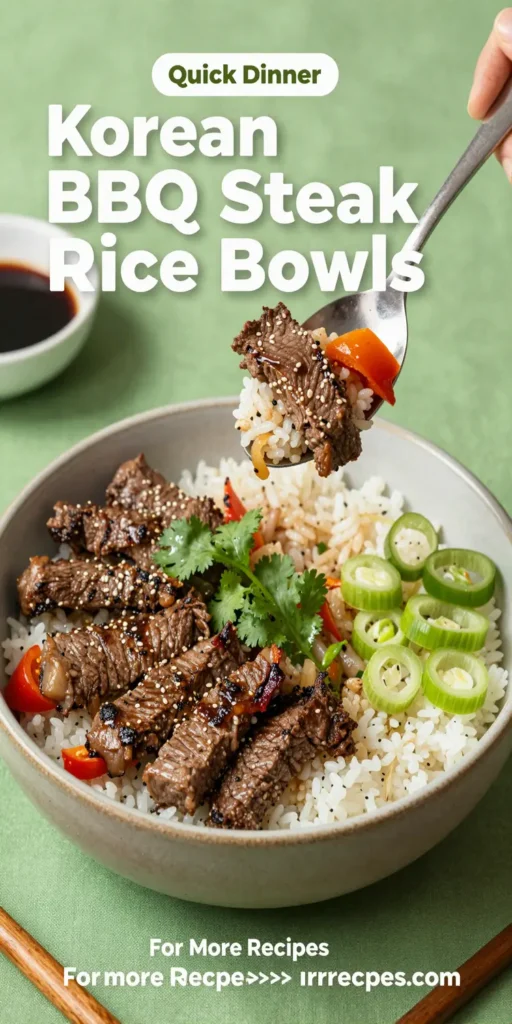
Korean BBQ Steak Rice Bowls are a delightful and satisfying meal that combines tender, marinated beef with fresh vegetables and steamed rice. This dish is not just a feast for the palate but also a colorful presentation that is sure to wow your family or guests. The beauty of this recipe lies not only in its flavor but also in its versatility; you can customize it to fit dietary preferences, making it a perfect dinner option for any occasion.
What Is Korean BBQ Steak Rice Bowls?
Korean BBQ Steak Rice Bowls are a quintessential Korean dish that showcases the balance of flavors and textures that Asian cuisines are renowned for. The main component is marinated steak, typically ribeye or flank steak, which is grilled or pan-seared to perfection, offering a savory and slightly smoky flavor. Accompanying the steak are fresh veggies like cucumbers, carrots, and scallions, all served on a bed of fluffy rice. This meal is ideal for any night of the week, offering both convenience and a delicious outcome.
Why You’ll Love This
There are countless reasons to love Korean BBQ Steak Rice Bowls. First and foremost, they combine **savory**, **sweet**, and **spicy** elements, which are the hallmark of Korean cuisine. The marinated steak is juicy, while the fresh vegetables add a delightful crunch. Additionally, this dish is incredibly adaptable; you can easily swap out ingredients based on availability or personal preferences.
Another great benefit is that this dish is perfect for meal prep. You can prepare the marinade ahead of time, allowing the meat to absorb maximum flavor while you handle other weekday tasks. By portioning out servings into meal containers, you’ll have delicious homemade meals at your fingertips all week long.
Ingredients You’ll Need
- 1 pound ribeye steak – This cut is tender and flavorful, ideal for marinating and grilling.
- 4 cups cooked white or brown rice – Acts as a base that soaks up all the delicious juices.
- 1/4 cup soy sauce – The salty component of the marinade, contributing umami flavor.
- 2 tablespoons sesame oil – Adds a nutty aroma and richness to the dish.
- 2 tablespoons brown sugar – Balances the saltiness with a hint of sweetness.
- 2 cloves minced garlic – Provides robust flavor that enhances the marinade.
- 1 tablespoon grated ginger – Adds warmth and depth to the marinades.
- 1 teaspoon red pepper flakes – Gives a gentle heat, adjustable to your taste.
- 1 carrot, julienned – Offers both color and a sweet crunch.
- 1 cucumber, sliced – Refreshes the dish and adds a crisp texture.
- 2 green onions, chopped – For garnishing and enhancing flavor.
- Optional: sesame seeds for garnish – Adds visual appeal and an additional nutty note.
How to Make
- Prepare the marinade: In a bowl, whisk together the soy sauce, sesame oil, brown sugar, garlic, ginger, and red pepper flakes. This combination of ingredients forms a marinade that is both savory and slightly sweet, forming a flavorful base that deeply penetrates the meat.
- Marinate the steak: Place the ribeye steak into the marinade, ensuring it’s well-coated. Cover the bowl with plastic wrap and let it marinate in the fridge for at least 30 minutes, although longer for 2 hours would intensify the flavor.
- Cook the rice: If you haven’t already, cook your rice according to package instructions. Both white and brown rice work beautifully, depending on your preference for flavor and health considerations. Let it sit covered to steam and become fluffy.
- Grill the steak: Preheat a grill or grill pan on medium-high heat. Remove the steak from the marinade, allowing excess marinade to drip off. Grill for about 4-5 minutes per side for medium-rare, adjusting the time according to your doneness preference.
- Prepare the vegetables: While the steak is grilling, julienne the carrot and slice the cucumber. These fresh vegetables add color and crunch, balancing the savory flavor of the meat.
- Assemble the bowls: Slice the cooked steak against the grain and layer it over a bed of fluffy rice. Top with the julienned carrots, sliced cucumbers, and chopped green onions. Optionally, sprinkle sesame seeds for a finishing touch.
Variations & Substitutions
Vegetarian Version: Swap the ribeye steak for tofu or tempeh. Marinate and grill as you would the steak, or sauté for a crispy texture. Pair it with edamame and mushrooms, which offer a satisfying umami flavor.
Spicy Korean BBQ Sauce: If you love a good kick, incorporate gochujang (Korean chili paste) into your marinade for a spicy twist. This ingredient adds depth and complexity while maintaining the dish’s authenticity.
Grain-Free Option: For a low-carb alternative, replace the rice with cauliflower rice. This substitution maintains the essence of a rice bowl while lowering the carbohydrate content.
Different Protein Choices: Feel free to experiment with other proteins like chicken thighs, shrimp, or even pork. Each protein will lend its unique flavor while adhering to the Korean BBQ style.
Common Mistakes to Avoid
One major mistake people often make is not allowing the steak to marinate long enough. Rushing the marinating process can lead to bland meat, as it won’t have enough time to absorb the flavors. Aim for at least 30 minutes, but ideally 2 hours is perfect.
Another issue can arise from overcrowding the grill or pan. Overcrowding can lead to steaming rather than searing, resulting in a less appetizing texture and flavor. Ensure plenty of space is available to allow proper browning on each piece.
Lastly, failing to slice the steak against the grain can lead to a tough bite. Slicing against the grain maximizes tenderness and makes the meat easier to chew. Always pay attention to the grain direction before cutting to ensure the best experience.
Storage, Freezing & Reheating Tips
To ensure your Korean BBQ Steak Rice Bowls maintain their flavor and texture, it’s essential to store them properly. Keep any leftover steak and rice in an airtight container in the refrigerator. They can be stored for up to 3 days without losing their taste. If you want to keep them longer, consider freezing the cooked components separately; the steak can last up to 3 months in the freezer.
When reheating, avoid using the microwave if possible, as this can make the steak tough. Instead, reheat in a skillet over low heat until warmed through. You can add a few drops of water to the skillet and cover it, creating steam to retain moisture.
Frequently Asked Questions
Can I make this dish gluten-free?
Absolutely! To make a gluten-free version of these Korean BBQ Steak Rice Bowls, simply substitute soy sauce with gluten-free tamari. Most other ingredients are naturally gluten-free, so it’s easy to adapt.
How can I adjust the spice level?
You can control the heat by adjusting the amount of red pepper flakes you include in the marinade. For a milder dish, omit them altogether or use sweet Korean gochugaru instead. For more heat, you can add chopped fresh chili peppers as a topping.
Can I use frozen veggies instead of fresh?
While fresh vegetables are preferred for their crisp texture, you can use frozen vegetables in a pinch. Just remember that frozen options might release more water when cooked, so be mindful of cooking times to prevent a soggy bowl.
Is this recipe suitable for meal prep?
Yes, this recipe is fantastic for meal prep. You can make multiple bowls ahead of time and store them individually. Just keep the steak and vegetables separate until you are ready to eat to maintain freshness.
What side dishes pair well with Korean BBQ Steak Rice Bowls?
Korean BBQ Steak Rice Bowls pair excellently with sides like kimchi, pickled vegetables, or even a simple side salad. These additions enhance the meal’s flavor and provide a nice balance of textures.
Conclusion: Korean BBQ Steak Rice Bowls are a perfect expression of comfort and flavor, ideal for busy weeknights or meal prepping. With a variety of variations and a reliable cooking method, you’ll find this recipe resonates with both your taste and your lifestyle. Enjoy making them for yourself and your loved ones.