Prep time: 30 minutes
Cook time: 2 hours
Total time: 2 hours 30 minutes
Servings: 6-8
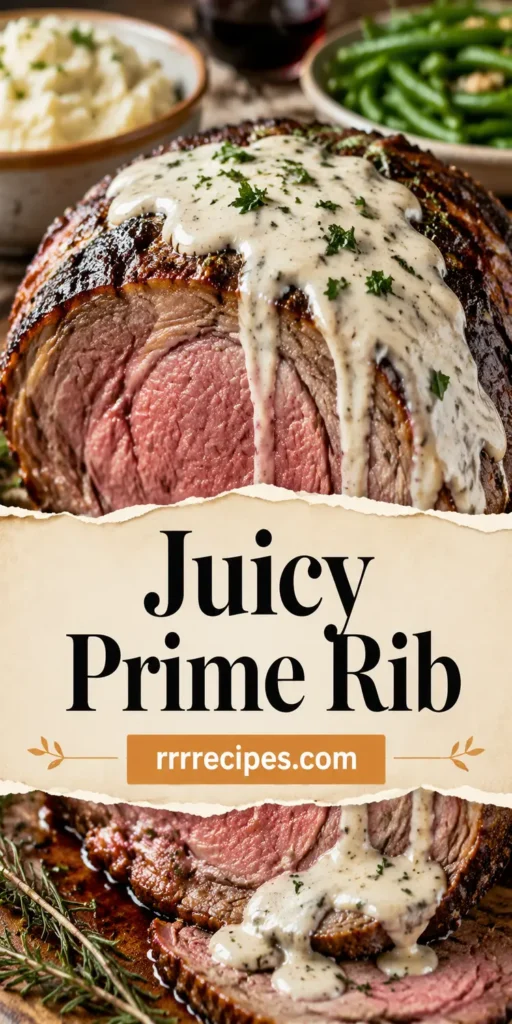
Juicy Prime Rib with Creamy Horseradish Sauce is an indulgent dish that’s perfect for special occasions or family gatherings. This roast is a showstopper, bringing a combination of tender, flavorful meat and a spicy, creamy sauce that enhances its richness. Picture it sizzling away in your oven, filling your kitchen with a savory aroma that promises a melt-in-your-mouth experience.
What’s truly delightful about this dish is its ability to captivate both seasoned chefs and kitchen beginners alike. Despite its luxurious appearance, the preparation is straightforward, offering approachable steps that will leave you feeling confident in your culinary skills.
What Is Juicy Prime Rib with Creamy Horseradish Sauce?
Juicy Prime Rib is a cut of beef from the rib section, known for its incredible tenderness and rich flavor. When roasted to perfection, it creates a mouthwatering crust on the outside while maintaining a succulent interior. The addition of a creamy horseradish sauce complements the meat, introducing a punch of flavor that cuts through its richness. The combination is nothing short of extraordinary, making it a favorite in both fine dining and home kitchens.
Why You’ll Love This
There are many reasons to adore this Juicy Prime Rib with Creamy Horseradish Sauce. First, the flavor – the rich beefiness of the prime rib paired with the zesty kick from the creamy sauce creates a perfect harmony. Second, the texture – each bite offers a wonderful contrast between the crispy exterior and the tender meat inside. Finally, the presentation is stunning; a perfectly cooked prime rib, coated in a dollop of creamy sauce, is sure to impress your guests and family alike. This dish is the ultimate comfort food that brings warmth and joy to any gathering.
Ingredients You’ll Need
- 4-5 pounds prime rib roast: This cut is essential for achieving the rich flavor and tenderness expected from prime rib.
- 2 tablespoons olive oil: Helps to create a beautiful crust while roasting.
- 4 cloves garlic, minced: Adds depth and an aromatic flavor to the roast.
- Fresh rosemary (2 tablespoons), chopped: Provides a lovely herbal note that complements the beef.
- Salt and black pepper: Essential for enhancing the natural flavors of the meat.
- 1 cup sour cream: The base for the creamy horseradish sauce.
- 3 tablespoons prepared horseradish: Gives the sauce its kick.
- 1 tablespoon Dijon mustard: Adds tanginess to the sauce.
- 1 tablespoon lemon juice: Brightens and balances the flavors.

How to Make
- Begin by preheating your oven to 450°F (230°C). This high temperature will create an inviting crust on the roast.
- Next, prepare the prime rib. Pat the roast dry with paper towels, then rub it with olive oil to ensure the seasonings stick.
- In a small bowl, combine minced garlic, chopped rosemary, salt, and pepper. Rub this mixture generously over the roast, ensuring it’s well-coated.
- Place the roast on a rack in a roasting pan and put it in the oven. Roast it at 450°F (230°C) for about 20 minutes to develop a crust.
- After 20 minutes, reduce the oven temperature to 325°F (160°C) and continue roasting. Use a meat thermometer to ensure you reach your desired doneness: 130°F (54°C) for medium-rare.
- Once cooked, remove the roast from the oven and let it rest for at least 20 minutes. This resting period allows the juices to redistribute throughout the meat.
Variations & Substitutions
Herb-Crusted Variation: For a more intense flavor, consider adding other herbs like thyme and parsley to your garlic-rosemary rub. The diverse herbal profile will complement the richness of the beef, elevating the dish even further. Additionally, you could incorporate some minced shallots for a bit of sweetness, which will caramelize slightly while roasting, adding to the overall flavor complexity.
Gluten-Free Option: If you’re looking for a gluten-free version, rest assured that this prime rib recipe already fits the bill. Just ensure that any sauces or dressings (like the horseradish sauce) are labeled gluten-free. Many prepared horseradish brands last. Furthermore, you can serve the prime rib with gluten-free sides such as roasted vegetables or a quinoa salad for a wholesome meal.
Different Cuts of Beef: While prime rib is the classic choice, you might consider using a ribeye steak or even a tenderloin. The cooking times will vary based on the cut, so adjust accordingly. Bone-in versus boneless options will also have different cooking times and flavors; however, both can result in a delicious meal.
Spicy Horseradish Sauce: For those who crave a little heat, mix in some extra horseradish or a splash of hot sauce to the creamy sauce. This version will add a fiery kick that pairs well with the rich meat, augmenting the overall flavor profile of the dish.
Common Mistakes to Avoid
Not letting the meat rest: A common pitfall is slicing into your prime rib immediately after cooking. By failing to allow the roast to rest, you risk losing all those delicious juices, leading to dry meat. Resting for the suggested period is critical for ensuring a juicy result.
Overcooking: Another frequent error is failing to monitor the internal temperature correctly. Invest in a reliable meat thermometer to avoid this mistake. Each oven is different, and only the thermometer can provide insightful guidance to achieve your preferred doneness.
Using inadequate seasoning: Under-seasoning can leave the dish bland. Be generous with salt and pepper, and consider flavoring the meat far in advance so that the seasoning has time to penetrate the roast. A well-seasoned roast is key to highlighting the prime rib’s flavors.
Storage, Freezing & Reheating Tips
To store any leftover prime rib, wrap it tightly in foil or place it in an airtight container. When stored in the refrigerator, it will keep for about 3 to 4 days. If you want to keep it longer, consider freezing it. Wrap in plastic wrap followed by aluminum foil; this double-layering helps in preventing freezer burn. Properly stored, it can last up to 6 months in the freezer.
When you’re ready to enjoy the leftovers, remove any packaging and let the prime rib thaw in the refrigerator overnight. For reheating, the best method is to use an oven. Place the slices in a baking dish, cover with foil to retain moisture, and heat in a preheated oven at 300°F (150°C) for about 15-20 minutes. This will help preserve the flavors and texture, ensuring a delicious meal.
Frequently Asked Questions
How do I choose the best prime rib roast?
When selecting a prime rib roast, look for well-marbled meat; the fat interspersed throughout will enhance the flavor and tenderness. Also, consider the grade of beef – Prime, Choice, or Select. Prime is the highest quality you can find, with incredible marbling, while Choice still offers great flavor without breaking the bank. Don’t hesitate to ask your butcher for recommendations suited to your particular tastes.
What should I serve with prime rib?
Prime rib pairs wonderfully with a variety of sides. Classic choices include creamy mashed potatoes, roasted veggies, or a crisp salad. Think about roasted Brussels sprouts, garlic butter asparagus, or even a savory Yorkshire pudding to elevate the meal even further. The key is complementing the rich flavors of the roast with sides that balance out the dish.
Can I use a different cooking method for prime rib?
Absolutely! While roasting is the most common method, you could also try sous-vide cooking for perfectly even doneness or smoking the prime rib for a unique flavor profile. Each method brings its own characteristics to the table, providing different textures and taste experiences.
How can I tell when the prime rib is done?
Using a meat thermometer is the most accurate way. For medium-rare, aim for 130°F (54°C) when removing it from the oven, as it will continue cooking while resting. Relying on time alone can lead to overcooked meat, so always check the temperature.
What is the best way to reheat leftover prime rib?
The oven is recommended for reheating to maintain quality and avoid drying out the meat. Keep the leftovers covered with foil to create a steamy environment that helps retain moisture. Avoid using the microwave, as it can lead to uneven heating and a less desirable texture.
Conclusion: In conclusion, Juicy Prime Rib with Creamy Horseradish Sauce is a feast for both the eyes and the palate. Its rich flavors and tender texture make it an ideal centerpiece for any gathering or special occasion. With straightforward preparation and a punchy sauce to enhance the experience, it’s a dish that everyone, from busy parents to novice cooks, can proudly master. So, roll up your sleeves, and enjoy creating this stunning dish in your own kitchen!