Prep time: 30 minutes
Cook time: 45 minutes
Total time: 1 hour 15 minutes
Servings: 8
Imagine the aroma of vanilla wafting through your home on a lovely spring day, the warmth of the oven bringing comfort as you bake. This is the experience you’ll have when making an Easter Vanilla Almond Cake. A cake that is not only perfect for celebrating Easter but also suitable for spring gatherings, birthday parties, or as a delightful treat for a simple afternoon tea with friends. This cake combines the classic flavors of vanilla with a hint of almond, resulting in a sweet, fragrant treat that will have everyone coming back for seconds.
This recipe stands out not just because of its beautiful flavor profile but also for its simplicity. With straightforward ingredients and easy-to-follow instructions, both novice cooks and seasoned bakers can make this scrumptious cake. You will learn how to create a moist and flavorful cake that captures the essence of spring, along with tips for variations, storage, and common pitfalls to avoid. Let’s dive into this culinary journey together.
What Is Easter Vanilla Almond Cake?
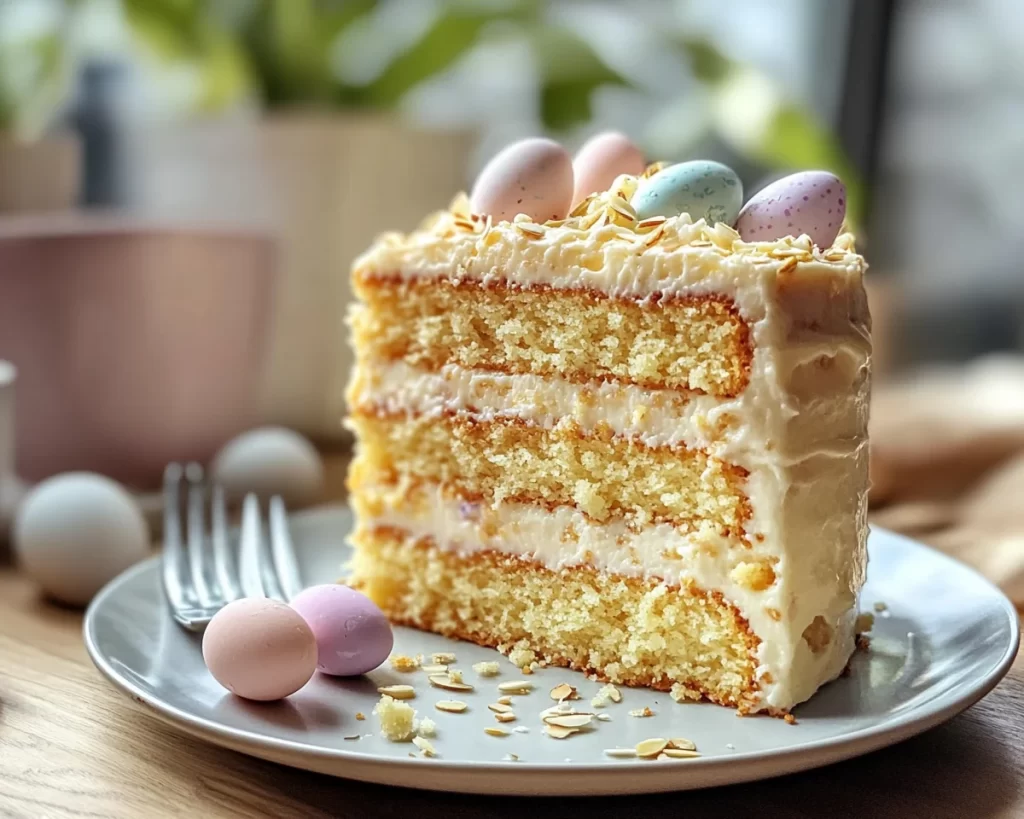
Easter Vanilla Almond Cake is more than just a dessert; it’s a celebration on a plate. Originating from traditional European baking, this cake combines the comforting flavors of vanilla and almond, often associated with festive occasions. The cake itself boasts a tender crumb, light texture, and an irresistible sweetness that evokes feelings of warmth and nostalgia. The top is sometimes garnished with a light dusting of powdered sugar or a delicate glaze, making it a visually appealing centerpiece for any spring gathering.
The appeal of this cake lies in its harmonious balance of flavors. The rich, creamy notes of vanilla mingle seamlessly with the nutty undertones of almond, creating a delightful experience for your palate. It pairs beautifully with coffee or tea, making it a versatile offering whether you are hosting a brunch or enjoying a quiet moment at home. Additionally, this cake is often decorated in a way that reflects the season, such as with edible flowers or sprinkles, making it not only delicious but visually stunning.
Why You’ll Love This
You will absolutely adore making and serving this Easter Vanilla Almond Cake for several reasons. First off, the taste is simply divine. The rich vanilla flavor, coupled with the nutty almond essence, gives the cake a unique flavor profile that is both comforting and sophisticated. This cake is versatile enough to be a delightful dessert after a hearty Easter meal or a clever treat to brighten up any spring gathering.
The ease of preparation is another reason why this cake is a winner. The straightforward ingredients and clear steps make this recipe accessible for everyone, including busy parents or beginner bakers. You won’t need any fancy equipment or advanced baking techniques. Even if you’ve never made a cake from scratch before, you will find that this recipe guides you through the process smoothly.
Cost-effectiveness is yet another feather in this cake’s cap. With common pantry ingredients that are generally affordable, you can create a stunning dessert without breaking the bank. Plus, the cake is quite adaptable; you can easily adjust it according to different dietary needs or preferences, ensuring that everyone at your gathering can enjoy this delicious treat.
Ingredients You’ll Need
- All-purpose flour: 2 cups
- Granulated sugar: 1 cup
- Unsalted butter: ½ cup (softened)
- Eggs: 3 large
- Vanilla extract: 2 teaspoons
- Almond extract: ½ teaspoon
- Baking powder: 2 teaspoons
- Salt: ½ teaspoon
- Whole milk: 1 cup
- Powdered sugar (for icing): 1 cup
- Milk (for icing): 2 tablespoons
Let’s break down these ingredients so you can better understand their roles.
All-purpose flour serves as the foundation for your cake, providing structure and stability. It is essential to measure it properly; consider using a kitchen scale for accuracy. If you’re gluten-sensitive, you can substitute with a gluten-free flour blend but keep in mind that the texture may vary.
Granulated sugar adds sweetness and helps with the cake’s rise, creating an airy texture. If you want a slightly healthier option, you can use coconut sugar or a sugar substitute like stevia, though it may slightly alter the flavor.
Unsalted butter contributes moisture and flavor. Ensure it’s softened to room temperature to cream well with the sugar. If you’re looking for a dairy-free option, you can substitute with margarine or a dairy-free butter alternative.
Eggs are crucial for binding the ingredients together; they also provide moisture and richness to the cake. If you want to make this cake vegan, you could use flaxseed meal or applesauce as an egg substitute, keeping in mind you may need to adjust the liquid ratios.
Vanilla extract is a key flavor component that enhances the cake’s natural sweetness. Using pure vanilla extract is always recommended for the best flavor. The almond extract provides a delightful nutty flavor that complements the vanilla beautifully; however, if you’re allergic to nuts, simply omit this ingredient.
Baking powder is a leavening agent that helps the cake rise and ensures a light texture. Make sure it is fresh for optimal results.
Salt is vital for balancing flavors and enhancing overall taste.
Whole milk adds moisture to the batter, creating a tender crumb. If you prefer a lower-fat option, you can use skim milk or even a plant-based milk like almond or soy, but this might impact the cake’s creaminess.
Finally, the powdered sugar will be used for icing; its fine texture dissolves beautifully, creating a smooth finish. You can flavor your icing with a touch of vanilla or almond extract, enhancing the overall flavor of the cake.
How to Make
To ensure your Easter Vanilla Almond Cake turns out perfectly, follow these step-by-step instructions:
- Preheat your oven to 350°F (175°C). This step is crucial for ensuring that your cake bakes evenly. While that’s happening, prepare your cake pans. Grease two 9-inch round cake pans with butter or cooking spray and line the bottoms with parchment paper for easy removal.
- Cream the butter and sugar. In a large mixing bowl, add the softened unsalted butter and granulated sugar. Using an electric mixer, beat them together on medium speed until the mixture is light and fluffy, about 3-5 minutes. This process incorporates air, resulting in a lighter cake.
- Add eggs one at a time. Crack your eggs into a separate bowl to avoid any shell mishaps, then add them one at a time to the butter-sugar mixture, mixing well after each addition. This helps to emulsify the ingredients, creating a smooth batter. Add both the vanilla extract and the almond extract during this step, blending until fully combined.
- Mix the dry ingredients. In another bowl, whisk together the all-purpose flour, baking powder, and salt. This helps ensure an even distribution of the dry ingredients throughout the cake batter.
- Combine the mixtures. Gradually add the dry ingredients to the wet mixture while alternating with the whole milk. Begin and end with the flour mixture, mixing just until incorporated. Over-mixing can make the cake dense, so be gentle!
- Pour the batter into the prepared pans. Divide the batter evenly between the two pans, smoothing the tops with a spatula. Give each pan a gentle tap on the counter to remove any air bubbles.
- Bake in the preheated oven for 25-30 minutes or until a toothpick inserted in the center comes out clean. Keep an eye on the cakes, as baking times can vary slightly depending on your oven.
- Cool the cakes. Once baked, remove the pans from the oven and let them cool in the pans for about 10 minutes. Then, carefully invert them onto a wire rack to cool completely. This step is vital for preventing sogginess.
- Prepare the icing. To make the icing, whisk together the powdered sugar and milk in a small bowl until it reaches your desired consistency. If you prefer a thicker glaze, use less milk. Feel free to add a pinch of salt for balance.
- Assemble the cake. Once the cakes are completely cooled, place one layer on a serving plate. Drizzle some icing over the first layer, allowing it to drip down the sides if desired. Place the second layer on top and repeat the process. You can also dust the top with additional powdered sugar or decorate with fresh fruits or edible flowers for an added touch.
Remember, the key to a delightful Easter Vanilla Almond Cake is attention to detail. Monitor your cake while it’s baking and don’t skip any steps in the preparation process. Each stage plays a crucial role in creating that perfect balance of flavors and textures.
Variations & Substitutions
Citrus Twist: If you’re looking to infuse a refreshing twist into your cake, consider adding citrus zest to the batter. Incorporate the zest of one lemon or orange into the mix for a burst of brightness. This variation complements the vanilla and almond flavors beautifully and will leave a lovely aromatic impression. Perfect for spring!
Chocolate Almond Cake: For all the chocolate lovers, why not turn this cake into a chocolate almond delight? Replace ½ cup of the all-purpose flour with unsweetened cocoa powder. This will give you a rich chocolate flavor while maintaining that almond essence. You can also add chocolate chips to the batter for an extra gooey treat.
Gluten-Free Version: You can easily make this cake gluten-free by substituting the all-purpose flour with a high-quality gluten-free flour blend. Ensure that your baking powder is also gluten-free. Note that the texture may differ slightly, but it will still be delicious. This is perfect for guests or family members with gluten sensitivities.
Berry Bliss: Incorporate seasonal berries like raspberries or strawberries into the batter for a fruity addition. Simply fold in about one cup of washed and chopped berries into the batter before pouring it into the baking pans. Not only will this add flavor, but it will also create a beautiful marbling effect.
Vegan Almond Cake: To make this recipe vegan, substitute the eggs with a flaxseed meal (1 tablespoon of flaxseed with 2.5 tablespoons of water per egg, let it sit until gel-like). Use coconut oil or vegan butter instead of unsalted butter, and choose plant-based milk. This cake will still be moist and flavorful but suitable for those avoiding animal products.
Common Mistakes to Avoid
One of the most common mistakes is overmixing the batter. This can lead to a dense cake that lacks the desired lightness. Remember, once you combine the wet and dry ingredients, mix just until incorporated for a fluffier result.
Another pitfall is not properly measuring the ingredients—especially flour. Spoon the flour into your measuring cup and level it off with a knife rather than scooping it directly from the bag. This will prevent using too much flour, which can also make the cake heavy.
Not preheating your oven is another issue. A properly preheated oven is crucial for even baking. You should also avoid opening the oven door frequently while the cake is baking, as this can result in fluctuating temperatures and may cause the cake to sink.
Lastly, make sure to allow the cake to cool completely before icing it. If you rush this step, the icing may melt and slide off, resulting in a less than appealing presentation.
Storage, Freezing & Reheating Tips
To store your Easter Vanilla Almond Cake, ensure it’s completely cooled, then wrap it in plastic wrap or aluminum foil to prevent it from drying out. Place it in an airtight container, and it can stay fresh in the fridge for up to a week.
If you want to enjoy it later, this cake freezes beautifully. Slice the cake into individual pieces and wrap each slice tightly in plastic wrap and then in foil before placing them in a freezer-safe bag. It can be stored in the freezer for up to 3 months. When you are ready to enjoy a slice, simply thaw it in the refrigerator overnight or let it sit at room temperature for an hour.
For reheating, you can pop a slice in the microwave for about 10-15 seconds, or use your oven. Preheat the oven to 350°F and place the slice on a baking sheet; heat for about 5-10 minutes until warmed through. This will bring back the lovely texture and flavor, just like when it was freshly baked.
Frequently Asked Questions
Can I substitute almond extract with something else? Yes, if you are allergic to nuts or don’t have almond extract, you can increase the vanilla extract to 2.5 teaspoons or use flavorings such as hazelnut or coconut extract to maintain a distinct flavor profile.
How can I make the cake more festive for Easter? To decorate the cake for Easter, consider using edible flowers, seasonal fruits, or colored sprinkles. A simple glaze can be tinted with food coloring for a festive touch. You could even shape the cake into a bunny or egg if you’re feeling creative!
Can I make this cake ahead of time? Absolutely! The cake can be made a day in advance. Just store it properly as mentioned earlier, and you can ice it the day you plan to serve it. Making it ahead can help save time, especially if you have a busy Easter gathering planned.
What should I do if my cake sinks in the middle? A sinking cake is often a sign of overmixing or an issue with the baking powder. Be sure that your baking powder is fresh and remember to mix the batter gently.
Can I use non-dairy milk for this recipe? Yes, you can use any non-dairy milk such as almond, soy, or oat milk. These alternatives work well in cakes and will help maintain moisture without altering the flavor significantly.
Conclusion:
Easter Vanilla Almond Cake is not just a recipe; it’s an experience that brings joy and flavor to any spring gathering. With its light and fluffy texture complemented by the rich notes of vanilla and almond, this cake is sure to be a crowd-pleaser. I encourage you to try making it, experiment with various flavors and decorations, and share it with your loved ones. You’ll not only create a delicious dessert but also wonderful memories that will last a lifetime. Happy baking!