Prep time: 20 minutes
Cook time: 15 minutes
Total time: 35 minutes
Servings: 4
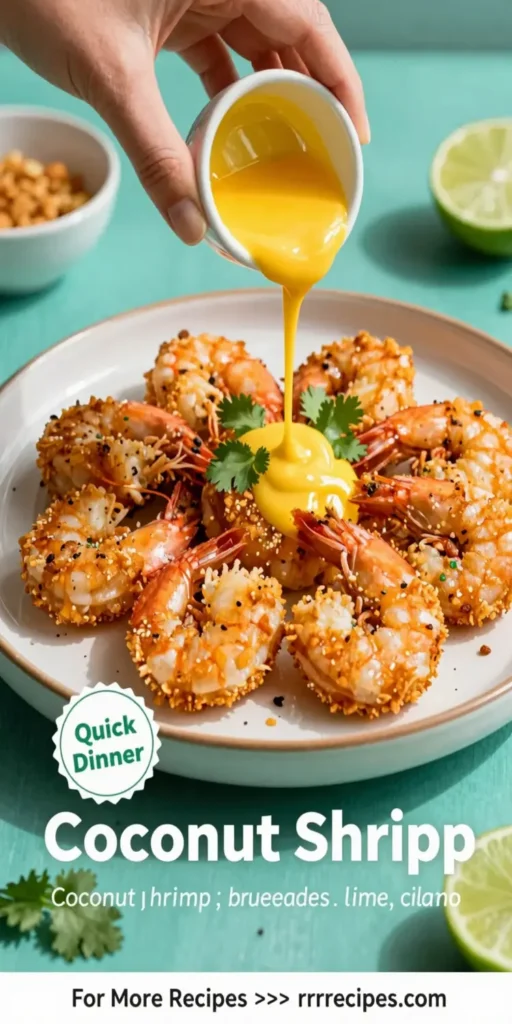
Coconut shrimp is a tropical delight that combines succulent shrimp with a crispy coconut coating, making it the perfect appetizer or main dish to impress guests or indulge in a quiet night at home. The sweet, nutty flavor of coconut paired with the tender shrimp makes for a sensational combination. Whether you are hosting a dinner party or have a craving for something exotic and delicious, this recipe will not disappoint.
What Is Coconut Shrimp?
Coconut shrimp is a dish that features battered shrimp rolled in shredded coconut, which is then deeply fried or baked until golden. This crispy coating provides textural contrast to the juicy shrimp inside. The shrimp can be served with a variety of dipping sauces, making them versatile for many occasions. They are a popular dish in coastal regions where seafood is the star of the cuisine. Traditionally, it is often served with a sweet chili sauce, enhancing its tropical appeal.
Why You’ll Love This
You’ll love this coconut shrimp recipe because it’s not only easy to prepare but also offers an explosion of flavors and textures. The sweetness of the coconut perfectly complements the savory shrimp, and the crispy exterior creates a delightful crunch with every bite. This dish is also visually appealing, making it ideal for entertaining. Additionally, it’s a crowd-pleaser that can cater to various dietary preferences, from the health-conscious diner to those just wanting a delicious treat.
Ingredients You’ll Need
- Shrimp (1 pound): Use large shrimp, peeled and deveined for the best texture.
- Coconut flakes (1 cup): Sweetened or unsweetened coconut flakes work, depending on your preference.
- All-purpose flour (1/2 cup): This helps the coconut adhere to the shrimp.
- Eggs (2 large): Beaten; they create a binding layer for the coconut.
- Salt (1/2 teaspoon): Enhances the flavor of the shrimp.
- Black pepper (1/4 teaspoon): Adds a bit of spice to the coating.
- Vegetable oil (for frying): Use enough oil to submerge the shrimp or for shallow frying.
How to Make
- Prepare the shrimp: Start by cleaning and deveining the shrimp. Rinse them under cold water and pat dry with paper towels. Removing excess moisture is vital for achieving a crispy texture.
- Set up your breading station: In one bowl, place the all-purpose flour. In another bowl, beat the eggs until smooth. In a third bowl, add the coconut flakes along with salt and pepper, mixing thoroughly.
- Coat the shrimp: Dredge each shrimp in flour, ensuring it’s fully covered, then dip in the beaten eggs, allowing any excess to drip off. Finally, roll the shrimp in the coconut flakes, pressing slightly to ensure the coconut adheres well.
- Fry the shrimp: In a large skillet or frying pan, heat vegetable oil over medium-high heat. Once hot, carefully place the shrimp in the oil. Fry for about 2-3 minutes on each side, or until they are golden brown and the coconut is crisp.
- Drain and serve: Remove the shrimp from the pan and place them on a paper towel-lined plate to absorb any excess oil. Serve immediately with your favorite dipping sauce.
Variations & Substitutions
Baked Coconut Shrimp: If you prefer a healthier option, you can bake the shrimp instead of frying them. Preheat your oven to 400°F (200°C). Place the breaded shrimp on a baking sheet lined with parchment paper and lightly spray with cooking oil. Bake for about 15-20 minutes, flipping halfway through, until they are golden and crispy.
Pineapple Coconut Shrimp: Incorporating pineapple into your dish adds a sweet, tangy punch! Grill pineapple slices alongside the shrimp and serve them together for a delightful tropical flair that compliments the coconut shrimp perfectly.
Spicy Coconut Shrimp: Add a kick by mixing cayenne pepper or paprika into the flour before dredging the shrimp. Alternatively, whisk in some hot sauce into the beaten eggs for a spicy coating that pairs beautifully with the sweetness of the coconut.
Common Mistakes to Avoid
One common issue is using wet shrimp, which can lead to a soggy coating. Be sure to thoroughly pat dry the shrimp before breading to achieve that desired crispiness. Secondly, ensure the oil is hot enough before adding the shrimp; otherwise, they can absorb too much oil, becoming greasy. Finally, avoid overcrowding the pan while frying, as it can reduce the oil temperature significantly, leading to uneven cooking.
Storage, Freezing & Reheating Tips
To store leftover coconut shrimp, place them in an airtight container in the refrigerator for up to 2 days. However, keep in mind that reheating may make them a bit less crispy. For longer storage, you can freeze the uncoated shrimp before cooking. Place them in a single layer on a baking sheet to freeze individually, then transfer to a resealable bag for up to 3 months. When ready to cook, there’s no need to thaw; simply add extra time to the cooking process.
When reheating cooked shrimp, the oven or air fryer is the best method to crisp them up again. Preheat your oven to 375°F (190°C) and bake for about 5-7 minutes or until heated through.
Frequently Asked Questions
Can I use frozen shrimp for this recipe?
Yes, you can use frozen shrimp! Just make sure to thaw them completely and pat them dry before starting the recipe. This ensures that they will adhere to the coating properly and help you achieve that crispy texture.
What dipping sauces pair well with coconut shrimp?
Coconut shrimp pairs beautifully with several dipping sauces. Sweet chili sauce is a classic choice, offering a sweet and spicy kick. Additionally, pineapple salsa is a refreshing option that complements the tropical flavors. For a creamy option, consider a coconut cream dip or cilantro-lime sauce.
Can I customize the coconut coating?
Absolutely! You can add flavor to the coconut coating by mixing in spices such as garlic powder, smoked paprika, or even fresh herbs. This is a great way to enhance the flavor profile of your coconut shrimp.
Is coconut shrimp gluten-free?
You can make gluten-free coconut shrimp by substituting all-purpose flour with a gluten-free blend, almond flour, or coconut flour. Ensure your coconut flakes are gluten-free as well to accommodate dietary restrictions.
Conclusion:
Coconut shrimp is a delightful dish that transports you straight to a tropical paradise. With the simple steps provided, you can create a mouthwatering treat in no time. Remember, the key to success lies in the preparation and the right frying technique. Enjoy crafting this dish for special occasions or even as a cozy snack at home. Every bite will have you dreaming of sunny shores and warm breezes, making this recipe a must-try for anyone who loves seafood.