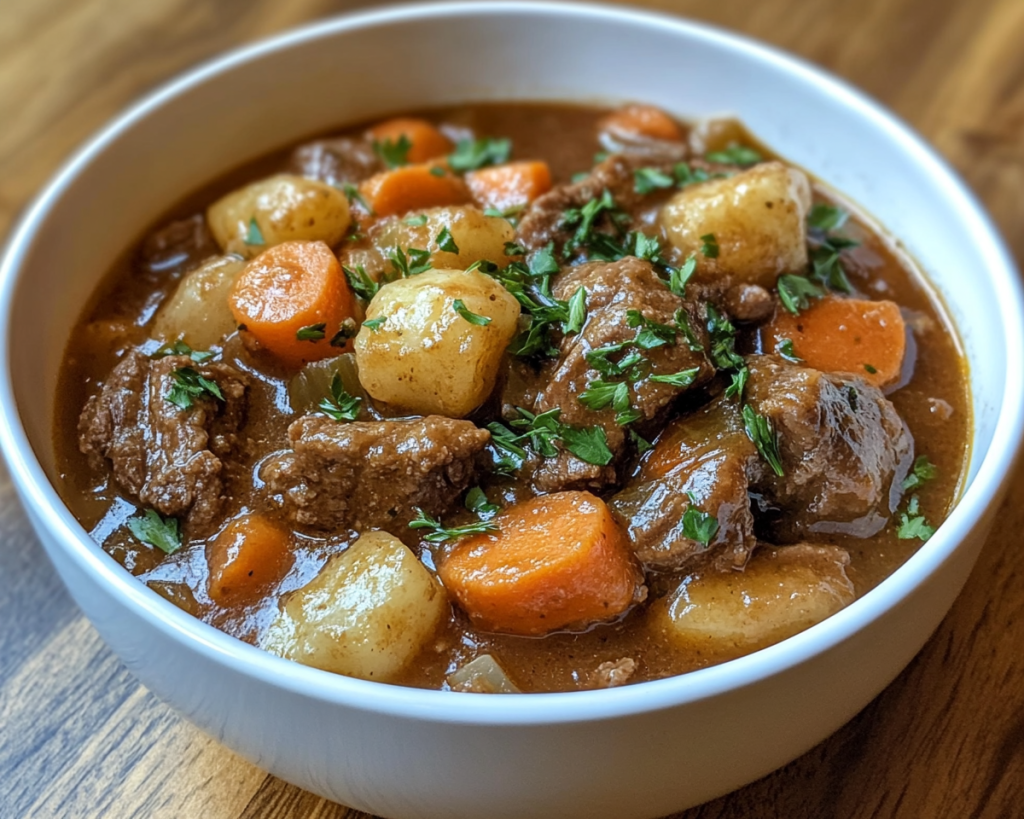
When the winter chill seeps into your bones and the skies grow gray, there’s nothing quite like a steaming bowl of classic beef stew to wrap you in warmth and comfort. This beloved dish isn’t merely a meal; it’s a celebration of hearty ingredients and slow cooking that brings families together. The rich aroma that fills your kitchen as it simmers away is enough to draw everyone in, inviting them to the table.
In this article, you’ll discover how to make an unforgettable classic beef stew that’s not just easy to prepare but also flexible enough for you to add your personal touch. We’ll dive deep into the ingredients, cooking techniques, variations, and even tackle some common mistakes you might encounter. So grab your pot, and let’s create a beverage of warmth that you’ll want to whip up again and again!
What Is Classic Beef Stew?
Classic beef stew is a quintessential comfort food that traces its roots back to various culinary traditions, notably those in Europe, where stewing meat was a practical way to tenderize tough cuts. This dish typically features **chunks of beef**, **root vegetables**, and a savory broth that melds together through long, slow cooking.
The appeal of beef stew lies in its robust flavors and heartiness. The beef becomes meltingly tender while soaking up the essence of the rich broth, resulting in a bowlful of comforting goodness. The vegetables, usually carrots, potatoes, and onions, release their sweetness into the stew, balancing the savory and earthy notes from the meat and herbs. Depending on the recipe, you may also find peas, celery, or mushrooms adding to the mix, creating a delightful tapestry of textures in each bite.
Moreover, the stewing process transforms simple ingredients into something extraordinary. The combination of **browning the meat** to create depth of flavor and slowly simmering everything together allows the ingredients to mingle and develop a complexity that cannot be rushed. Each spoonful promises nostalgia as you savor the warmth, reminiscent of cozy family dinners during the cold winters.
Why You’ll Love This Classic Beef Stew
You might be asking, “What makes this classic beef stew worth my time?” Let me share some of the reasons why this recipe is special:
– **Unmatched Comfort**: There’s a special place in many hearts for a beef stew. It serves as a warm embrace from the inside out, capturing the essence of homecooked goodness.
– **Versatility**: Classic beef stew recipes can easily be tweaked to suit dietary preferences or what you have on hand. Don’t have carrots? Swap them out for parsnips! Prefer a gluten-free version? You can use cornstarch instead of flour to thicken the stew.
– **Health Benefits**: Rich in protein, vegetables, and nutrients, beef stew is filling and nourishing. When using lean cuts of beef and plenty of vegetables, it becomes a wholesome meal option that warms both body and soul.
– **Easy to Make**: While the cooking time may be lengthy, the actual hands-on time is surprisingly minimal. You peel, chop, and sauté, then let the stew work its magic while you enjoy other activities.
– **Make-Ahead Friendly**: Beef stew tastes even better the next day! Making it in advance can save time on busy weeknights while allowing the flavors to deepen and evolve.
By choosing this classic recipe, you’ll discover how to make a stew that not only satisfies the hungry but also provides a wonderful opportunity for social interaction around the dinner table.
Ingredients You’ll Need
Here’s a rundown of the essential ingredients that come together to create a savory classic beef stew:
– **2 pounds of beef chuck**: This cut is ideal due to its rich marbling, which breaks down during slow cooking to tender, flavorful morsels. You can substitute it with round steak or brisket if needed.
– **3 tablespoons of flour**: Lightly coating the beef in flour before browning not only helps in thickening the stew but also adds texture. For a gluten-free option, consider using cornstarch.
– **2 tablespoons of vegetable oil**: Used for browning the beef, vegetable oil has a high smoke point. You could also use olive oil or a combination of oils.
– **1 large onion**: Sweet onion adds a wonderful base flavor to the stew. Feel free to substitute with shallots or red onion for a different flavor profile.
– **3 cloves of garlic**: Fresh garlic adds a pungent aroma and depth. If you don’t have fresh on hand, 1 teaspoon of garlic powder will do.
– **4 cups of beef broth**: A hearty beef broth is key to developing the stew’s flavor. You can also use homemade broth or lower-sodium versions if preferred.
– **2 cups of carrots**: Chopped into rounds or chunks, carrots contribute sweetness that balances the savory notes. You may also opt for parsnips for a twist.
– **2 cups of potatoes**: Yukon Gold potatoes are perfect since they hold their shape well. However, feel free to use russet potatoes if that’s what you have.
– **1 cup of frozen peas**: Adding these towards the end of cooking helps them retain a burst of color and sweetness.
– **2-3 sprigs of fresh thyme**: Fresh herbs bring vibrancy to the dish. Dried thyme is an alternative, but use about a teaspoon instead.
– **1-2 bay leaves**: These add an aromatic touch. Don’t forget to remove them before serving!
– **Salt and pepper**: Essential for seasoning, these staples are the finishing touch to your stew.
Prepping all these ingredients ahead of time can make the cooking process smoother. You can chop vegetables the night before, or even make the entire stew a day ahead for the flavors to develop.
How to Make Classic Beef Stew
Now that you have all your ingredients ready, let’s walk through the steps to create a heartwarming classic beef stew. Gather your tools: a large pot or Dutch oven, a sharp knife, a cutting board, and a wooden spoon for stirring.
1. **Prepare the Beef**: Start by cutting your beef chuck into 1.5-inch cubes. It’s essential to make even cuts for uniform cooking. Pat the beef dry with paper towels; this helps achieve a good sear. In a bowl, toss the beef with flour, salt, and pepper until evenly coated. This coating will help thicken the stew as it cooks.
2. **Brown the Meat**: In a large pot over medium-high heat, add the vegetable oil. When the oil is shimmering but not smoking, add the beef in batches to avoid overcrowding. Brown the beef on all sides—this should take around 5 to 7 minutes. Transfer the browned beef to a plate and set it aside. Just a tip: don’t rush this step; achieving a deep browning adds incredible flavor to the stew.
3. **Sauté the Aromatics**: In the same pot, add your sliced onion and a pinch of salt, scraping the bottom of the pot to release flavorful bits stuck to the bottom. Sauté for about 5 minutes until the onion begins to soften. Then, add minced garlic and cook for another minute until fragrant.
4. **Add the Liquid**: Pour in the beef broth, stirring to combine with the onions. It’s important to fully deglaze the pot in this step to ensure no tasty bits are left behind.
5. **Introduce the Beef**: Return the browned beef back into the pot, along with any accumulated juices. Bring everything to a gentle simmer before adding the carrots, potatoes, bay leaves, and thyme.
6. **Simmer Low and Slow**: Once simmering, reduce the heat to low, cover the pot, and let the stew cook for about 2 to 2.5 hours. Stir occasionally, and check every 30 minutes to make sure it’s not boiling too vigorously. You want a gentle simmer that will soften the meat and vegetables without overcooking them.
7. **Final Touches**: Around 30 minutes before serving, add the frozen peas, stirring them into the pot. They’ll add a final touch of color and texture.
8. **Taste and Adjust**: After about 2.5 hours, check the tenderness of the beef with a fork— it should shred easily. Taste the stew; adjust seasoning with salt and pepper if needed. If the stew is too thin, you can mix a tablespoon of cornstarch with cold water and stir it into the stew, cooking for an additional 5-10 minutes.
9. **Serving**: Remove bay leaves and thyme stems if used. Ladle the stew into bowls, garnishing with fresh parsley if desired. Serve hot with warm crusty bread or over a bed of rice or mashed potatoes to soak up that delicious broth.
5 Variations & Substitutions
Every cook has their own take on classic beef stew, and you can easily customize this recipe according to your taste or what’s available in your pantry. Here are five variations and substitutions to consider:
1. Red Wine Beef Stew
By incorporating a cup of red wine into the broth, you’ll add depth and richness to the stew. The acidity from the wine cuts through the richness of the beef, enhancing the overall flavor. Use a wine that you would enjoy drinking, as its qualities will shine through. Allow the wine to simmer for a few minutes before adding the broth.
2. Mushroom Beef Stew
Adding sliced mushrooms gives the stew an earthy flavor that complements the beef beautifully. Simply sauté the mushrooms alongside the onions before proceeding with the recipe. Varieties such as cremini or shiitake work well, contributing a unique taste and texture to the dish.
3. Mediterranean Twist
Incorporating ingredients like olives, sun-dried tomatoes, and Italian herbs such as oregano and basil transforms the stew into a Mediterranean delight. Replace the bay leaves and thyme with these herbs for a lighter, aromatic flavor.
4. Slow Cooker Version
If you’re looking to simplify your cooking process, consider using a slow cooker. After browning the meat and sautéing the vegetables, combine everything in your slow cooker, cooking on low for 6-8 hours or high for 3-4 hours. This method still yields tender beef, and you can set it and forget it!
5. Vegetarian or Vegan Stew
For a meat-free option, you can swap the beef for hearty vegetables like **jackfruit**, lentils, and beans for protein. Use vegetable broth instead, and adjust the seasonings accordingly. The same cooking method applies, but you may want to reduce the cooking time for lentils.
Common Mistakes to Avoid
Preparing beef stew is rewarding, but there are some common pitfalls to watch out for:
– **Skipping the Browning Step**: Don’t skip browning the beef! This step is crucial for developing flavor. If you add the beef directly to the pot without browning, your stew may taste flat.
– **Overcrowding the Pot**: When browning the meat, make sure not to overcrowd it. Crowding causes the beef to steam rather than brown, resulting in less flavor. It’s better to do it in batches.
– **Cooking at Too High a Temperature**: Allow your stew to simmer gently. A vigorous boil can result in dry and tough meat. Low and slow is the name of this game.
– **Not Adjusting Seasoning**: Always taste before serving! Cooking intensifies flavors; make sure to taste and adjust with salt, pepper, or other seasonings before serving.
– **Forgetting to Remove Bay Leaves**: Remember to take out bay leaves before serving! While edible, they can be unpleasant to chew and ruin the lovely experience of your stew.
Storage, Freezing & Reheating Tips
One of the great aspects of classic beef stew is that it stores excellently, allowing for delicious leftovers. Here’s how to handle the storage:
– **Refrigerating**: Store any leftovers in an airtight container in the fridge for up to 3-4 days. Be sure to allow the stew to cool completely before sealing to maintain freshness.
– **Freezing**: Beef stew can be frozen for up to 3 months. Portion out servings into freezer-safe containers and label them. When ready to enjoy, thaw in the refrigerator overnight before reheating.
– **Reheating**: You can reheat the stew on the stovetop over low heat, stirring occasionally until heated through. Alternatively, you can microwave portions in a safe dish, covering it loosely to avoid splatter.
Being prudent about storage and reheating will ensure that each bowl of your beef stew tastes just as incredible as it did the day it was cooked.
Frequently Asked Questions
**Can I use another cut of beef besides chuck?**
Absolutely! While chuck is favored for its marbling, you can use brisket, round steak, or even flank steak. Keep in mind that tougher cuts will require longer cooking times to become tender, while lean cuts may become dry if overcooked.
**Is beef stew gluten-free?**
Traditional beef stew is not gluten-free due to the flour used in coating the beef. However, you can easily make it gluten-free by using cornstarch or gluten-free flour for thickening. Just remember to check your broth as well, as some store-bought varieties can contain gluten.
**Can I make beef stew in advance?**
Definitely! In fact, beef stew often tastes better the next day as the flavors deepen and meld together. You can make it 2-3 days in advance and store it in the refrigerator. Be sure to cool it completely before refrigerating.
**What should I serve with beef stew?**
To complement beef stew, consider serving it with crusty bread for dipping. A side salad or some roasted vegetables would also work wonderfully. Alternatively, you can serve it over rice or mashed potatoes for a heartier meal.
**How do I make my beef stew thicker?**
If you prefer a thicker stew, you can mix a tablespoon of cornstarch with cold water to make a slurry, then stir it into the stew during the last 10-15 minutes of cooking. Let it simmer until thickened. Alternatively, you can also blend a portion of the stew and then mix it back in for added thickness.
In conclusion, this classic beef stew recipe not only warms the soul but is also a canvas you can paint with your flavors. Its rich taste, hearty aroma, and tender meat make it an unforgettable comfort food that will undoubtedly become a staple in your winter meal rotation. So don your apron, roll up your sleeves, and create a dish that captures the essence of home. Let the satisfying scents wrap around you and fill your kitchen with love. Enjoy, and consider sharing your experience with friends and family—because homemade food is best shared!
Happy cooking!