Prep time: 20 minutes
Cook time: 40 minutes
Total time: 1 hour
Servings: 4
Spring is a delightful season, bringing with it an abundance of fresh produce that can transform your meals. With vibrant greens, sweet fruits, and fragrant herbs starting to bloom, it’s the perfect time to uplift your culinary repertoire. This collection of recipes will not only brighten your meals but also captivate your senses.
What Is Best Spring Recipes to Brighten Your Meals This Season?
Spring recipes showcase the season’s best ingredients, emphasizing freshness and flavor. Think of colorful salads bursting with seasonal vegetables, light and airy dishes, and vibrant fruit desserts that reflect the cheerful spirit of the season. These recipes typically use *strong* ingredients like asparagus, peas, mint, and strawberries, creating meals that are both delicious and visually appealing.
Why You’ll Love This
You’ll appreciate these spring recipes for several reasons. First, they highlight *strong* seasonal ingredients, ensuring you enjoy peak flavors. Second, they cater to various dietary preferences, making them perfect for family gatherings or informal celebrations. Lastly, these dishes are not just about taste; their lively colors and fresh aromas will elevate your dining experience, making meals feel like a celebration.
Ingredients You’ll Need
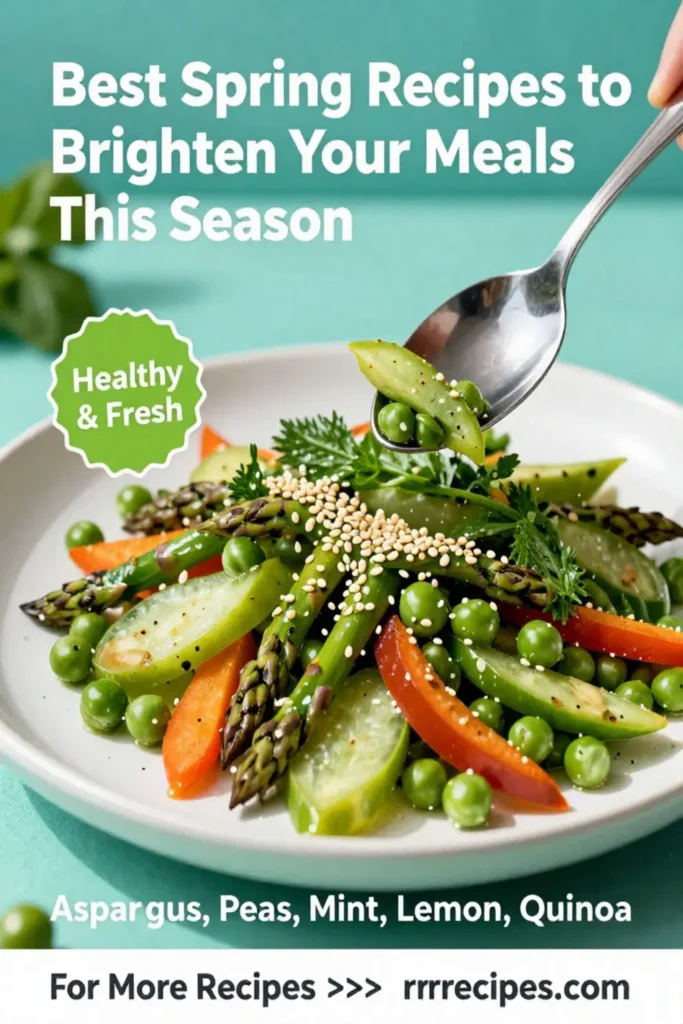
- Asparagus: 1 pound, trimmed. Asparagus adds texture and a vibrant green color.
- Peas: 1 cup, fresh or frozen. Peas provide sweetness and a pop of color.
- Mint: 1/4 cup, chopped. Fresh mint brings a refreshing note to dishes.
- Strawberries: 2 cups, hulled and sliced. They add a natural sweetness to salads and desserts.
- Quinoa: 1 cup, rinsed. A nutritious base that pairs well with various toppings.
- Lemon juice: 2 tablespoons. Adds brightness and enhances flavors.
- Olive oil: 3 tablespoons. A healthy fat that complements fresh ingredients.
- Salt and pepper: To taste. Essential for enhancing all the flavors.
How to Make
- Start by cooking the quinoa. In a medium saucepan, combine the rinsed quinoa with two cups of water. Bring it to a boil over medium heat, then reduce the heat to low, cover the pot, and let it simmer for about 15 minutes until the water has been absorbed. Fluff it with a fork and let it cool.
- While the quinoa cooks, prepare the asparagus. Bring a separate pot of salted water to a boil. Add the asparagus and cook for 3-4 minutes, or until it’s tender yet still bright green. Drain and quickly transfer it to an ice bath to stop the cooking process.
- In a large mixing bowl, combine the cooled quinoa, drained asparagus, and peas. If you’re using fresh peas, add them directly; if they’re frozen, make sure they’re thawed.
- Next, prepare a dressing by whisking together the olive oil, lemon juice, salt, and pepper in a small bowl. Pour this mixture over the quinoa salad and toss gently until everything is evenly coated.
- Finally, fold in the sliced strawberries and chopped mint just before serving to maintain their freshness. Taste and adjust the seasoning as needed.
Variations & Substitutions
Grilled Veggie Addition: Enhance your salad by adding grilled vegetables. Zucchini and bell peppers work beautifully and add a smoky flavor. Simply slice them, toss in olive oil, grill for a few minutes until marks appear, and then mix them into the salad.
Vegan Protein Boost: You can add protein to this dish without dairy by including chickpeas. One can, drained, rinsed, and mixed in, will not only increase the protein content but also add creaminess.
Fruity Twist: Instead of strawberries, try using diced mango or sliced peaches. They’ll give a tropical flair to the dish and a burst of sweetness.
Nutty Crunch: Introduce textures by tossing in some toasted nuts such as almonds or walnuts. They provide a satisfying crunch and pair nicely with the salad’s flavors.
Common Mistakes to Avoid
It’s easy to make a few common mistakes when preparing spring recipes. First, don’t overcook your veggies. Overcooked asparagus, for example, can become mushy and lose its vibrant color, so aim for tenderness while keeping that bright green hue.
Another mistake is not letting the quinoa cool before adding it to the salad. Warm quinoa can wilt fresh vegetables, resulting in a less appealing dish. Make sure to cool it completely for the best texture.
Finally, don’t skip seasoning. A pinch of salt and a dash of pepper can elevate the taste significantly, but leaving them out might result in a bland meal. Always taste and adjust accordingly.
Storage, Freezing & Reheating Tips
For optimal freshness, store any leftover quinoa salad in an airtight container in the refrigerator. It can last up to three days. However, the presentation might be somewhat altered as the ingredients may soften over time.
If you’re looking to make this dish ahead, consider keeping the dressing separate until serving. This ensures that the fresh flavors are preserved. If you want to freeze this salad, it’s best to avoid freezing fresh berries or mint, as they lose their texture and quality. However, you can freeze plain quinoa and veggies, and mix them with fresh additions after thawing.
For reheating, you can gently microwave the salad, but do so in short bursts to prevent overheating. Alternatively, you can serve it cold or at room temperature, which maintains the intended fresh taste.
Frequently Asked Questions
What type of quinoa is best for spring recipes?
The best type of quinoa for spring recipes is typically white quinoa due to its light texture and neutral flavor. However, red and black quinoa can add a beautiful contrast in color and flavor to your dishes. It ultimately depends on your preference and the visual appeal you want to achieve.
Can I make the salad ahead of time?
Absolutely! This salad can be made a few hours in advance. Just keep in mind that the longer it sits, the more the flavors meld, which can be a positive thing. However, storing it without the dressing until ready to serve can keep the components fresher.
What other vegetables can I include?
You can certainly include a variety of spring vegetables such as radishes, snap peas, or even baby spinach. They will blend well and bring additional crunch and nutrients to your salad. Feel free to experiment with seasonal produce for a twist on this base.
How do I know if asparagus is fresh?
When choosing asparagus, look for bright green stalks with firm tips. Avoid those that appear limp or have a woody texture. Fresh asparagus will snap when bent, which is a good indicator of its freshness.
Is the recipe gluten-free?
Yes, this recipe is naturally gluten-free, as quinoa is a gluten-free grain. However, always check to ensure that any packaged ingredients you use are certified gluten-free, especially if you have dietary restrictions.
Conclusion: This collection of spring recipes is designed to bring joy to your meals, combining vibrant flavors and seasonal ingredients that reflect the beauty of the season. Each dish is crafted to celebrate freshness and creativity in your cooking. Enjoy these recipes as you embrace the delightful offerings spring has to offer, and watch your meals come to life with color and taste.