Prep time: 15 minutes
Cook time: 45 minutes
Total time: 1 hour
Servings: 6
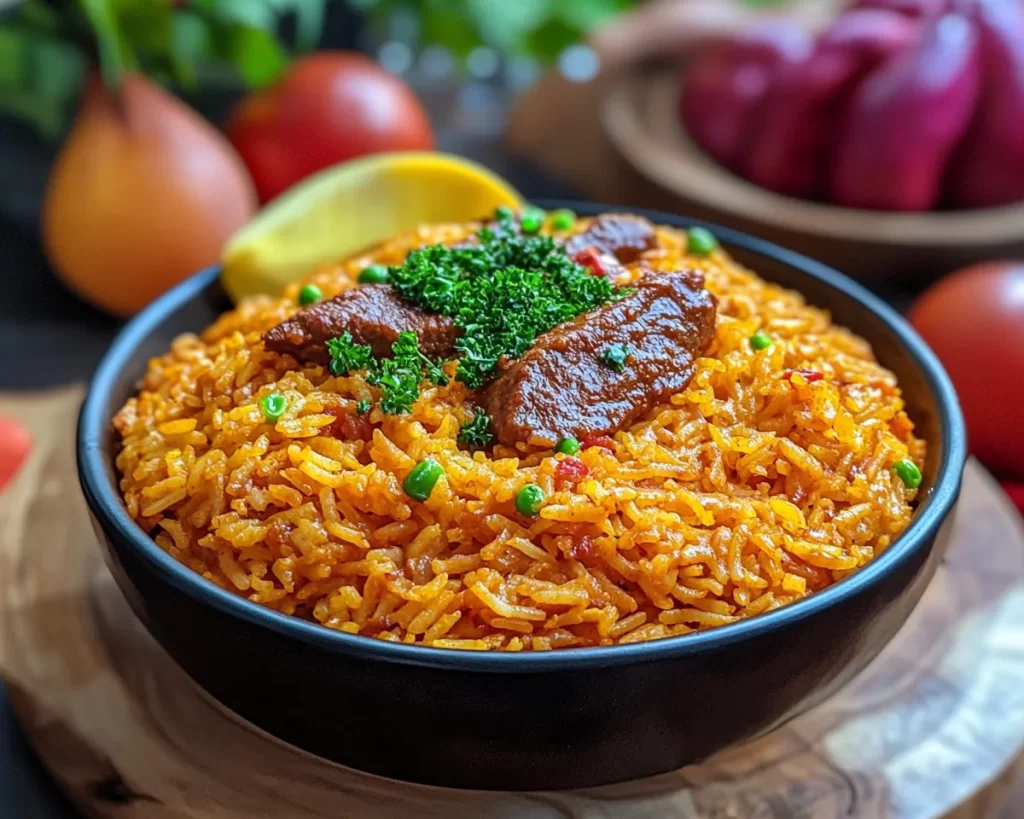
Authentic West African Jollof Rice is a beloved dish that embodies the vibrant flavors of West African cuisine. It’s a party favorite, often served at celebrations and gatherings, but it’s also an ideal meal for busy weeknights. The combination of tomatoes, peppers, and spices creates a beautiful rice dish that saturates your senses with its fragrant aroma and rich taste.
This recipe will walk you through making the perfect Jollof Rice. The beautifully cooked grains are infused with flavor, garnished with vegetables, and paired well with proteins like chicken, fish, or beans.
What Is Authentic West African Jollof Rice?
Jollof Rice is a one-pot dish that consists of rice cooked in a flavorful tomato sauce. The dish varies across West Africa, with each country putting its unique twist on the recipe—Nigerians, Ghanaians, and Senegalese all have their variations.
The essence of Jollof Rice lies in its rice texture, which should be fluffy yet coated with a rich sauce. It’s important to note that proper cooking is essential to prevent the rice from becoming mushy. Traditionally, the rice is cooked by steaming it in the sauce, allowing it to absorb all the flavors.
Why You’ll Love This
You will love making Jollof Rice not just for its delicious taste but also for its versatility. This dish is perfect for feeding a crowd, making it excellent for family gatherings, birthday parties, or any festive occasion. The various ingredients create a harmony of flavors that will impress both family and friends.
Furthermore, Jollof Rice seamlessly fits into various diets—vegan, vegetarian, or even as a hearty accompaniment to meat dishes. The best part is how easy it is to modify the spice level according to your palate; whether you prefer mild or spicy, this dish can cater to all preferences.
Ingredients You’ll Need
- Long Grain Parboiled Rice: 3 cups, rinsed and drained. This type is the best for Jollof as it absorbs the sauce well without getting mushy.
- Tomatoes: 6 medium ripe tomatoes. Fresh tomatoes give the dish a vibrant color and flavor.
- Tomato Paste: 3 tablespoons. Enhances the richness of the sauce.
- Red Bell Peppers: 2 large, blended. They add sweetness and depth to the flavor profile.
- Onion: 1 large, chopped. Provides a foundational flavor.
- Garlic: 4 cloves, minced. Infuses the dish with a warm, aromatic taste.
- Ginger: 1 inch, minced. Adds a fresh and spicy aroma.
- Chicken Stock: 4 cups. Using stock enhances the dish’s overall flavor.
- Bay Leaves: 2 leaves. Add subtle floral notes.
- Thyme: 1 teaspoon (dried) or 1 tablespoon (fresh). A must-have herb that complements the dish wonderfully.
- Scotch Bonnet Pepper: 1 (or to taste). For those who desire extra heat.
- Vegetable Oil: 1/2 cup. Necessary for sautéing ingredients and adds richness.
- Salt: To taste. Essential for enhancing flavor.
- Black Pepper: To taste. For additional seasoning.
How to Make
- Prepare the Tomato Base: Start by blending the fresh tomatoes, red bell peppers, and one chopped onion in a blender until smooth. This mixture forms the heart of your sauce. Set aside.
- Sauté Aromatics: In a large pot, heat the vegetable oil over medium heat. Add the remaining chopped onion and garlic; sauté until fragrant and translucent. This should take about 5 minutes. Don’t rush this step—it builds flavor!
- Add the Tomato Mixture: Pour the blended tomato mixture into the pot. Stir in the tomato paste, ensuring everything is well combined. Let it simmer for about 10-15 minutes, stirring occasionally. The mixture should reduce slightly, becoming thicker and more concentrated.
- Add Spices and Rice: Stir in the ginger, bay leaves, thyme, salt, and black pepper. Mix well before adding the rinsed rice, ensuring each grain gets coated with the sauce.
- Pour in the Stock: Gradually add the chicken stock and bring to a boil. Once boiling, reduce the heat to low, cover the pot tightly, and allow it to simmer. Cooking for 30 minutes will allow the rice to absorb the flavors. Avoid lifting the lid during this time!
- Finish and Serve: Monitor the rice; when it’s tender and the liquid has been absorbed, remove the pot from heat. Let it rest, covered, for about 10 minutes. This helps the flavors meld together. Fluff with a fork and serve!
Variations & Substitutions
Vegetarian Jollof Rice: For a vegetarian twist, you can replace chicken stock with vegetable stock. Also, add a variety of vegetables such as carrots, peas, or green beans to give it an extra nutritional boost. The flavors will remain rich and satisfying without the meat.
Seafood Jollof Rice: If you’re a seafood lover, consider incorporating shrimp or fish into your Jollof Rice. Sauté the seafood after you’ve added the rice and stock. This method allows the protein to absorb the flavor without overcooking.
Spicy Jollof Rice: For those who crave heat, increase the amount of Scotch Bonnet pepper or add cayenne pepper. You can also add chopped jalapeños for a different type of spice. Remember to adjust seasoning accordingly, as additional heat may require more salt.
Low-Carb Jollof Rice: For a keto-friendly adaptation, consider substituting rice with cauliflower rice. The cooking process remains the same—just be sure to shorten the simmering time since cauliflower cooks much faster than traditional rice.
Common Mistakes to Avoid
Overcooking the Rice: One of the most common mistakes is overcooking the rice, which can lead to a mushy texture. To avoid this, keep the double ratio of stock to rice in check, and follow timing closely. Once the rice absorbs the liquid, remove it from heat promptly.
Not Allowing the Flavors to Develop: Another pitfall is rushing the sautéing process of onions and garlic. When not cooked long enough, it can leave a raw taste that dulls your dish. Ensure these ingredients are cooked thoroughly to bring out their full flavor.
Skipping the Resting Time: Never skip the resting time after cooking! Allowing the rice to sit for about 10 minutes off heat helps the grains fluff up and lets the flavors meld beautifully. It makes a significant difference in taste.
Storage, Freezing & Reheating Tips
Store any leftover Jollof Rice in an airtight container in the refrigerator for up to 4 days. To freeze, pack it well in freezer-safe bags or containers; Jollof Rice can last for up to 3 months.
When reheating, make sure it is heated to an internal temperature of at least 165°F (74°C) to ensure food safety. For quick reheating, use the microwave, adding a splash of water to prevent drying out. Alternatively, you can reheat on the stove over low heat, stirring occasionally to ensure even warming.
Frequently Asked Questions
Can I make Jollof Rice ahead of time?
Absolutely! Jollof Rice is a great make-ahead meal. After preparation, let it cool, and store it in the refrigerator. It’s also delicious when reheated, as the flavors deepen over time. Just be sure to reheat thoroughly.
What spices can I use in my Jollof Rice?
The key spices are thyme, bay leaves, and pepper, but feel free to experiment with cumin, coriander, or even smoked paprika for extra depth. Adjust according to your taste preferences; the beauty of cooking lies in creativity!
Is Jollof Rice healthy?
Jollof Rice can be a hearty, nutritious meal, especially when made with fresh ingredients. Including more veggies and lean proteins can further boost its nutrient profile, making it a satisfying and wholesome dish.
Can I use brown rice instead?
Yes, you can use brown rice, though the cooking time will significantly increase. Brown rice typically needs about 45-50 minutes to cook due to its outer bran layer. Be sure to adjust liquid and cooking times accordingly.
What can I serve with Jollof Rice?
Jollof Rice pairs wonderfully with proteins like grilled chicken, fish, or beans. You can also serve a side salad, fried plantains, or coleslaw for a refreshing contrast to the flavorful rice.
Conclusion:
Authentic West African Jollof Rice is more than just a dish; it’s a culinary tradition filled with flavor, history, and joy. As you explore this recipe, you will find that it’s not just about cooking—it’s about creating unforgettable memories around the table. Enjoy the vibrant tastes and aromas as you serve this dish to family and friends, making every meal a celebration.