Prep time: 15 minutes
Cook time: 0 minutes
Total time: 15 minutes
Servings: 4 servings
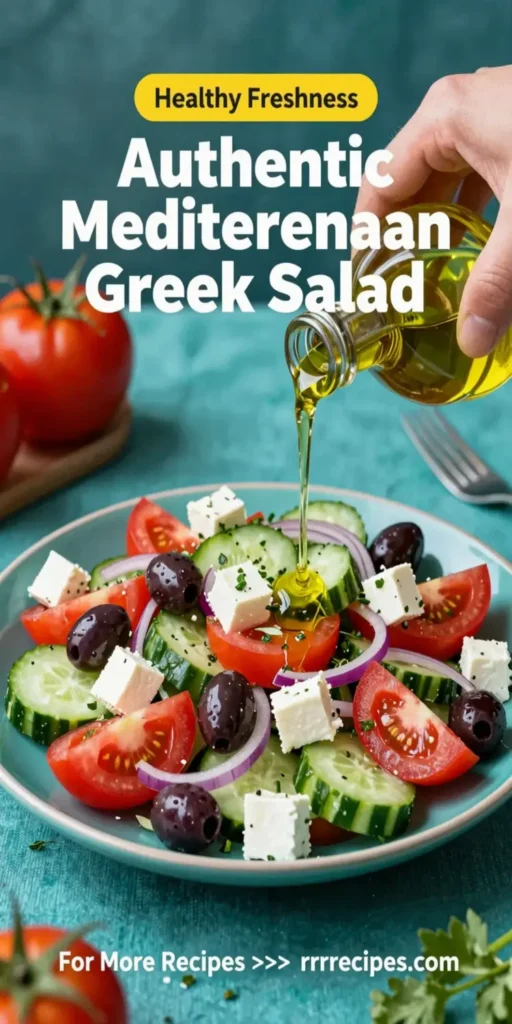
Authentic Mediterranean Greek Salad is a vibrant dish that celebrates the fresh, earthy flavors of the Mediterranean region. This salad combines a variety of colorful vegetables, tangy cheese, and olives, all lightly dressed with olive oil and herbs. It’s perfect for a light lunch, a nutritious side, or a quick dinner on a warm evening. The beauty of this salad lies not just in its taste, but in its simplicity. You’re only a few minutes away from creating a delicious meal that embodies the spirit of Greece.
What Is Authentic Mediterranean Greek Salad?
Authentic Mediterranean Greek Salad, known as ‘Horiatiki’ in Greece, is a traditional dish that showcases the region’s abundant produce. This salad traditionally features tomatoes, cucumbers, red onions, bell peppers, Kalamata olives, and large chunks of feta cheese. Unlike some variations that toss the ingredients together, the authentic Greek salad often presents the components separately, allowing each flavor to shine. Fresh herbs, particularly oregano, elevate the dish, while a drizzle of high-quality olive oil brings everything together. This salad is not just a dish; it’s a representation of Greek culture and the Mediterranean lifestyle.
Why You’ll Love This
There are many reasons to fall in love with this Mediterranean Greek Salad. Firstly, it celebrates freshness and simplicity. Using seasonal vegetables ensures every bite is bursting with flavor. Secondly, it is incredibly versatile. Whether you’re looking to prepare a meal for a casual gathering or a refined dinner party, this salad fits all occasions. Moreover, it is packed with nutrients, making it a fantastic option for anyone aiming to eat healthier. The vibrant colors of the ingredients not only make the dish appealing but also indicate the variety of nutrients you’re consuming. Lastly, preparing this salad is incredibly quick and can easily fit into a busy lifestyle, making it a go-to recipe for parents and anyone juggling multiple commitments.
Ingredients You’ll Need
- 2 cups ripe tomatoes: Fresh tomatoes add juiciness and flavor. Choose varieties that are in season for the best taste.
- 1 large cucumber: Crisp cucumbers provide a refreshing crunch and hydration.
- 1 medium red onion: A thinly sliced onion offers a pungent kick that balances the sweet tomatoes.
- 1 bell pepper: Any color works, but a red or yellow bell pepper adds sweetness and bright color.
- 1 cup Kalamata olives: These briny olives contribute a savory depth to the salad.
- 200g feta cheese: A few large chunks of this tangy cheese are essential for the authentic Greek taste.
- 1/4 cup extra virgin olive oil: The foundation of the dressing; use a high-quality oil for the best flavor.
- 1 tsp dried oregano: This herb is a staple in Greek cooking, adding an aromatic touch.
- Salt and pepper to taste: Essential for enhancing the flavors of the vegetables.

How to Make
- Begin by preparing your vegetables. Wash the tomatoes and cucumbers thoroughly. For the tomatoes, chop them into bite-sized pieces. If you’re using larger tomatoes, quarter them for easier handling.
- Next, peel and slice the cucumber. Aim for thick slices or half-moons to maintain that satisfying crunch.
- Proceed to slice the red onion thinly; soaking the slices in cold water for a few minutes can reduce the sharpness if desired.
- Core and chop the bell pepper into bite-sized pieces. You can leave the seeds out for a cleaner texture.
- Now, toss all the chopped vegetables into a large serving bowl. Add the Kalamata olives, ensuring they are pitted.
- Finally, crumble the feta cheese over the top of the salad. Drizzle generously with olive oil and sprinkle with oregano, salt, and pepper. Toss gently to combine everything without breaking up the feta too much.
Variations & Substitutions
Quinoa Greek Salad: For a heartier option, consider adding cooked quinoa to your Greek salad. Quinoa not only adds protein but also provides a delightful nutty flavor that complements the fresh ingredients beautifully. Simply mix in about a cup of chilled, cooked quinoa after combining the vegetables.
Grilled Vegetable Greek Salad: If you love grilled flavors, try grilling your vegetables before adding them to the salad. Grilling intensifies the flavors and adds a smoky taste that pairs wonderfully with the tangy feta. Bell peppers, zucchini, and eggplant are excellent choices for grilling.
Vegan Greek Salad: To make this dish vegan, substitute the feta cheese with a plant-based alternative or even creamy avocado for richness. You can also enhance the flavor with some nutritional yeast to mimic that cheesy taste while keeping it dairy-free.
Protein-Packed Greek Salad: If you’re looking to add protein, consider incorporating chickpeas or grilled chicken. Both ingredients blend seamlessly into the Mediterranean palate and will keep you satisfied longer.
Common Mistakes to Avoid
One common mistake when preparing Greek salad is using low-quality oil. Strongly consider using high-quality extra virgin olive oil to enhance the flavors. The better the oil, the tastier your salad will be.
Another mistake is over-dressing the salad. Remember, less is often more; a drizzle of olive oil and a sprinkle of herbs can do wonders without overwhelming the fresh flavors.
Lastly, many people forget to adjust seasoning. Properly salting and peppering your salad is essential for bringing out the veggies’ natural flavors, so make sure to taste as you go.
Storage, Freezing & Reheating Tips
When it comes to storing your salad, it’s best to keep the dressing separate until you are ready to enjoy it. This keeps the vegetables crisp and prevents them from becoming soggy. Store any leftovers in an airtight container in the refrigerator for up to two days.
Freezing is not recommended because of the high water content in vegetables like tomatoes and cucumbers; freezing can alter their texture. However, you can prepare individual components ahead of time. For instance, you can chop vegetables, store them in the fridge, and assemble the salad fresh whenever you need it.
If reheating is necessary—though it shouldn’t be required for a salad—do so only for components that can withstand heat, like grilled veggies or protein. Enjoy them cold or at room temperature to maintain the freshness of this delightful salad.
Frequently Asked Questions
Can I make Greek salad in advance?
You can prepare the components of the salad in advance but avoid mixing everything together or adding the dressing until just before serving. This keeps the fresh vegetables crisp and vibrant.
What kind of olives should I use?
Kalamata olives are traditional and provide a unique flavor that is integral to Greek salads. If you can’t find them, you can use any briny black olive, but the taste won’t be quite the same.
Can I replace feta cheese with something else?
If you’re avoiding dairy, a plant-based feta can work, or opt for creamy avocado, which offers a similar texture. However, it will change the flavor somewhat. If you’re not vegan, there’s no substitute that matches feta’s distinctive taste!
Is Greek salad healthy?
Absolutely! A Greek salad is a fantastic source of vitamins, healthy fats from olive oil, and antioxidants from the fresh veggies. It’s low in calories but high in nutrients, making it perfect for almost any diet.
What are some serving suggestions?
Authentic Mediterranean Greek Salad pairs wonderfully with grilled meats, fish, or as part of a mezze platter. Serve it alongside warm pita bread or as a topping for your favorite wrap for a complete meal.
Conclusion: Authentic Mediterranean Greek Salad is more than just a dish; it’s a delightful and healthy way to incorporate vibrant flavors and colors into your meals. With its quick preparation time and incredible taste, it’s bound to become a staple in your culinary repertoire. Whether enjoyed on its own or as a beautiful side dish, this salad brings the essence of the Mediterranean right to your table.