Prep time: 30 minutes
Cook time: 30 minutes
Total time: 1 hour
Servings: 10
There’s something truly magical about celebrating the arrival of spring with a delightful dessert that captures the essence of the season. Spring Cake: Strawberry Lemon Layer Cake is more than just a dessert; it’s an experience for the senses. Imagine biting into a moist cake layered with sweet, juicy strawberries and zesty lemon frosting, each mouthful echoing the sun’s warmth. This cake is perfect for birthdays, picnics, or even just an afternoon tea. It combines freshness and sweetness in a way that evokes joyful memories of sunny days spent outdoors.
This cake is special for a myriad of reasons beyond its vibrant flavors. It marries the floral note of lemon with the lusciousness of strawberries, creating a balance that is not only pleasant but also visually stunning. With each layer, you can expect a burst of flavor and a soft texture that melts in your mouth. In this recipe, you’ll learn how to create an impressive and beautiful cake, from scratch, ensuring that even beginners in the kitchen can whip it up with confidence. Each step is broken down, and you will also discover some handy tips and variations along the way.
What Is Spring Cake: Strawberry Lemon Layer Cake?
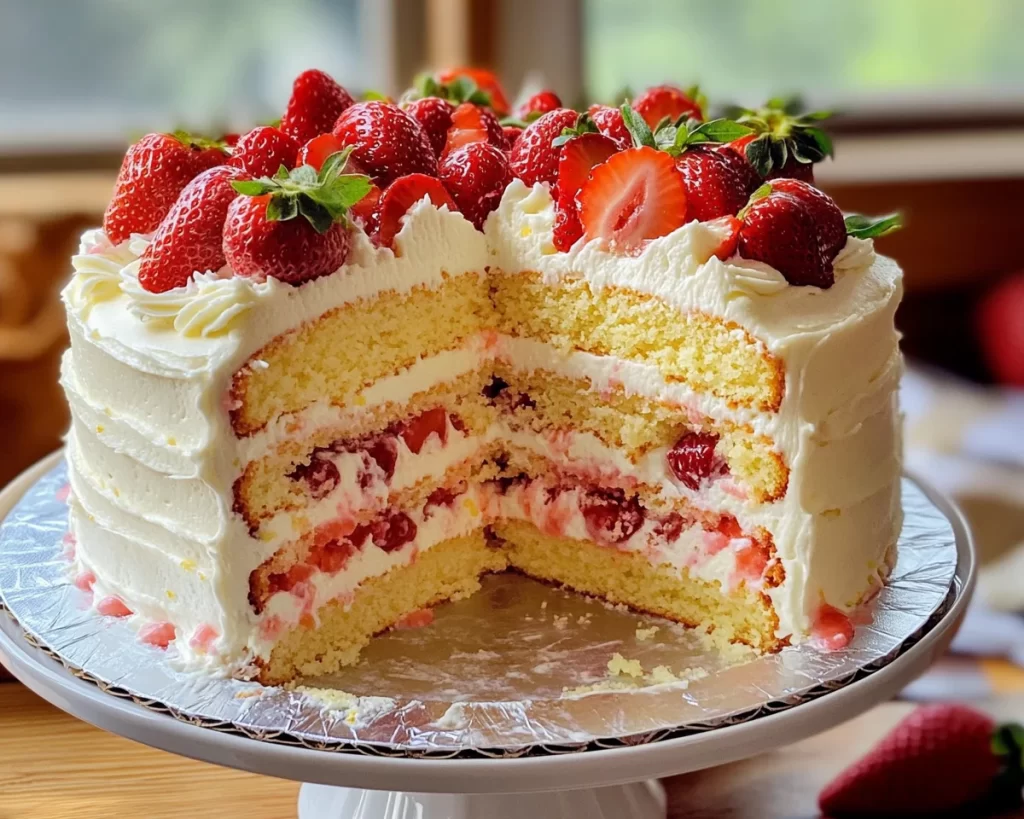
Spring Cake: Strawberry Lemon Layer Cake is a delightful confection characterized by its layers of light, fluffy cake, layered with a rich lemon frosting and adorned with fresh strawberries. This cake is believed to have originated in home kitchens where seasonal fruits were celebrated, particularly in the spring when strawberries come into season. The combination showcases the vibrant flavors of fresh strawberries and bright lemon, which together create a refreshing taste that feels particularly suited for warmer weather.
The texture of this cake is one of its standout features—it is light yet moist, allowing the luscious lemon frosting and fresh fruit to shine. As you cut into this layered cake, the inviting colors and aroma will immediately tantalize your senses. The cake layers themselves are infused with lemon zest, giving them a subtle tang that complements the sweetness of the strawberries. With every bite, you experience layers of flavor and texture—from the light, airy cake to the creamy frosting and juicy fruit.
This cake serves as a fantastic centerpiece for any gathering and is symbolic of spring’s bounty. It’s more than just a dessert; it’s a celebration of life, love, and the beautiful moments shared around a dining table.
Why You’ll Love This
There are countless reasons to fall in love with Spring Cake: Strawberry Lemon Layer Cake. For starters, the vibrant flavors of strawberries and lemon create a mouthwatering experience that is sure to impress your guests and elevate any occasion. The freshness of the ingredients coupled with the delightful sweetness makes it an instant favorite for both young and old alike. Additionally, the visual appeal of the cake, with its striking colors and textures, makes it a showstopper on any dessert table.
Another benefit of this cake is its ease of preparation. Many may assume that a layered cake requires advanced baking skills, but this recipe is designed to be user-friendly and approachable, even for those just starting in the kitchen. It allows you to explore your creativity without being overly complicated. In fact, many busy parents and novice bakers will find this to be a perfect recipe to try.
Finally, this cake can be customized in numerous ways, allowing you to tailor it to your taste preferences or dietary needs. It’s versatile enough for adjustments, making it suitable for various occasions. Whether you are looking for a healthy treat or a more indulgent dessert, you can easily play around with ingredients and variations.
Ingredients You’ll Need
To create this remarkable cake, you’ll need the following ingredients:
- 2 cups all-purpose flour – This will form the cake’s foundation. You can substitute with a gluten-free blend if necessary.
- 1 ½ cups granulated sugar – Sweetens the cake, balancing the tartness of the lemon.
- ½ cup unsalted butter (softened) – Provides moisture and richness; coconut oil can be used as a dairy-free substitute.
- 1 cup buttermilk – To keep the cake light and fluffy. You can make a substitute by mixing milk with lemon juice or vinegar.
- 3 large eggs – Binds the ingredients together, contributing to the cake’s structure. Vegan options include flax eggs.
- 1 tablespoon lemon zest – Adds depth and fragrance, making the cake more aromatic.
- 1 tablespoon baking powder – Essential for adding volume and texture. Ensure it’s fresh for optimal rise.
- ½ teaspoon salt – Enhances flavor, balancing the sweetness.
- 1 cup fresh strawberries – For layering and decoration, ensuring they are ripe will contribute to the flavor.
- 1 cup powdered sugar – Essential for the frosting, creating the desired sweetness and smooth texture.
- 4 ounces cream cheese (softened) – Adds creaminess to the frosting, although you can use a vegan alternative.
- 2 tablespoons lemon juice – Provides the tang in the frosting, beautifully complementing the sweetness.
Each ingredient plays a crucial role, contributing to the overall flavor, texture, and appearance of the cake. The right balance will ensure a delightful result. Feel free to get creative and use the suggested substitutions to make this recipe your own while still achieving fantastic results.
How to Make
Creating your Spring Cake: Strawberry Lemon Layer Cake is a process, but it’s well worth the effort. Follow these detailed steps to craft your cake:
- Preheat your oven. Start by preheating your oven to 350°F (175°C). This is a crucial step because it ensures that your cake bakes evenly. Prepare your 9-inch cake pans by greasing them with butter or non-stick spray and lining the bottoms with parchment paper for easy release.
- Mix the dry ingredients. In a medium bowl, whisk together the all-purpose flour, baking powder, and salt. This step is essential as it helps to evenly distribute the leavening agent. Make sure all the ingredients are well combined to avoid clumps in the batter, which can affect the texture of your cake.
- Cream the butter and sugar. In a large mixing bowl, use an electric mixer to cream together the softened butter and granulated sugar on medium speed for about 3-5 minutes. The mixture should turn light and fluffy. This is a key process that incorporates air into the butter, aiding in cake leavening.
- Add eggs and lemon zest. Next, add the eggs one at a time, mixing well after each addition to ensure they are fully incorporated. After the eggs, add in the lemon zest. This will infuse the batter with a lovely citrus aroma, setting a fresh tone for the cake.
- Combine wet and dry ingredients. Gradually add the dry mixture to the wet mixture, alternating with the buttermilk. Start and end with the dry ingredients, mixing just until combined—do not overmix. Overmixing could lead to a dense cake, which we want to avoid.
- Pour and bake the batter. Divide the batter evenly between the prepared cake pans and smooth the tops. Bake in the preheated oven for 25-30 minutes or until a toothpick inserted in the center comes out clean. Keep an eye on your cakes as baking times can vary, especially if your oven runs hot or cool.
- Cool the cakes. Once baked, remove the cakes from the oven and allow them to rest in the pans for about 5 minutes. After that, carefully turn them out onto wire racks to cool completely. Cooling is crucial; if you frost a warm cake, the frosting will melt and spoil the presentation.
- Prepare the strawberry filling. While the cakes are cooling, slice the fresh strawberries. You can choose to macerate them with a teaspoon of sugar to enhance their sweetness, depending on your preference. Set them aside; this will be the layer of flavor in our cake.
- Make the lemon frosting. In a separate bowl, beat the softened cream cheese until smooth and creamy. Gradually add the powdered sugar and lemon juice, mixing until the frosting is fluffy and well combined. Taste to adjust the sweetness or tartness as needed. If the frosting is too thick, you can add a tiny splash of milk for a smoother consistency.
- Assemble the cake. Place one layer of cake on a serving plate or cake stand. Spread a layer of lemon frosting on top and add a generous amount of sliced strawberries. Repeat with the second layer, adding more frosting and strawberries. Top with the final layer of cake and frost the top and sides of the entire cake.
- Decorate. For the final touch, garnish the top of the cake with a few fresh strawberries and perhaps a sprinkle of lemon zest or some mint leaves for a pop of color. This step not only adds visual appeal but also reinforces the fresh flavors of your cake, inviting your guests to indulge.
- Chill and serve. Allow your cake to chill in the refrigerator for at least 30 minutes before serving. This helps to set the frosting and enhances the sliceability. Once ready, cut into generous slices and enjoy your delightful creation.
As you go through these steps, take your time and enjoy the process; baking can be both therapeutic and rewarding. Each stage of creating this cake is an opportunity to build flavors, so be mindful and savor the aroma as it fills your kitchen.
Variations & Substitutions
Gluten-Free Variation: If you or your guests have gluten sensitivities, you can easily swap regular all-purpose flour for a gluten-free baking blend. Just ensure that it includes xanthan gum to help bind the ingredients. The texture may vary slightly, but you will still get a delicious cake. Pairing gluten-free flour with additional moisture, like an extra egg or more buttermilk, can also enhance the overall consistency.
Vegan Variation: For a vegan-friendly adaptation, you can substitute the eggs with flaxseed meal or applesauce. Use a dairy-free butter and almond or coconut milk in place of buttermilk. The lemon flavor remains vibrant, and you will still achieve a fluffy cake. Be mindful that some frosting recipes also contain cream cheese, so opting for a plant-based alternative is key.
Flavor Twist Variation: You could take a different approach by incorporating other fruits like raspberries or blueberries. Mixing strawberries with these berries adds dynamic flavor profiles, allowing for deeper tastes and more complexity. The bright colors will also enhance the cake’s visual appeal, making each slice a stunning representation of spring’s bounty.
Citrus Burst Variation: If you want to elevate the lemon flavor, consider adding orange zest to your batter along with the lemon zest. This combination will create a more complex flavor balance that still shines through in the final cake. You might even opt to make an orange-flavored frosting instead of lemon for an exciting twist.
Chocolate Lovers Variation: If you or your guests prefer chocolate, consider making a chocolate version of the cake by incorporating cocoa powder into the dry ingredients and substituting some flour for it. Use chocolate ganache instead of lemon frosting, layered with strawberries for a rich contrast. This combination can offer a unique delight for chocolate lovers while retaining the freshness of the fruits.
Common Mistakes to Avoid
One common mistake is **overmixing** the batter. When you combine your dry and wet ingredients, aim for just a combined mixture; it’s okay if there are still a few lumps. Overmixing can develop gluten and lead to a rubbery cake, which is far from the light texture we desire.
Another mistake often made is **skipping the cooling process**. If you frost the cakes while they are still warm, you risk the frosting melting and ruining the aesthetics of your cake. Ensure your cakes cool completely before attempting to frost them.
Also, be cautious with **adjusting sugar levels**. While you may want a less sweet cake, reducing the sugar can impact the overall texture and moisture content. Sugar is a key ingredient that not only adds sweetness but helps to retain moisture and create structure. If you are looking for a healthier option, consider reducing the sugar slightly but not to the point of compromising the structure.
Lastly, don’t forget to taste your frosting as you prepare it. You may find that the balance between sweetness and acidity can be adjusted. If it tastes overly sweet, adding a bit more lemon juice can help create the perfect balance, enhancing the lemon kick in your cake.
Storage, Freezing & Reheating Tips
Proper storage is essential to maintain the cake’s freshness. After making your Spring Cake: Strawberry Lemon Layer Cake, if there are leftovers, store them in an airtight container in the refrigerator. This will keep the cake moist and ensure that the precious flavors remain intact. The cake can generally be kept in the fridge for up to 3-5 days.
If you wish to make the cake in advance, consider freezing it. Ensure the layers are well cooled and wrap each layer tightly in plastic wrap, followed by aluminum foil. This double-layering prevents freezer burn and protects the flavors. You can freeze the layers for up to 3 months. When ready to use, thaw the layers in the refrigerator overnight before assembling your cake.
Reheating is not typically necessary unless you enjoy a warm slice of cake. If you decide to reheat, be cautious. A microwave can dry out the cake quickly. Instead, consider using an oven at a low temperature for gentle warming. Place a slice in an oven-safe dish, cover with foil, and warm at 300°F (150°C) for about 10 minutes, just until lightly warmed.
Keep in mind food safety best practices: always avoid letting the cake sit at room temperature for more than two hours. Bacteria can grow rapidly in warm environments, especially with ingredients like cream cheese present in the frosting.
Frequently Asked Questions
Can I use frozen strawberries instead of fresh ones? Yes, you can use frozen strawberries. However, keep in mind that they may release extra moisture when thawed, affecting the cake’s texture. Pat them dry before adding them to the cake to prevent excess liquid from making your layers soggy.
What if I don’t have buttermilk? If you don’t have buttermilk, you can easily make a substitute at home. Mix 1 cup of milk with a tablespoon of lemon juice or vinegar and let it sit for about 5-10 minutes until it thickens a bit. This mimics the acidity of buttermilk, contributing to a lighter texture in the cake.
Can I make this cake ahead of time? Absolutely! You can bake the cake layers a day or two in advance and store them in the refrigerator. Alternatively, the layers can be frozen for longer-term storage. Just ensure they are wrapped properly to keep them fresh.
How can I add more lemon flavor to the cake? For an intensified lemon flavor, consider adding more lemon zest and juice to both the cake batter and the frosting. A hint of lemon extract can also enhance the lemon profile without altering the cake’s consistency.
Can I substitute the frosting with something else? Yes! If cream cheese frosting isn’t your thing, you could opt for a simple buttercream frosting, a light whipped cream, or even a ganache for a chocolatey contrast. Each option will complement the strawberries and cake beautifully, allowing you to customize your dessert to your liking.
Conclusion:
This Spring Cake: Strawberry Lemon Layer Cake is a celebration of spring’s bounty and a delightful way to treat yourself and your loved ones. With its vibrant flavors and visually stunning layers, it encapsulates the essence of the season while being remarkably easy to prepare. Don’t hesitate to make adjustments that suit your taste or dietary needs, and remember that the joy of baking lies in the creativity and love you put into it. I encourage you to try this recipe, share your results, and make unforgettable memories around your dining table. Happy baking!