Prep time: 15 minutes
Cook time: 25 minutes
Total time: 40 minutes
Servings: 4 servings
Introduction:
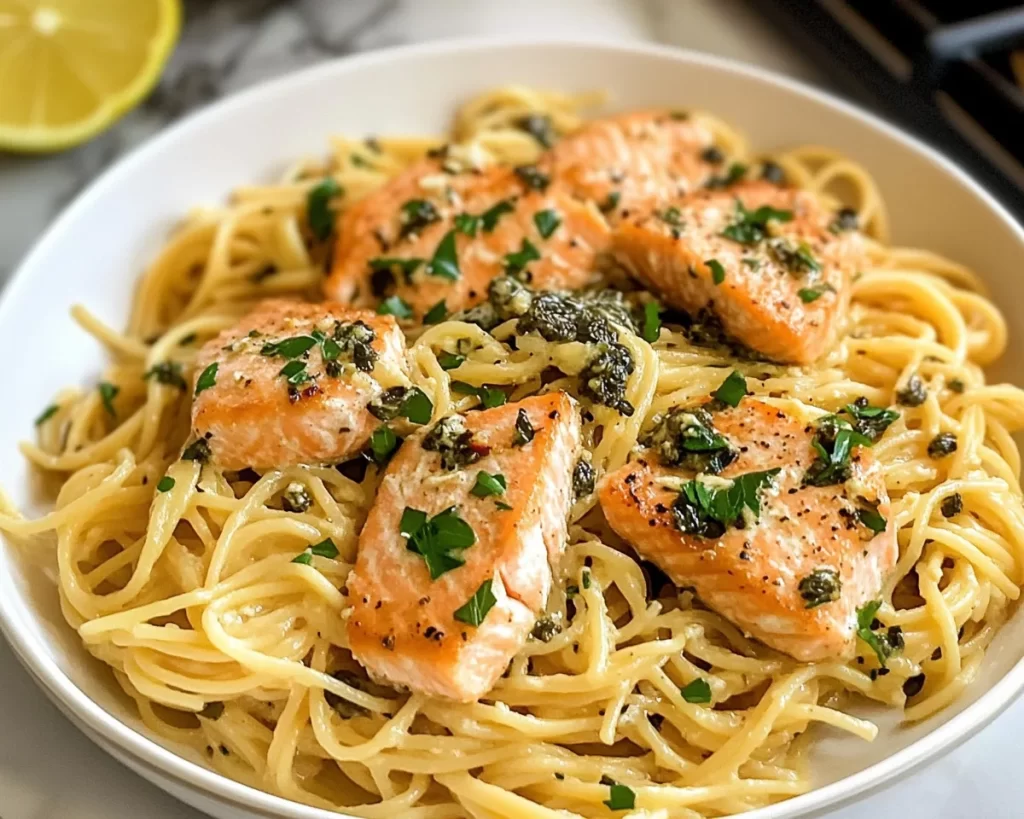
Imagine this: a vibrant plate of pasta shimmering with a tangy lemon sauce, featuring succulent salmon, fragrant garlic, and a hint of capers. Simple Salmon Piccata Pasta is not just a dish; it’s a celebration of flavors that come together effortlessly. This recipe is special because it draws inspiration from the classic Italian piccata, but includes the heartiness of pasta, making it both filling and refreshing. In this article, you will learn how to prepare this delightful dish step-by-step, uncover the ingredients that make it pop, and explore variations that suit any palate.
What Is Simple Salmon Piccata Pasta?
Simple Salmon Piccata Pasta merges the richness of salmon with the zing of a traditional piccata sauce—often seen in chicken or veal dishes. This version incorporates tender, flaky salmon, which is lightly pan-seared and bathed in a sauce made with fresh lemon juice, zesty garlic, and briny capers. The result is a delightful harmony of flavors where the salmon’s richness is complemented by the bright acidity of the sauce. The pasta acts as a perfect vehicle, soaking up the dressing and offering a satisfying bite that’s creamy yet citrusy.
The origins of the piccata style date back to Italy and is noted for its ability to add a punch of flavor with simple ingredients. The dish is typically quick to prepare, making it an excellent weeknight dinner option for busy families. When combined with pasta, it transitions beautifully from a light meal to something that feels more substantial, perfect for any occasion.
Why You’ll Love This
One of the main reasons you’ll love Simple Salmon Piccata Pasta is its incredible taste. The flavors are bold yet perfectly balanced, offering a tangy bite that awakens your palate. Not only is the taste exceptional, but this dish is also easy to prepare, even for beginner cooks. The straightforward ingredients and simple cooking techniques make it user-friendly, letting anyone recreate this restaurant-quality meal at home in about 40 minutes.
Additionally, this dish is budget-friendly, allowing you to enjoy a sophisticated meal without breaking the bank. Salmon is often viewed as a high-end ingredient, but using it in this simple recipe demonstrates its versatility and cost-effectiveness. Lastly, this recipe is healthy! Packed with omega-3 fatty acids from the salmon and fiber from the pasta, it’s a nutritious option for those watching their dietary preferences without sacrificing flavor.
Ingredients You’ll Need
- Salmon fillets: The star of the dish, providing protein and essential fatty acids. Fresh salmon is preferred, but frozen can work too; just ensure it’s thawed properly.
- Pasta: Any long pasta like spaghetti or fettuccine pairs beautifully. Whole wheat or gluten-free options can also be utilized for dietary needs.
- Olive oil: This will help brown the salmon beautifully and create a base for your sauce.
- Garlic: Fresh minced garlic adds aromatic depth and pairs perfectly with the other flavors. Dried garlic can substitute in a pinch but may not give the same freshness.
- Capers: These add a unique briny flavor that contrasts with the richness of the sauce. If you prefer not to use them, green olives can be a suitable substitute.
- Lemon juice: Freshly squeezed lemon juice is key for brightness and acidity. Bottled lemon juice won’t provide the same aromatic punch.
- Parsley: Chopped fresh parsley brightens the dish and adds a pop of color and freshness.
- Salt and pepper: To season as needed to enhance all the flavors.
How to Make
- Start by cooking your pasta according to the package instructions. Once it’s al dente, drain it and set it aside, reserving about a cup of the pasta water for later use. This water can help thicken your sauce, making it luxuriously creamy without too much additional fat.
- While the pasta cooks, prepare your salmon. Pat the fillets dry with paper towels and season both sides generously with salt and pepper. This simple seasoning elevates the fish’s natural flavors and creates a flavorful crust when cooked.
- In a large skillet, heat a couple of tablespoons of olive oil over medium heat. Once hot, add the seasoned salmon fillets, skin-side down, to the pan. Cook for about 4-5 minutes, or until the skin is crispy and the fish is mostly cooked through. Carefully flip the fillets using a spatula and cook for an additional 2-3 minutes. When done, transfer the fish to a plate to keep warm, leaving the fond (brown bits) in the pan.
- In the same skillet, add a touch more olive oil if needed, followed by the minced garlic. Sauté for about a minute until fragrant, being careful not to burn it; burnt garlic can ruin the flavor of your sauce!
- Next, add the capers and cook for another minute before deglazing the pan with the fresh lemon juice. The acidity will lift all the flavorful bits stuck to the bottom, making your sauce deeply flavorful. Stir in some pasta water to achieve your desired sauce consistency. You want it to be mildly thick and able to cling to the pasta.
- Return the salmon gently to the skillet, breaking it into bite-sized pieces if you prefer. Add the cooked pasta, tossing everything together. Make sure every strand of pasta is coated with the beautiful sauce. Adjust seasoning with additional salt and pepper to taste.
- Finally, serve the pasta warm, garnished with fresh parsley for that touch of color and flavor. A sprinkle of crispy lemon zest or a dash of additional lemon juice can heighten the dish, making every bite a burst of freshness!
Variations & Substitutions
Creamy Salmon Piccata:
For those who enjoy a richer sauce, consider adding heavy cream or a few tablespoons of crème fraîche to your piccata sauce. This will create a luxurious, velvety texture that envelops the pasta beautifully. This variation works well if you prefer something less tangy and more comforting. When making this adjustment, reduce the amount of lemon juice to keep the flavors balanced without overpowering the dish.
Vegetable-Loaded Piccata:
If you’re looking for a veggie boost, incorporate seasonal vegetables like asparagus, spinach, or cherry tomatoes. Sauté them in the olive oil before adding the garlic. This not only adds extra nutrients but also adds color and texture to your plate. Such a version is especially ideal for busy parents aiming for a way to sneak in more vegetables while keeping the meal enjoyable for the kids.
Pasta Alternatives:
For a gluten-free or low-carb option, substitute your traditional pasta with zucchini noodles or spaghetti squash. These alternatives maintain the integrity of the dish while accommodating different dietary preferences. Cooking times may vary, so be mindful to undercook your zucchini noodles slightly to keep their texture crisp.
Herb-Infused Salmon:
For added depth in flavor, marinate the salmon beforehand in a mixture of lemon juice, olive oil, and fresh herbs like dill or thyme. This brings an aromatic twist to your dish and enhances the overall complexity of flavors. Experimenting with different herbs can yield various delightful experiences each time you make this dish!
Common Mistakes to Avoid
One common mistake is overcooking the salmon. Fish cooks quickly, and overdoing it can lead to dry salmon. Always aim for a slightly undercooked center, as it will continue to cook with residual heat after being removed from the pan. Another common pitfall is adding too much lemon juice at once. The acidity can overpower the dish if not balanced correctly; start with less and gradually add to fit your taste preferences.
Additionally, not reserving pasta water can also hinder your sauce’s consistency. This starchy water helps bind the sauce to the noodles, giving it a cohesive, creamy texture. Lastly, neglecting to taste and adjust seasoning can lead to a mediocre finished product. Always remember to sample your dish, as each ingredient’s flavor can vary significantly based on freshness and seasonality.
Storage, Freezing & Reheating Tips
When storing leftovers, ensure the dish has cooled before transferring it to an airtight container. It can typically be stored in the refrigerator for up to three days, though the pasta may absorb more sauce as it sits. For extended storage, consider freezing the salmon separately from the pasta, as reheating both together can lead to less-than-optimal texture. The dish can last in the freezer for about a month before the taste begins to decline.
When you’re ready to reheat, do so gently using stovetop heat to maintain the texture of the pasta and sauce. Add a splash of reserved pasta water to help loosen and meld the flavors back together. Microwaving is a quicker option but may lead to uneven heating. Always ensure your meals are heated to a safe internal temperature to prevent foodborne illnesses.
Frequently Asked Questions
Can I use canned salmon for this recipe?
Yes, canned salmon can be a convenient and budget-friendly substitute. It’s important to drain and flake the salmon, and you will want to add it to the sauce towards the end of cooking since it is already cooked. This prevents it from becoming overcooked and dry while still using it in the beautiful sauce.
What can I substitute for capers?
If capers aren’t available, green olives can serve as a decent substitute, providing a similar salty, briny flavor. Another option could be chopped pickles or even a sprinkle of lemon zest, though these won’t have the same flavor profile, they can still add a hint of tanginess that pairs well with the dish.
How can I make this dish spicier?
For those who love heat, consider adding red pepper flakes or a dash of hot sauce to the sauce as it simmers. You can also serve the finished pasta with a sprinkle of freshly chopped chili or a drizzle of chili oil for an extra kick that complements the zesty lemon beautifully.
Is this dish suitable for meal prep?
Absolutely! Simple Salmon Piccata Pasta can be meal prepped for the week. Just ensure to store the components separately to prevent the pasta from becoming mushy. Pack the pasta, sauce, and salmon in separate containers. When ready to eat, simply combine and warm.
What’s the best way to make the salmon skin crispy?
For crispy skin, make sure your skillet is adequately hot before adding the salmon skin-side down. Avoid moving the fillets during cooking; let them sear without interference to form a perfect crust. A little patience goes a long way in achieving that delightful crunch!
Conclusion:
Simple Salmon Piccata Pasta is a delightful fusion of flavors that harmonizes taste, nutrition, and ease. The balancing act of the tart lemon, savory salmon, and the satisfying bite of pasta creates a meal that is both comforting and exciting. Don’t hesitate to try this recipe, adapt it to your preferences, or challenge yourself with different variations. Gathering around a table filled with homemade, delicious meals nurtures not just the body, but the soul. Enjoy this culinary adventure, and share your delightful creations with family and friends!