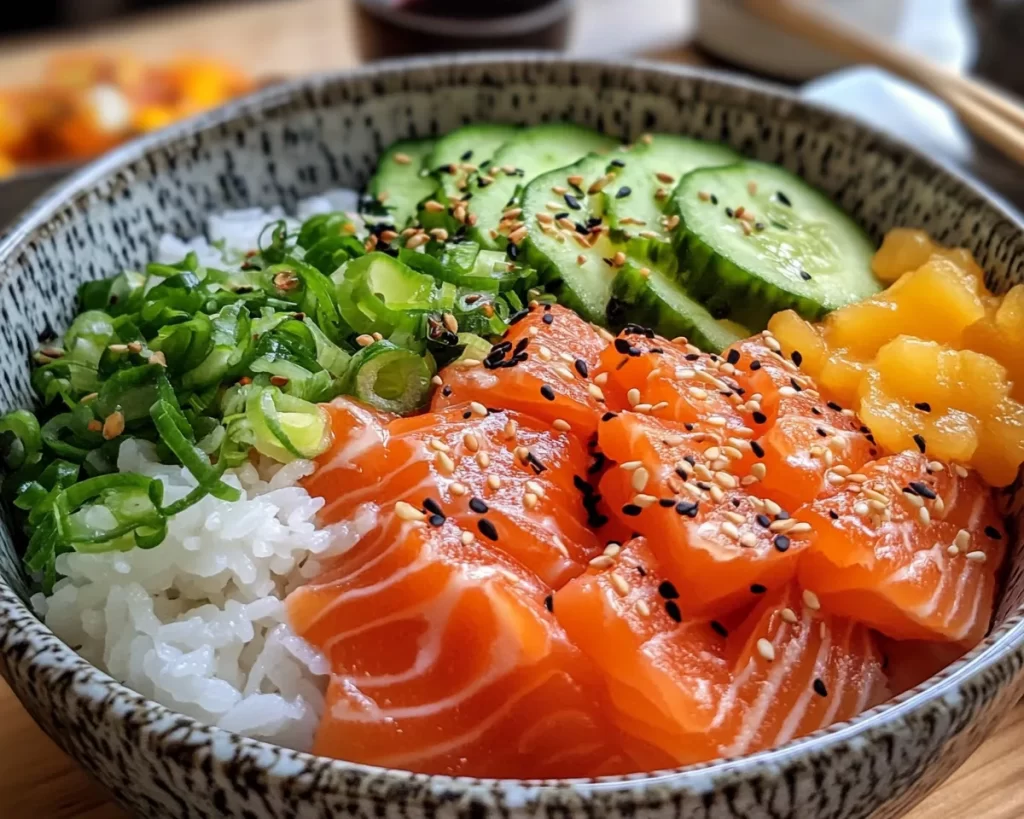
Prep time: 15 minutes
Cook time: 30 minutes
Total time: 45 minutes
Servings: 4
Indulging in a flavorful meal while hosting friends or family can be an exhilarating and rewarding experience. Picture a laid-back evening where you can connect with your loved ones over a delicious and heartwarming dish. The Spring Dinner Party: Salmon Rice Bowl Bar is not only an appealing feast but also offers a fun, interactive dining experience. Imagine a table filled with various colorful toppings and sauces and the satisfying aroma of perfectly cooked salmon. This recipe lets you personalize your bowl exactly how you like it, ensuring everyone leaves with happy bellies and smiles on their faces.
What sets this dish apart is its delightful fusion of flavors and textures. The flaky, tender salmon pairs beautifully with nutty rice and vibrant vegetables, creating a balanced meal that feels light yet filling. You’ll also find that the versatility of this recipe adapts to various dietary preferences, making it a go-to for gatherings. In this article, you will discover the underlying techniques for making a fantastic salmon rice bowl, tips to amp up the aesthetics, and clever variations to keep things fresh and exciting.
What Is Spring Dinner Party: Salmon Rice Bowl Bar (Easy Hosting)?
The Spring Dinner Party: Salmon Rice Bowl Bar is a delightful meal that encapsulates the freshness of spring while offering a relaxing dining ambiance. Drawing inspiration from traditional Japanese chirashi bowls, this dish combines seasoned rice with fresh, cooked salmon and a selection of toppings that encourage creativity. The base of the bowl is fluffy, warm rice, which serves as a neutral canvas that welcomes myriad flavors and textures.
The salmon, rich in healthy omega-3 fatty acids and protein, shines in this dish. Baking or grilling allows for a tender texture that contrasts beautifully with the crispy vegetables and luscious sauces. This recipe invites you to explore a world of flavor by incorporating various toppings, such as tangy pickles or crunchy seaweed. Each bite becomes an exciting adventure, blending the savory aspects of the fish with the freshness of vegetables, creating a satisfying experience that caters to various palates.
Served with bright sauces and garnishes, the Spring Dinner Party: Salmon Rice Bowl Bar becomes an event in itself—encouraging guests to engage, share stories, and create their own unique combinations. It transforms dinner into an interactive celebration that your guests will love.
Why You’ll Love This
There are countless reasons to fall in love with this recipe. First and foremost, the taste profile is undeniably satisfying. The melt-in-your-mouth salmon and the nutty, slightly sweet flavor of the rice make a harmonious combination. You can customize your toppings to your taste, ranging from fresh vegetables to various sauces, each adding its unique flair to the meal.
Ease of preparation is another winning quality. Even if you are not an experienced cook, following the step-by-step instructions will guide you through the process. You’ll find that most of the ingredients are easy to source and can even be prepped in advance, making this dish ideal for busy weeknights or special occasions. The rewarding aspect of this meal is that it can be put together quickly without compromising quality.
Cost-effectiveness is yet another reason why this dish deserves a spot in your recipe book. Salmon may seem like a luxurious choice, but when bought in bulk or on sale, it becomes an affordable protein option that elevates any dish. You can swap in budget-friendly alternatives like chicken or tofu, keeping your expense within range while still creating a remarkable meal that dazzles.
Finally, the health benefits cannot be overlooked. Salmon is packed with protein and healthy fats, and you can load up on nutrients through your chosen toppings. Whether adding leafy greens, avocados, or colorful vegetables, every ingredient can contribute to a well-rounded meal, supporting healthy eating habits. Unlike many traditional dishes that can feel heavy, this recipe gives you a sense of vitality, making it a perfect addition to your spring dinner table.
Ingredients You’ll Need
- 1 lb salmon fillet: Fresh salmon is the star of this dish, delivering exceptional flavor and health benefits. You can also use frozen salmon, but ensure it is thawed properly before cooking.
- 2 cups sushi rice: Sushi rice provides a lovely sticky texture that binds the bowl together. You can substitute with brown rice for a healthier option, but the cooking time may vary.
- 2 ½ cups water: Essential for cooking the rice; you may also use vegetable broth for added flavor.
- 1 tablespoon rice vinegar: Adding this to the rice gives it a slight tang that enhances the overall flavor.
- 1 tablespoon soy sauce: This contributes savory elements to the dish. Consider using low-sodium soy sauce for a healthier choice.
- 1 tablespoon sesame oil: Adds a nutty aroma and flavor, ideal for drizzling over your completed bowl.
- 1 grated ginger clove: Infuses the salmon with a fresh, zesty flavor. You can also use ground ginger if fresh isn’t available.
- ½ cucumber, thinly sliced: Adds crunch and freshness to the bowl.
- 1 avocado, sliced: Creamy texture that balances the dish beautifully.
- 1 cup shredded carrots: Provides sweetness and a pop of color.
- 2 green onions, sliced: A vibrant garnish that adds a mild, oniony flavor.
- Seaweed snacks or nori: Optional, but highly recommended for a gourmet touch.
- Sesame seeds: Add a crunchy texture and nutty flavor; also makes a visually appealing garnish.
Each ingredient serves a unique role in this recipe. The salmon provides the primary protein source, while the rice establishes a hearty base. Fresh vegetables like cucumbers and carrots contribute both color and nutrition, making this dish visually appealing. Always remember to choose fresh, high-quality ingredients for a successful outcome. For variations, consider substituting salmon with grilled chicken, tofu, or shrimp, depending on your dietary needs.
How to Make
- Prepare the rice: Begin by rinsing the sushi rice under cold water until the water runs clear; this removes excess starch. Place the rinsed rice in a rice cooker or a medium saucepan, add the water, and let it soak for about 30 minutes. After the soak, cook the rice according to your rice cooker’s instructions or bring the water to a boil, then reduce to a simmer for approximately 18-20 minutes until the water is absorbed. Fluff the rice with a fork, add rice vinegar, and let it cool slightly.
- Cook the salmon: Preheat your oven to 375°F (190°C). Season the salmon fillet with soy sauce, grated ginger, and a drizzle of sesame oil. Place the seasoned salmon on a baking sheet lined with parchment paper. Bake in the preheated oven for about 15-20 minutes or until the salmon flakes easily with a fork. If you want a slightly crisp exterior, place it under the broiler for the last 2–3 minutes of cooking.
- Prepare the toppings: While the salmon bakes, wash and slice your vegetables. Cut the cucumber into thin rounds, slice the avocado, and shred the carrots. You can also chop green onions for garnishing. Arrange them beautifully in small bowls or on a platter for easy access once it’s time to build your rice bowls.
- Assemble the bowl: Once the rice and salmon are cooked, it’s time to build your rice bowl. Start with a generous scoop of seasoned sushi rice in each bowl, followed by a piece of flaky salmon on top. Then, artistically arrange the fresh toppings such as cucumber, shredded carrots, and avocado around the salmon to create an enticing presentation.
- Finish with garnishes: Drizzle a little more sesame oil over the assembled bowls and sprinkle with sesame seeds. For extra flavor, you can also use seaweed snacks or crumbled nori to add a touch of umami. If you like, serve additional soy sauce or spicy mayo on the side for your guests to personalize their meal even further.
Following these steps will yield magnificent results. As you prepare your dish, take care to enjoy the vibrant colors and tantalizing aromas that fill your kitchen. This process not only nourishes your body but feeds your soul as well.
Variations & Substitutions
Bowl Variation: Teriyaki Salmon Rice Bowl
Switching up the flavor profile is as easy as substituting the soy sauce with a homemade or store-bought teriyaki sauce. This variation provides a sweeter, more robust taste, ideal for those who prefer a hint of sweetness in their meals. Pair your teriyaki salmon with toppings like corn, edamame, and radish for added depth and texture. For an even lighter option, use a grilled chicken breast instead of salmon or opt for a vegan grilled tofu instead, allowing everyone at the table to find their perfect flavor combination while keeping the meal suitable for varied dietary needs.
Bowl Variation: Mediterranean Salmon Rice Bowl
Transform the dish into a Mediterranean delight by switching to a base of couscous or quinoa instead of sushi rice. Season your salmon with Mediterranean herbs like oregano and thyme, and pair it with toppings like cherry tomatoes, olives, feta cheese, and a drizzle of tzatziki sauce. This version is perfect for those looking for a refreshing and vibrant option that’s different yet equally satisfying. You could even exchange the salmon for grilled shrimp or chicken to accommodate your guests’ preferences, making it an inviting meal for everyone.
Veggie Bowl Variation: Vegan Buddha Bowl
For a completely plant-based option, leave out the salmon and replace it with a protein-rich option like grilled tempeh or marinated chickpeas. Keep the sushi rice or choose cauliflower rice for a lower-carb alternative. Load up your bowl with various seasonal vegetables like roasted bell peppers, zucchini, and leafy greens. Drizzle with tahini sauce or a lemony vinaigrette for a delightful zing. This colorful vegan bowl not only visually tantalizes but provides a wholesome array of vitamins and minerals—perfect for those mindful of health.
Common Mistakes to Avoid
One common mistake when making the Spring Dinner Party: Salmon Rice Bowl Bar is overcooking the salmon. Ensure you keep a close eye on the fish while it’s cooking; you want it to be just cooked through and still moist. Use a fork to test for doneness; it should flake easily without being dry.
Another common pitfall is improperly cooking the sushi rice. Rinsing the rice is crucial to achieving the desired texture, so never skip this step! Additionally, allow the rice to rest after cooking, giving it time to firm up and avoid a mushy consistency.
Lastly, when assembling your bowls, a careful balance of flavors is essential. Avoid overpowering your dish with too many strong flavors. For example, heavy sauces can mask the delicate taste of the salmon. Instead, focus on fresh, vibrant toppings that complement the main ingredients while maintaining their integrity.
Storage, Freezing & Reheating Tips
To maintain a well-balanced spring dinner experience, it’s essential to store your leftovers properly. After your gathering, place any unused ingredients in airtight containers. Store the salmon, rice, and vegetables separately to preserve their texture and flavor.
Your cooked sushi rice can be kept in the refrigerator for up to 3-4 days, while salmon remains fresh for 2-3 days maximum. When reheating, be mindful not to overheat the fish, as it can become dry. Use the microwave on low power or warm in a skillet over low heat until just warmed through.
Freezing is an option if you know you won’t eat any leftovers within a few days. Freeze the salmon in individual portions and the cooked rice in freezer-safe bags, ensuring to remove as much air as possible from the bags to prevent freezer burn. Since vegetables tend to lose their texture when frozen, it’s best to store them fresh or simply prep extras for another meal in the future.
Food safety is essential, so always remember the rule: when in doubt, throw it out! If you notice any unusual smells, colors, or textures upon reheating, it’s safest to discard the food.
Frequently Asked Questions
Can I substitute the salmon with another protein?
Absolutely! If you’re looking for alternatives, grilled chicken, shrimp, or even marinated tofu work exceptionally well in this dish. Each substitute offers a different flavor profile while still integrating seamlessly into the recipe. The key is ensuring that your chosen protein is cooked to the correct temperature for food safety.
How can I make this recipe gluten-free?
To make this recipe gluten-free, switch out traditional soy sauce for tamari, which is gluten-free. Additionally, ensure that all other condiments and toppings are labeled as gluten-free, as sometimes sauces can contain hidden gluten. You can also use quinoa or brown rice as a base if you want more variety.
What’s the best way to achieve perfectly cooked rice?
For perfectly cooked sushi rice, the rinse is essential; remove excess starch to prevent clumping. Tracking the water-to-rice ratio is also crucial. Using a rice cooker or an Instant Pot often yields consistent, excellent results. If using a pot on the stovetop, allow the rice to simmer gently, and avoid lifting the lid too often, as this alters the cooking process.
Can I prepare the components ahead of time?
Yes! Many components can be prepped in advance. Cook the rice a day ahead and store it in the refrigerator. The salmon can also be seasoned and baked a few hours before serving. Additionally, chop your vegetables and store them in airtight containers. This way, you can quickly assemble the bowls when it’s time for dinner.
What toppings can I add to my rice bowl?
The toppings are where the fun begins! You can customize your salmon rice bowl with an array of ingredients. Try adding fresh herbs like cilantro or parsley, pickled vegetables, nuts for crunch, or different sauces like sriracha mayo or sweet chili sauce. Feel free to experiment based on what you and your guests enjoy!
Conclusion:
The Spring Dinner Party: Salmon Rice Bowl Bar stands out as an ideal choice for any casual gathering or event. With vibrant flavors, healthy ingredients, and easy customization, it encapsulates the joy of shared meals. Encourage your creativity by trying various toppings and swapping out proteins to make this recipe your own. Don’t let the cooking process intimidate you; the guidelines provided will aid you at every step, whether you’re a seasoned cook or just starting. Go ahead, gather your loved ones, and create an evening filled with delightful tastes and cherished memories!