Prep time: 15 minutes
Cook time: 25 minutes
Total time: 40 minutes
Servings: 4 servings
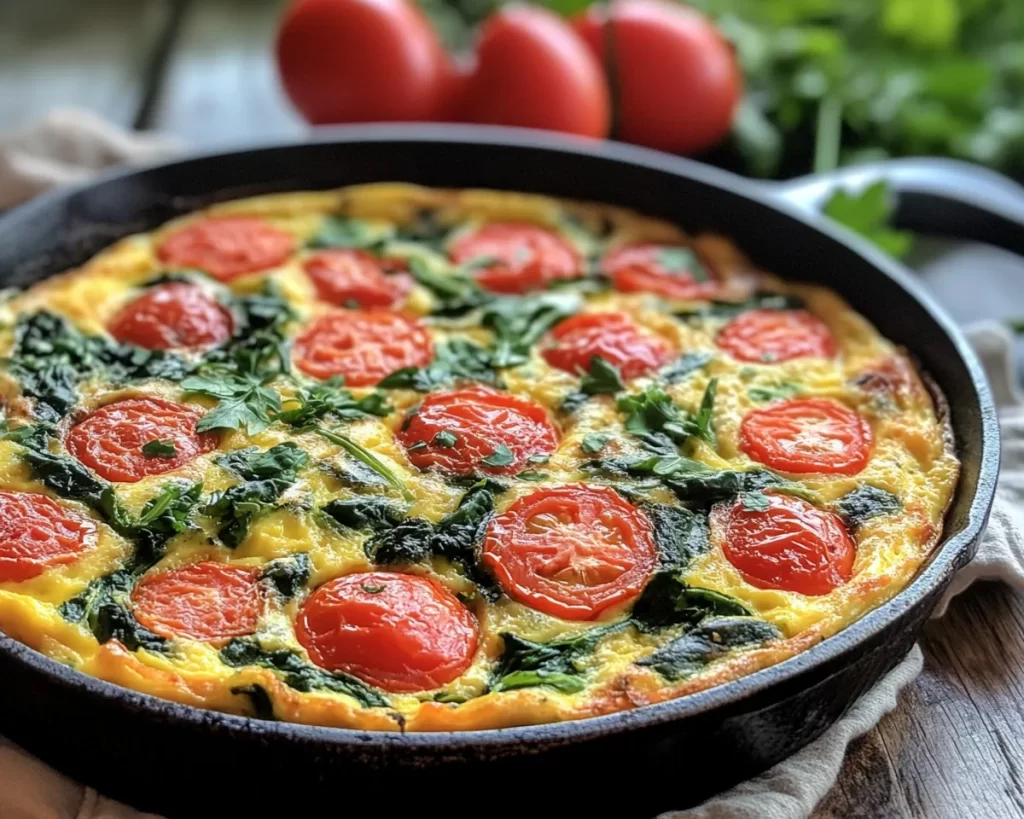
Have you ever experienced that moment when you open your fridge and see a mix of ingredients just waiting to be transformed into something delicious? That’s the beauty of a frittata, and when you add **spinach** and **tomatoes**, you get a dish that’s not only easy to make but incredibly satisfying. The warm aroma fills your kitchen, making it irresistible, and the best part? It’s perfect for breakfast, lunch, or even dinner. This frittata recipe brings together wholesome ingredients in a simple yet elegant way, offering a fulfilling meal that can please your entire family. In this article, I will guide you through crafting the perfect frittata with spinach and tomatoes, sharing tips, variations, and everything else you need to know for a delightful cooking experience.
What Is Frittata Recipe with Spinach + Tomatoes (Healthy Easy)?
A frittata is an Italian dish that resembles an omelet or crustless quiche but is heartier and more versatile. It is typically made by beating eggs and then mixing them with a variety of fillings, such as vegetables, meats, and cheeses, and cooking it all in a skillet. The key is not to stir the eggs too much after adding the fillings. Instead, allow the mixture to set and develop that beautiful, fluffy texture.
What makes spinach and tomatoes particularly special in this frittata is their distinctive flavors and contrasting textures. The juicy, sweet tomatoes complement the green, earthy spinach perfectly. Together, they create a fresh and vibrant dish that’s visually appealing and packed with nutrients. **Spinach** is rich in vitamins A, C, and K, while **tomatoes** add antioxidants like lycopene – not only enhancing the frittata’s taste but also making it a healthful choice.
Origin-wise, frittatas have a rustic Italian background, often being a go-to dish for utilizing leftover ingredients. This makes it not just a delightful meal but also a practical one, especially for busy families or individuals looking to optimize their meals. Whether you’re dining alone or cooking for a group, this frittata comes together quickly and easily, making it a cornerstone of home cooking.
Why You’ll Love This
There are myriad reasons to adore this frittata recipe with spinach and tomatoes. For starters, its **taste** is undeniably fantastic; the savory eggs combine beautifully with the fresh vegetables for a dish that’s bursting with flavor. Secondly, the **ease** of preparation is a significant perk. A typical frittata takes under thirty minutes to whip up, making it an excellent choice for those busy mornings or quick weeknight dinners.
Cost-effectiveness is another fantastic benefit. Most ingredients are budget-friendly and often already in your pantry. Unlike many elaborate dishes, the frittata is forgiving – you can replace or add ingredients based on what you have available. Plus, it’s a healthy meal option. Packed with protein from the eggs and a plethora of vitamins from the vegetables, it aligns perfectly with nutritious eating habits.
With so many misconceptions surrounding eggs and breakfast dishes, this frittata stands out. Some may think a frittata is complicated; on the contrary, it allows for creativity and experimentation in the kitchen—perfect for home cooks at any skill level. If you’re a busy parent juggling multiple schedules, a beginner wanting to impress friends, or anyone looking to eat healthy without spending hours in the kitchen, this frittata is your solution.
Ingredients You’ll Need
To make this delightful frittata with spinach and tomatoes, you’ll need the following ingredients:
- 6 large *eggs*
- 1 cup *fresh spinach*, chopped
- 1 cup *cherry tomatoes*, halved
- 1/2 cup *onion*, diced
- 1/2 cup *milk* (or your preferred dairy or non-dairy alternative)
- 1 teaspoon *olive oil*
- 1/2 teaspoon *salt*
- 1/4 teaspoon *black pepper*
- *Fresh herbs* (like basil or parsley) for garnish
Each of these ingredients plays a crucial role in the overall flavor and texture of the frittata:
– **Eggs**: The backbone of any frittata, providing essential protein and richness.
– **Fresh Spinach**: This leafy green not only adds nutritional value but also offers a delicate, earthy flavor.
– **Cherry Tomatoes**: Their natural sweetness balances the dish and provides a juicy burst with every bite.
– **Onion**: Sautéing onions adds a mild sweetness and depth of flavor as they caramelize.
– **Milk**: This adds creaminess to the frittata. You can use whole milk, almond milk, or any milk of your choice.
– **Olive Oil**: Used for sautéing and adding a touch of richness.
– **Salt and Black Pepper**: Essential for seasoning and enhancing all the dish’s flavors.
– **Fresh Herbs**: Not only for garnish, but they also provide freshness and aroma.
Feel free to customize this list with any other vegetables or proteins—like bell peppers, jalapeños, or cooked bacon—if you’re looking for more variety.
How to Make
Making a frittata with spinach and tomatoes is straightforward. Just follow these steps for a beautiful, fluffy dish that you won’t forget.
- Preheat the Oven: Begin by preheating your oven to 350°F (175°C). This ensures that your frittata cooks evenly and sets without burning.
- Prepare the Vegetables: In a medium skillet, heat 1 teaspoon of *olive oil* over medium heat. Once the oil is hot, add the *diced onions* and sauté until they become translucent and fragrant, about 3-4 minutes. Add the *chopped spinach* and *halved tomatoes* to the skillet, cooking for another 2-3 minutes, until the spinach wilts and the tomatoes soften slightly. Stir occasionally to prevent sticking.
- Beat the Eggs: In a large bowl, crack the *6 large eggs* and add *1/2 cup of milk*, *salt*, and *black pepper*. Whisk the mixture vigorously until everything is well combined and you see some air bubbles forming, which helps create a fluffier texture.
- Combine Ingredients: Once the vegetables have cooled slightly, pour them into the beaten egg mixture. Stir gently until everything is uniformly mixed, ensuring the vegetables are evenly distributed throughout the egg.
- Cook on the Stovetop: Clean out the skillet and return it to the stovetop. Heat an additional teaspoon of olive oil over medium heat. Once hot, pour in the egg and vegetable mixture. Allow it to cook for about 5 minutes without stirring, until the edges begin to set. You might see bubbles forming, indicating that it’s cooking through.
- Transfer to Oven: Once the edges are set, carefully transfer the skillet to your preheated oven. Bake for approximately 15-20 minutes. You’ll know it’s done when the center is set and no longer jiggles when gently shaken.
- Cool and Serve: After removing from the oven, let the frittata cool for a few minutes. This makes slicing easier. Cut it into wedges, and serve warm, garnished with fresh herbs like *basil* or *parsley*.
This step-by-step process not only ensures that you create a delicious and satisfying frittata but also gives you the flexibility to adjust to your taste preferences.
Variations & Substitutions
Veggie-Loaded Variation
If you’re a fan of vegetables, consider adding more colorful options like *bell peppers*, *zucchini*, or *mushrooms*. These extra ingredients will elevate the dish in flavor and texture, providing a delightful crunchy bite alongside the soft spinach and juicy tomatoes. This version is perfect for anyone trying to increase their veggie intake.
Protein-Packed Variation
For those who want to turn this frittata into a more hearty meal, consider adding cooked *bacon*, *ham*, or even *chorizo*. These ingredients can be sautéed with the onions before adding the spinach and tomatoes. Not only do they add a savory depth of flavor, but they also increase the protein content, making it a fantastic breakfast or brunch option for active individuals.
Dairy-Free or Vegan Variation
To make this recipe vegan-friendly, substitute the *eggs* with a mixture of *flaxseed meal* and water or *silken tofu*. For a creaminess reminiscent of dairy, opt for *nut milk* and nutritional yeast in place of cheese. This variation is ideal for those following a plant-based diet, ensuring no one misses out on this deliciously versatile dish.
Cheesy Frittata Variation
Adding *cheese* can elevate the flavor profile significantly. Consider using *feta* or *cheddar* incorporated right into the egg mixture. Grating some cheese over the top just before finishing in the oven creates a beautiful, melted layer that’s hard to resist. This version is for cheese lovers who want a richer, creamier experience.
Common Mistakes to Avoid
When it comes to making a frittata, there are several common pitfalls to be aware of to ensure your dish comes out perfectly each time. One of the most critical mistakes is *overcooking the frittata*. This can lead to a rubbery texture instead of the light, fluffy consistency you desire. To avoid this, keep an eye on the edges; they should look firm while the center can still have a slight jiggle before taking it out of the oven.
Another common mistake is not pre-cooking your vegetables sufficiently. Sautéing the *onions* and *spinach* until they’re translucent and wilted is crucial. This extra step prevents excess moisture from making the frittata soggy. If you skip it, you might end up with a delicious frittata that has a less-than-desirable texture.
Finally, don’t forget to *season* adequately. While it may seem tempting to under-season when cooking eggs, poor seasoning can lead to bland results. A lack of *salt and pepper* or herbs can drown out the vibrant flavors of the dish, so taste along the way to ensure perfection.
Storage, Freezing & Reheating Tips
If you’re lucky enough to have leftovers (though unlikely!), storing a frittata is straightforward. Allow it to cool completely, then slice it into individual portions. Store the slices in an airtight container in the refrigerator for up to three days. When ready to eat, reheat in the microwave or on the stovetop for a quick and nourishing snack.
For longer storage, you can also freeze portions of the frittata. Wrap each slice tightly in plastic wrap or aluminum foil, and then place them in a freezer-safe container. This can extend the storage time to about three months. To reheat, allow it to thaw in the refrigerator overnight, then heat as desired.
When reheating, be cautious about food safety. Always ensure the frittata reaches an internal temperature of 165°F (74°C) before consuming. This simple practice can ensure that your meal remains safe and enjoyable.
Frequently Asked Questions
Can I make a frittata without an oven?
Yes! If you don’t have an oven, you can finish cooking the frittata on the stovetop. Lower the heat and cover the skillet with a lid to trap steam, which helps it cook through. Just be cautious not to burn the bottom. Check periodically until the center is set. This method works beautifully but may require a little extra patience.
Can I use frozen spinach instead of fresh spinach?
Frozen spinach can be a convenient substitute for fresh spinach. Make sure to thaw and drain any excess moisture before adding it to your frittata mix. While frozen spinach may not match the exact texture of fresh, it is still nutritious and saves prep time in a pinch.
How do I know when the frittata is done?
A frittata is perfect when the edges are set, and the center is firm but slightly jiggly. It continues cooking slightly after removed from the oven, so it’s important to let it rest for a few minutes before slicing. Another method is to use a knife or toothpick to check for doneness; it should come out clean when inserted into the middle.
Can I double the recipe for a larger crowd?
Absolutely! Doubling the recipe works well for larger gatherings or meal prep. Just ensure you use a larger skillet or bake the frittata in a larger dish. Keep an eye on the cooking time; it may vary, so a toothpick test will be key to ensuring it’s properly cooked.
What’s the best way to serve a frittata?
Frittatas can be served warm, at room temperature, or even cold. They shine as a standalone dish but can be complemented with fresh fruits, a light salad, or even crusty bread for a complete meal. Don’t hesitate to get creative with garnishes—fresh herbs or a dollop of sour cream can elevate the presentation and flavor.
Conclusion:
In summary, this Frittata Recipe with Spinach and Tomatoes is not only simple to prepare, but it is also versatile, budget-friendly, and packed with nutrition. Whether you are cooking for yourself or your family, the frittata is a dish that can adapt to your tastes and dietary needs. I encourage you to try your hand at making this delightful recipe. Customize it to fit your preferences, and don’t hesitate to share your version with friends and family. Happy cooking!