Prep time: 15 minutes
Cook time: 2 hours
Total time: 2 hours 15 minutes
Servings: 6
When you think of comforting dishes, nothing quite matches the deep, rich flavors of a traditional beef ragu. Have you ever tasted pasta that melted away in your mouth, enveloped in a velvety sauce that pulls you into a culinary embrace? Mouthwatering Beef Ragu Pasta is not just another dinner; it’s a sumptuous experience that transforms an ordinary meal into a feast. Packed with tenderness and flavor, this recipe will have you coming back for seconds and thirds. As you read, you’ll discover why this dish has made its way into family lore and how you can create it in your very own kitchen.
You’ll be learning about the glorious history of this dish, how to bring together essential ingredients, cooking techniques, and clever tips that will elevate your ragu game. Don’t worry if you consider yourself a novice in the kitchen—this recipe is straightforward yet yields fantastic results. A luscious sauce simmered to perfection, and pasta that feels like a warm hug are just around the corner.
What Is Mouthwatering Beef Ragu Pasta?
Mouthwatering Beef Ragu Pasta is a classic Italian dish, originating from the rich culinary traditions of Italy. Ragu itself is a type of meat-based sauce that incorporates various aromatics, tomatoes, and wine, creating a hearty, soul-satisfying meal. The texture is remarkably inviting—slow-cooked beef becomes fork-tender, while the sauce blends effortlessly with pasta, making every bite deliciously memorable.
To make this dish, you typically start by browning the beef, which adds depth and a savory umami flavor. The meat is then simmered with aromatic vegetables and a blend of herbs, usually including oregano, bay leaves, and thyme. This long cooking process helps to develop a profound complexity in terms of flavor and aroma.
You might find that people often associate ragu with a variety of regional styles, but one consistent feature is its heartiness. The sauce should coat your pasta, imparting a comforting warmth that feels like home. In the case of Mouthwatering Beef Ragu Pasta, perfection lies in the balance of flavors, ensuring that each component shines while harmoniously blending into a dish that feels refreshingly authentic.
Why You’ll Love This
There are countless reasons to fall in love with Mouthwatering Beef Ragu Pasta. First and foremost, the taste is undeniable; it possesses a depth that can only be achieved through the perfect slow cooking. You are rewarded with tender, flavorful meat and a sauce that captures the spirit of Italian cuisine. Additionally, this recipe is incredibly versatile. You can serve it on a busy weeknight or save it for a special family gathering.
Preparation is surprisingly simple, making it a pristine choice for busy parents who want to serve something hearty without spending hours in the kitchen after a long day. The cost-effectiveness of this dish is another appealing element. With minimal investment in ingredients, you can prepare a meal that both pleases the palate and satisfies the hunger of family members.
Forget the misconception that pasta and sauce always need a lengthy list of fancy ingredients. In fact, the beauty of this recipe revolves around using quality basic ingredients to achieve stunning results. Although this dish appears elegant, it embraces a sense of rustic comfort that invites you to take your time, savor each bite, and enjoy quality time around the table.
Ingredients You’ll Need
- Olive Oil: Essential for sautéing, it provides richness and flavor. You can substitute it with vegetable oil but may miss the authentic taste.
- Beef Chuck Roast: This is the star of the dish—its marbling ensures the meat becomes tender while simmering. Flank steak can be a leaner alternative, although it may not yield the same juiciness.
- Carrots: Diced for sweetness and color, carrots enhance the sauce’s body. You could replace them with parsnips for an intriguing flavor twist.
- Celery: Adds an aromatic base to the ragu. The crunchy texture during the sautéing stage builds upon the overall flavor.
- Onions: Chopped onions are necessary for sweetness and depth. Shallots can serve as a substitute for a milder, more refined flavor.
- Garlic: Minced garlic delivers a zesty kick. Fresh garlic is preferred, but you can use granulated garlic in a pinch.
- Crushed Tomatoes: The backbone of the sauce, crushed tomatoes provide the essential acidity and are integral for that rich color. Canned whole tomatoes can be broken down for additional texture.
- Red Wine: A splash of red wine elevates the flavor profile remarkably. Feel free to replace it with beef broth if you are avoiding alcohol.
- Herbs: Fresh basil, oregano, and bay leaves contribute to a robust herbal quality. Dried alternatives can work, but use less as they are more concentrated.
- Salt and Pepper: Essential seasoning elements that enhance all other flavors in the dish. Regulate to taste based on dietary preferences.
- Parmesan Cheese: Finely grated for serving, it adds a layer of umami richness that ties everything together. Nutritional yeast can be a great vegan alternative.
How to Make
- Prep the Ingredients: Start by gathering all your ingredients. Chop the carrots, celery, onions, and garlic into fine pieces. For the beef, cut it into large chunks. This preparation plays a crucial role in the cooking process, ensuring even cooking and balanced flavors.
- Sauté the Aromatics: Heat a generous drizzle of olive oil in a large pot over medium heat. Once the oil shimmers, add the chopped onion, carrots, and celery. Allow them to cook for about 5 to 7 minutes until they soften and are fragrant. Stir occasionally to prevent sticking. Incorporating these base vegetables will provide a sturdy foundation for your ragu.
- Brown the Beef: Push the vegetables to the side of the pot and add the beef chunks. Make sure they do not crowd the pan; you may need to do this in batches. Cook until all sides are browned, usually around 8–10 minutes. This browning step is essential as it builds a deep, complex flavor.
- Add Garlic and Deglaze: After browning the beef, mix in the minced garlic and sauté for about 1 minute until fragrant. Pour in the red wine and scrape any browned bits off the bottom of the pot. This technique, called deglazing, captures additional flavor from the caramelized bits. Let the wine reduce by half for about 4–5 minutes.
- Incorporate Tomatoes and Herbs: Stir in the crushed tomatoes, bay leaves, oregano, salt, and pepper. Mix until well-blended. The combination of these ingredients will create a rich base for the ragu. Allow the mixture to simmer for about 2 hours on low heat. This slow cooking is what brings out all the delicious flavors.
- Cook the Pasta: About 15 minutes before serving, bring a pot of salted water to boil. Add the pasta of your choice—tagliatelle or pappardelle work best. Follow the package instructions for cooking time but leave the pasta slightly al dente. You want it to hold up against the hearty ragu.
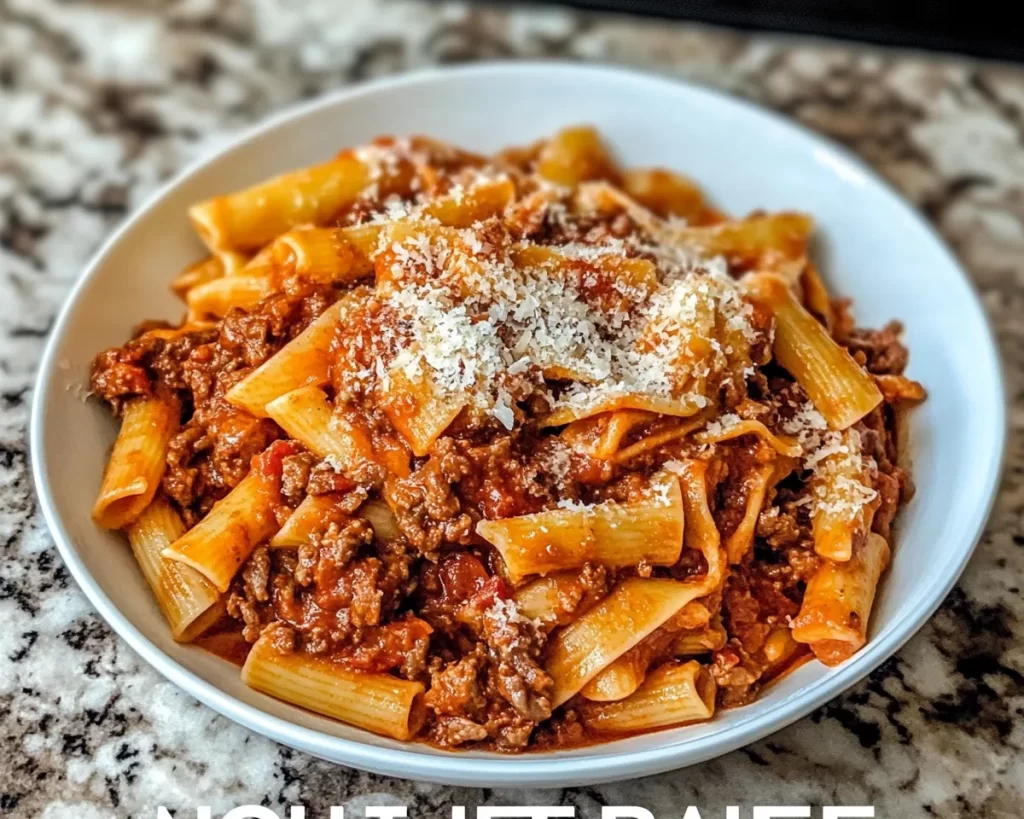
- Combine and Serve: Once the pasta is cooked, drain it and add it directly to the pot of ragu. Toss to coat each noodle generously. Serve hot, garnished with finely grated parmesan and a sprinkle of fresh basil for a finishing touch. The ragu should cling beautifully to the pasta, creating a delightful visual and flavorful experience.
Variations & Substitutions
Vegetarian Ragu: If you’re looking for a meatless option that still delivers on flavor and satisfaction, consider substituting the beef with mushrooms, lentils, or a combination of both. The earthy notes of mushrooms add depth similar to beef, while cooked lentils provide protein and texture. This variation also embraces additional vegetables like zucchini or bell peppers to enhance flavor and nutrition.
Spicy Ragu: If you like a kick to your meal, adding crushed red pepper flakes during the sautéing stage will lend a delightful heat to your ragu. You can also include a splash of hot sauce for extra zing. This version works well with robust pasta shapes that can hold onto the sauce better and provides a comforting warmth that many enjoy.
Slow Cooker Version: For a fuss-free method, you can adapt the traditional ragu to a slow cooker. Place all the prepared ingredients in the slow cooker, set it to low, and allow it to cook for 6 to 8 hours. This method ensures that the flavors meld beautifully and work great for meal prep. Just remember to brown the beef and sauté the aromatics first for added flavor.
Gluten-Free Pasta: For gluten-sensitive individuals, simply substitute the regular pasta with gluten-free options. There are plenty of excellent gluten-free pasta varieties available, including chickpea or brown rice-based pasta, which can hold up well to the rich ragu sauce. Just make sure to watch the cooking times, as they may differ from traditional pasta.
Common Mistakes to Avoid
One common mistake is rushing the browning process of the beef. If you overcrowd the pan, you may end up steaming the meat rather than achieving a nicely browned crust. Always give the meat enough space to sear properly, which contributes to the development of flavor.
Another pitfall is skimping on the simmering time. The key to authentic ragu lies in the slow cooking; cutting this step short can lead to a dish that lacks depth and complexity. Ensure the ragu simmers for at least 2 hours to allow the ingredients to meld beautifully.
Don’t forget to taste as you go. Under-seasoning is a common oversight, especially when it’s time to add salt and pepper. Always taste your ragu before serving and adjust the seasoning as necessary.
Storage, Freezing & Reheating Tips
Mouthwatering Beef Ragu Pasta stores exceptionally well, making it a great candidate for meal prep. To store, first allow the ragu to cool completely in an airtight container. Refrigerate it for up to 3 days, or freeze for up to 3 months. When freezing, consider portioning it out into individual servings for convenience later on.
When reheating, do so slowly on the stove over low heat, adding a splash of water or broth to prevent it from drying out. If using a microwave, heat in short intervals, stirring in between to ensure even warming.
A few key food safety practices to remember include ensuring the ragu reaches a safe internal temperature of 165°F before consumption and never refreezing thawed items. By following these tips, you can enjoy this delicious ragu at your convenience without compromising flavor or quality.
Frequently Asked Questions
Can I make Mouthwatering Beef Ragu Pasta ahead of time?
Absolutely! This dish is perfect for meal prep. You can prepare the ragu in advance, allow it to cool, and store it in the fridge or freezer. It tastes even better the next day, as the flavors continue to develop.
What type of wine should I use in the ragu?
A dry red wine such as Merlot, Chianti, or Pinot Noir works beautifully in this recipe. Choose a wine that you enjoy drinking, as the flavor will concentrate during cooking. If you prefer not to use wine, substituting with beef broth is a good option.
Should I use fresh or dried herbs?
While fresh herbs typically provide superior flavor, dried herbs can be a great alternative. Be cautious with the amount, as dried herbs are more potent than fresh. If using dried herbs, a good rule of thumb is to use one-third the amount called for fresh.
Can I add other vegetables to the sauce?
Definitely! You can include bell peppers, mushrooms, or zucchini for added nutrition and flavor. Just make sure to chop them finely so they cook evenly and integrate into the sauce.
Is this dish child-friendly?
Yes! The flavors are robust yet palatable for most children. To encourage them to try it, you can omit any spicy components and serve it with a sprinkle of cheese, turning it into a family favorite meal.
Conclusion:
In summary, Mouthwatering Beef Ragu Pasta is not just a recipe; it’s an experience that captivates with each bite. The combination of tender meat, rich sauce, and comforting pasta makes for a dish that could easily become a staple on your family table. Don’t hesitate to customize the recipe to your liking, exploring various variations or the additions that feel right for you. This recipe invites you to embrace the process, take your time, and enjoy the warm flavors reminiscent of an Italian kitchen. So grab your apron, gather your loved ones, and create something truly special worth sharing.