Prep time: 25 minutes
Cook time: 35 minutes
Total time: 1 hour
Servings: 12
Carrot cake has long been a beloved dessert, especially during spring celebrations like Easter. The unique combination of tender cake infused with sweet, moist carrots creates a flavor that is both comforting and indulgent. When topped with a creamy, rich cream cheese frosting, this dessert becomes an unforgettable centerpiece. Whether you’re hosting a holiday gathering or simply want to treat yourself and your family, this Easter Carrot Cake with Cream Cheese Frosting is sure to delight everyone at the table.
What makes this recipe stand out is its balance of flavors and moist texture, resulting from the ever-reliable carrot as the star ingredient. As you dive into the process, you’ll discover how easy it is to create a cake that not only tastes phenomenal but also looks stunning. You’ll learn about essential tips and variations that can elevate your carrot cake experience, from enhanced flavor profiles to dietary adaptations.
What Is Easter Carrot Cake with Cream Cheese Frosting?
Easter Carrot Cake, in its essence, is a *moist* and *flavorful* cake traditionally made with grated carrots, flour, eggs, sugar, and a blend of spices such as cinnamon and nutmeg. The addition of cream cheese frosting adds a luscious and tangy layer that complements the sweetness of the cake beautifully. Historically, carrot cake gained popularity during the early 20th century, utilizing carrots as a natural sweetener. The texture is soft and airy yet dense enough to hold together while allowing the celebration of spring flavors to shine.
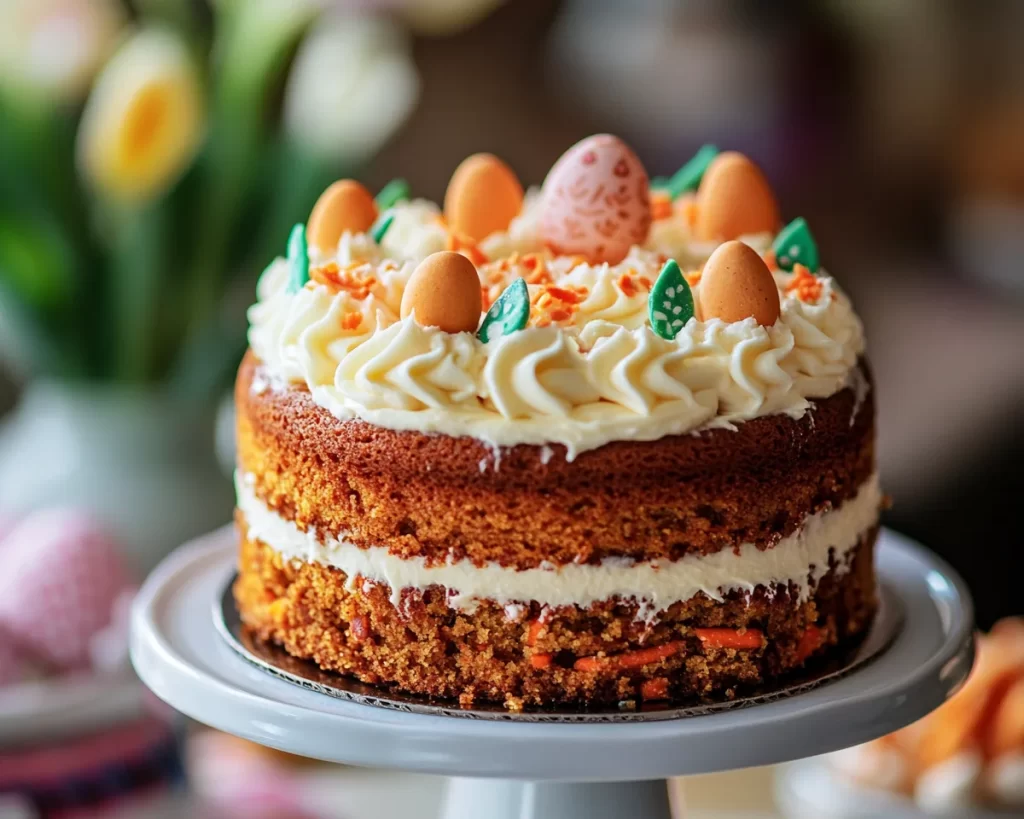
You’ll find that the cake itself features a harmonious blend of sweet and spiced notes, creating an inviting aroma as it bakes. The grated carrots not only provide *moisture* but also contribute a subtle sweetness that plays well with the *savory* undertones of the spices. As the finished cake rests on your table, it becomes an eye-catching centerpiece finished off with fluffy frosting that adorns each slice. This cake’s charming appearance matches its delicious flavor, making it an ideal option for celebrating Easter.
Why You’ll Love This
There are countless reasons to adore the Easter Carrot Cake with Cream Cheese Frosting. First and foremost, the taste is out of this world! You get to enjoy the delightful sweetness of the carrots intermingled with the warm spices, and paired with the rich cream cheese frosting, it’s a flavor match made in heaven. Additionally, this cake is practical to make, offering a straightforward approach perfect for beginners or busy parents who cherish homemade desserts.
Budget-wise, this recipe is also a winner since it mainly utilizes common ingredients you might already have in your pantry. In terms of health, carrot cake can be a guilt-free treat when made with wholesome ingredients; carrots lend vitamins and fiber to your slice, making it a slightly *healthier* option compared to other cakes. Another key aspect is its versatility; you can tailor it with various additions like nuts, pineapple, or even coconut to create your family’s signature cake.
With every bite, you’ll be pleased to find that this recipe does not skimp on *texture* or *flavor*. Understanding common misconceptions, such as assuming all carrot cakes taste the same, will enhance your appreciation for this treat’s uniqueness. You can enjoy a classic take or put your twist on it, making it an exciting dessert for everyone to enjoy.
Ingredients You’ll Need
- 2 cups of all-purpose flour: This serves as the base, giving structure to the cake. You can substitute it with gluten-free flour for a gluten-free version.
- 2 cups of granulated sugar: Adds sweetness and moisture. Brown sugar can also be used for a deeper flavor.
- 1 cup of vegetable oil: This ingredient keeps the cake moist. You may opt for unsweetened applesauce for a healthier fat substitution.
- 4 large eggs: The eggs are essential for binding the cake ingredients together and providing lift.
- 3 cups of grated carrots: The star of the dish, carrots add moisture, texture, and natural sweetness.
- 1 teaspoon of baking powder: Helps the cake rise and become fluffy.
- 1 teaspoon of baking soda: Works in tandem with baking powder to achieve a light texture.
- 1 teaspoon of ground cinnamon: Provides warmth and flavor that perfectly complements the carrots.
- 1/2 teaspoon of ground nutmeg: Adds aromatic depth and enhances the overall flavor profile.
- 1/4 teaspoon of salt: Essential for balancing sweetness.
- 1 cup of crushed pineapple: This optional addition offers natural sweetness and *extra moisture*, making the cake even more tender.
- 3 cups of cream cheese: The main ingredient for the frosting, it provides a rich, tangy flavor.
- 2 cups of powdered sugar: This sweetens the frosting while ensuring a smooth texture.
- 1 teaspoon of vanilla extract: Elevates the flavor of the frosting.
Each ingredient plays a significant role in making this cake a delightful experience. Feel free to explore substitutes that could enhance your cake or suit dietary needs without sacrificing flavor and texture.
How to Make
- Preheat the oven: Start by preheating your oven to 350°F (175°C). This ensures that the cake cooks evenly. Preparing your baking pans in advance will also save you time. Grease and flour two 9-inch round cake pans.
- Mix dry ingredients: In a large mixing bowl, sift together the all-purpose flour, baking powder, baking soda, cinnamon, nutmeg, and salt. Sifting helps to integrate air, making the dry ingredients lighter and easier to mix into the batter.
- Combine sugar and oil: In another bowl, mix granulated sugar and vegetable oil until well blended. This mixture should be smooth and creamy, which will help keep your cake moist.
- Add eggs: Add the eggs one at a time to the sugar and oil mixture, beating well after each addition. This step is crucial for creating a light texture in your cake; proper beating incorporates air, which will make your cake rise beautifully.
- Fold in carrots: Gradually add the grated carrots to the wet mixture, stirring gently until fully combined. The carrots not only provide sweetness and moisture but also give the cake its lovely orange color.
- Combine wet and dry ingredients: Slowly mix the dry ingredients into the wet batter, being careful not to overmix. Overmixing can lead to a dense, chewy cake, unlike the light and fluffy texture you’re aiming for.
- Add optional ingredients: If you’re adding crushed pineapple or nuts, fold these in next, ensuring they are evenly distributed throughout the batter. The pineapple will create *extra moisture* while enhancing sweetness and flavor.
- Pour into pans: Divide the batter evenly between the greased cake pans. Use a spatula to smooth out the tops for even baking.
- Bake: Place the cakes in the preheated oven and bake for 30-35 minutes, or until a toothpick inserted in the center comes out clean. Keep an eye on the cakes; don’t open the oven door too frequently as it can cause them to collapse.
- Cool: Once baked, remove the cakes from the oven and let them cool in the pans for about 10 minutes before transferring to a wire rack to cool completely. This step ensures they don’t stick to the pans and helps prevent dryness.
- Prepare the frosting: In a mixing bowl, combine cream cheese, powdered sugar, and vanilla extract. Beat until smooth and fluffy. Ensure your cream cheese is at room temperature for easier blending, which will yield a smoother frosting.
- Frost the cake: Once the cakes have cooled completely, spread a generous layer of frosting between the layers, then coat the top and sides of the cake. Get creative with your frosting; feel free to embellish with additional grated carrots or nuts.
With each step, you’ll find that the process is simple yet rewarding. The final product will be a stunning cake that not only looks amazing but tastes heavenly, too!
Variations & Substitutions
Gluten-Free Carrot Cake: If you or someone in your family has a gluten intolerance, you can easily swap out all-purpose flour for a gluten-free blend. Make sure to use a flour mix that includes xantham gum to maintain the cake’s texture. You might also want to monitor baking time, as gluten-free flours can vary in moisture absorption.
Carrot Cake with Pineapple: To make this cake even more moist, consider adding crushed pineapple to the batter. The fruity flavor pairs exceptionally well with the spices and carrots, creating a delightful tropical twist. Ensure you drain the pineapple well to prevent excess moisture; otherwise, it might lead to a soggy cake.
Add Nuts or Raisins: Chopped walnuts or pecans can add a delightful crunch to your cake. If you’re a fan of dried fruit, consider tossing in some raisins for natural sweetness. Both options complement the texture of the cake beautifully and offer added nutritional benefits.
Vegan Carrot Cake: It’s possible to create a delicious vegan version of this cake by replacing eggs with flax eggs (1 tablespoon of ground flaxseed mixed with 2.5 tablespoons of water per egg), and substituting the cream cheese with a dairy-free alternative. Use a plant-based oil and non-dairy milk in place of dairy products.
Common Mistakes to Avoid
One common mistake is using too much flour, which can make the cake dense and dry. To avoid this, always measure your flour accurately. Spoon the flour into your measuring cup and level it off without packing it down.
Another pitfall is overbaking the cake. This can lead to a dry result. Always keep an eye on the baking time and perform the toothpick test—pull the cake out of the oven when the toothpick comes out clean or with a few moist crumbs.
Additionally, those who opt for cream cheese frosting often find it too runny; using cold cream cheese instead of room temperature is the reason why. Be sure to let your cream cheese sit out before mixing; this ensures the frosting is creamy and not too thin.
Finally, not properly incorporating air into the batter by under-mixing can lead to a dense cake. Make sure to mix the wet and dry ingredients well enough to create a fluffy texture, but avoid overmixing.
Storage, Freezing & Reheating Tips
For storage, place any leftover cake in an airtight container in the refrigerator for up to 5 days. The marriage of flavors improves over time, making it a delight even days after baking.
If you wish to freeze the cake, wrap each layer tightly in plastic wrap, followed by aluminum foil to protect from freezer burn. This will last up to 3 months. To thaw, simply remove from the freezer and let it sit at room temperature or place in the fridge overnight. When ready to serve, frost it fresh for the best flavor.
When reheating a piece, a quick 10-15 seconds in the microwave will warm it up beautifully without drying it out. If you prefer, you can enjoy it chilled directly from the fridge for a refreshing treat.
Frequently Asked Questions
Can I make this cake ahead of time?
Yes! This cake can be made a day in advance. It actually tastes better as it rests, allowing the flavors to meld together. Just be sure to frost it closer to serving to maintain the freshness of the frosting.
What can I serve with carrot cake?
Carrot cake pairs wonderfully with a cup of coffee or tea. It can also be served alongside a simple fruit salad or ice cream for those seeking extra sweetness and contrast in textures.
Is carrot cake healthy?
While traditional carrot cake does include sugar and fats, it also contains nutrient-rich carrots, which offer some vitamins and fiber. You can make it healthier by substituting ingredients as mentioned in the variations section, like using whole wheat flour or reducing sugar.
Can I use other types of frosting?
Absolutely! While cream cheese frosting is a classic choice, you can try using buttercream, whipped cream, or even a light glaze. Each frosting type can bring a unique flavor and texture profile to the cake.
How should I store leftover carrot cake?
Leftover carrot cake should be stored in an airtight container in the refrigerator. It will stay fresh for up to 5 days. If you want to keep it longer, freezing is a great option as well.
Conclusion:
This Easter Carrot Cake with Cream Cheese Frosting is not just a dessert; it is a celebration of flavors and a joyful way to add sweetness to your gatherings. With its moist consistency, delightful spices, and creamy frosting, it’s no wonder why this cake is a favorite among many. I encourage you to try making it this Easter, customize it to your taste, and enjoy a slice together with loved ones. Remember, baking is all about sharing joy, so don’t hesitate to invite others into your kitchen as you whip up this delicious cake!