Prep time: 30 minutes
Cook time: 40 minutes
Total time: 1 hour 10 minutes
Servings: 12
Imagine a festive gathering where the aroma of rich coconut wafts through the air, tantalizing your senses and beckoning you to the dessert table. This is what awaits you with an Easter Coconut Cake. Typically enjoyed during the Easter holiday, this cake is not just a dessert; it’s an experience that captures the essence of springtime celebrations with its moist texture, sweet coconut flavor, and luscious frosting. In this recipe, you’ll discover the intricacies of blending flavors, achieving the perfect balance of sweetness, and crafting a visually delightful dessert. Get ready to impress, whether it’s for a family gathering, a party, or simply because you need a slice of heaven on your plate!
This recipe is special not only for its delightful taste but also for its ease of preparation. Even if it’s your first time in the kitchen, you’ll find that the step-by-step instructions are manageable, ensuring that you won’t be overwhelmed. We’ll cover essential cooking tips along the way, so you can avoid common mistakes and achieve a cake that not only tastes great but also looks stunning. By the end of this article, you will feel empowered to take on the challenge of making your own Easter Coconut Cake.
What Is Easter Coconut Cake?
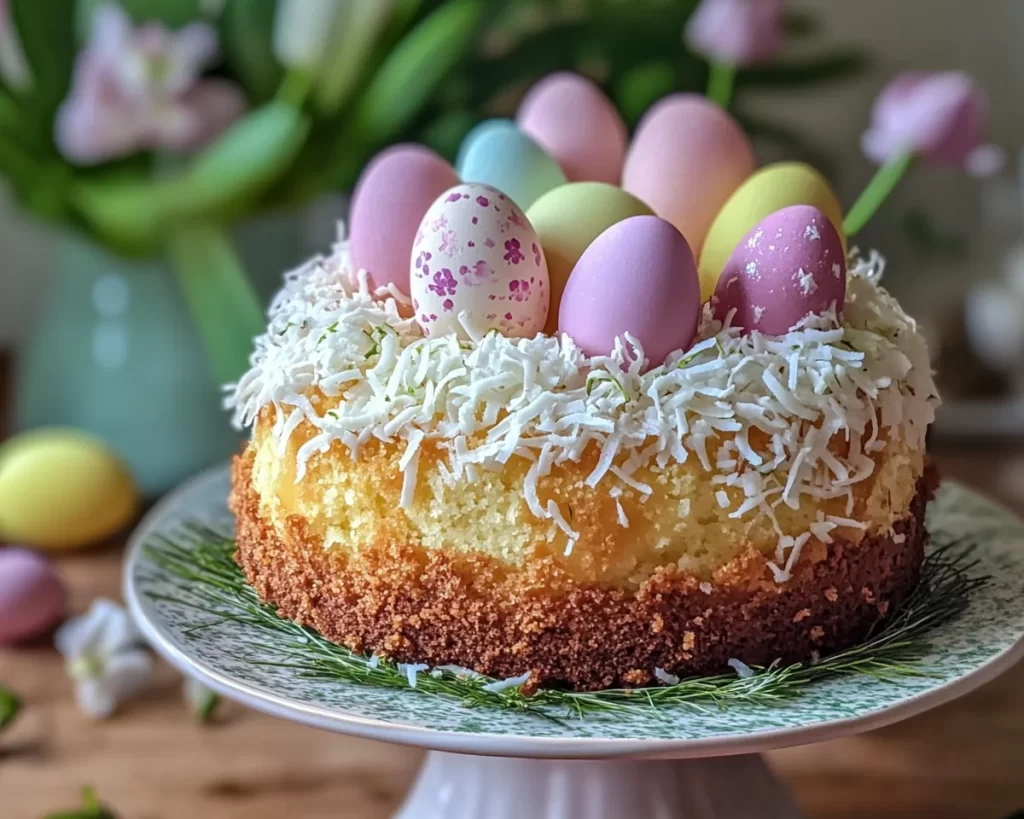
Easter Coconut Cake is a traditional dessert that has graced tables during Easter celebrations for generations. Often made to commemorate the arrival of spring, this cake typically embodies three layers of moist, fluffy sponge cake infused with the rich flavor of coconut. Each layer is generously coated in a decadent coconut frosting, which is often topped off with sweetened flaked coconut to enhance both its texture and aesthetic appeal.
The origins of coconut cake can be traced back to the Southern United States, where coconut was a popular ingredient due to its tropical flavor profile and versatility. The cake’s fluffy, airy texture is complemented by the soft, moist interior, offering a delightful contrast to the rich frosting. As you slice into the cake, the light crumb falls away, revealing layers that are generously permeated with coconut flavor. The experience is aromatic and indulgent, leaving a lingering sweetness that makes it utterly unforgettable.
This cake not only represents the celebration of Easter but also serves as a canvas for creativity. With its simple yet rich ingredients, you can adapt it to your preferences, making it a great choice for various occasions. Whether you’re a novice or an experienced baker, Easter Coconut Cake is the perfect way to utilize simple pantry staples to create something extraordinary.
Why You’ll Love This
This Easter Coconut Cake is beloved for several reasons. Firstly, the **taste** is simply divine. The combination of sweet coconut, rich butter, and the subtle hint of vanilla creates a flavor profile that tantalizes your taste buds from the first bite to the last. Each mouthful is bursting with flavor, reminding you of the joys of spring and celebration.
Secondly, the **ease** of preparation makes it a fantastic choice for both beginner bakers and seasoned chefs. With simple, straightforward steps and readily available ingredients, it’s accessible for anyone looking to dive into the world of baking. You don’t need to be an expert to create a cake that looks like it came straight from a professional bakery.
In addition to its deliciousness and ease, this recipe is budget-friendly. Compared to other elaborate desserts, the ingredients for Easter Coconut Cake are both affordable and easy to find, making it a cost-effective option for your holiday celebrations. It allows you to impress your guests without breaking the bank, making it a win-win.
Finally, the versatility of the cake cannot be overstated. You can modify it to match dietary needs or personal preferences, catering to various tastes and diets. The options are endless, from adding various fillings to experimenting with toppings. In creating this cake, you’re not just making a dessert; you’re crafting an experience that everyone at your gathering can enjoy.
Ingredients You’ll Need
- All-purpose flour: 2¾ cups – This forms the structure of the cake, giving it a light and airy texture. You can substitute it with gluten-free flour for a gluten-free version.
- Baking powder: 1 tablespoon – This is crucial for leavening, helping the cake rise and achieve that fluffy texture.
- Salt: ½ teaspoon – Enhances the flavors of the other ingredients, balancing the sweetness.
- Unsalted butter: 1 cup (room temperature) – Provides richness and moisture to the cake. Make sure it’s softened for easier creaming.
- Sugar: 2 cups – This sweetens the cake and contributes to its tender crumb.
- Eggs: 4 large – Adds structure and moisture. Always use room temperature eggs for better mixing.
- Vanilla extract: 2 teaspoons – This will deepen the flavor profile, complementing the coconut perfectly.
- Coconut milk: 1 cup – A key component for that authentic coconut flavor.
- Shredded coconut: 1 cup – Adds texture and intense coconut flavor to the cake and the frosting.
- Powdered sugar: 4 cups – For the frosting, it helps achieve a smooth and creamy texture.
- Heavy cream: ½ cup – This is essential for creating a rich and fluffy frosting.
These ingredients are straightforward and commonly found in most pantries, which makes crafting this Easter Coconut Cake incredibly simple. However, if you have dietary restrictions or preferences, numerous substitutes can help you achieve the same delightful end result.
How to Make
1. **Preheat your oven:** Start by preheating your oven to 350°F (175°C) to ensure it’s hot and ready for baking. Proper temperature is essential for the cake to rise correctly. Prepare your cake pans by greasing them generously with butter and then dusting them with flour to prevent sticking.
2. **Mix dry ingredients:** In a medium bowl, combine the all-purpose flour, baking powder, and salt. Whisk these together to ensure that everything is evenly mixed. This step is crucial as it helps the baking powder to distribute evenly throughout the flour, which will promote even rising.
3. **Cream butter and sugar:** In a large mixing bowl, combine the room temperature unsalted butter and granulated sugar. Using an electric mixer on medium speed, cream them together until the mixture is light and fluffy, about 4-5 minutes. This process incorporates air into the batter, resulting in a tender cake.
4. **Add eggs and vanilla:** Add the eggs, one at a time, mixing well after each addition. Follow this by incorporating the vanilla extract and combining it until smooth. The mixture should become light in color and smooth, further enhancing the cake’s richness.
5. **Alternate adding dry ingredients and coconut milk:** Gradually add the flour mixture to the butter mixture, alternating with the coconut milk. Start with the flour, followed by coconut milk, mixing gently but thoroughly after each addition. This method prevents overmixing and maintains a light batter.
6. **Fold in shredded coconut:** Gently fold in the shredded coconut. This will provide texture and a coconut burst in every bite. Be careful not to overmix; use a spatula to get everything combined evenly without losing air.
7. **Bake the cakes:** Divide the batter evenly among the prepared cake pans. Bake in the preheated oven for 30-35 minutes or until a toothpick inserted into the center comes out clean. If you are using multiple pans, rotate them halfway through to ensure even baking.
8. **Cool the layers:** Once baked, remove the cakes from the oven and let them cool in the pans for about 10 minutes. Then, carefully take the cakes out and transfer them to a wire rack to cool completely. This step is crucial; if the layers are not fully cooled, they might crumble when you frost them.
9. **Prepare the frosting:** In a mixing bowl, combine the heavy cream and powdered sugar. Using an electric mixer, whip until stiff peaks form. This will create a light and fluffy frosting that will easily spread and hold its shape on the cake.
10. **Assemble the cake:** Once your cake layers have cooled completely, place one layer on a serving platter. Spread a generous amount of frosting over the top, then add another layer. Repeat this process with the remaining layers. Finally, cover the entire cake with frosting and top with additional shredded coconut for a beautiful presentation.
11. **Chill before serving:** Allow the cake to chill in the refrigerator for at least an hour before serving. This helps the flavors meld together, and the frosting will set perfectly.
By following these steps, you can create a stunning Easter Coconut Cake that not only looks impressive but also tastes divine. Your kitchen will be filled with the irresistible aroma of coconut as you work your way through this satisfying recipe.
Variations & Substitutions
Gluten-Free Coconut Cake: If you’re catering to gluten-free eaters, substitute the all-purpose flour with a gluten-free flour blend. This alternative will still provide a fluffy cake, though be attentive to the blend’s unique properties. Ensure that the baking powder is also gluten-free. The taste and texture will remain delightful, allowing everyone to enjoy this flavorful cake.
Chocolate Coconut Cake: For chocolate lovers, swap out ½ to 1 cup of all-purpose flour with unsweetened cocoa powder. This variation provides a rich chocolate flavor that pairs beautifully with coconut. You can also add some chocolate chips into the batter for an extra surprise. Just ensure to keep an eye on your baking time as the cocoa can slightly alter how fast the cake bakes.
Vegan Coconut Cake: For a vegan variation, replace the eggs with flax eggs by mixing 1 tablespoon of ground flaxseed with 2.5 tablespoons of water, allowing it to sit for a few minutes to thicken. Substitute the butter with coconut oil or vegan butter and use unsweetened almond milk instead of coconut milk. This delicious alternative allows everyone to enjoy a slice without compromising on flavor.
Coconut Cream Cheese Frosting: For an extra indulgent frosting, mix 8 ounces of room temperature cream cheese with the whipped heavy cream and powdered sugar. The cream cheese adds a tangy flavor that perfectly balances the sweetness of the cake. It’s a delightful twist that provides a rich and creamy texture.
Fruit-Filled Coconut Cake: To make your cake even more exciting, try incorporating some fresh fruit layers, such as sliced strawberries or peaches, between the cake layers. This addition adds a burst of freshness and balances the sweetness of the cake. When combined with the coconut frosting, the entire dessert has a refreshing quality that is perfect for any spring gathering.
Each of these variations allows you to personalize your Easter Coconut Cake according to your needs and preferences. Baking is all about creativity, and experimenting with different flavors can lead to delightful discoveries!
Common Mistakes to Avoid
One of the most frequent mistakes when baking a cake is **not properly measuring ingredients**. Baking is a science, and even slight miscalculations can yield undesired results, such as a dense or overly dry cake. Always use a kitchen scale or proper measuring cups and spoons to achieve accuracy.
Another common issue is **overmixing the batter**. While mixing the ingredients is crucial to combine them, you should be careful not to overdo it, as this can incorporate too much air or develop gluten, resulting in a tough cake. Mix until just combined and then stop.
Using cold ingredients instead of room temperature can also lead to problems. **Cold eggs and butter** can cause your batter to come together unevenly, affecting the final rise and texture. Prior to baking, take eggs and butter out of the refrigerator to allow them time to reach room temperature.
Finally, be sure not to **open the oven door too frequently** while the cake is baking. Every time you do, you’re letting heat escape, which can impact the baking time and the rise of the cake. Try to resist the urge until the final few minutes are approaching, using a light to check if it’s done.
By avoiding these common mistakes, you’re much more likely to create a perfect Easter Coconut Cake that will impress your family and friends.
Storage, Freezing & Reheating Tips
Your Easter Coconut Cake can be stored at room temperature for up to three days as long as it’s properly covered with plastic wrap or stored in an airtight container. However, for optimal freshness and moisture retention, consider refrigerating it. It can last up to a week in the refrigerator but should be allowed to come to room temperature before serving for the best flavor and texture.
If you’re looking to make your cake ahead of time, you can freeze it. Wrap each layer tightly in plastic wrap and aluminum foil, ensuring that they are well protected. It can be frozen for up to three months. When you’re ready to enjoy it, simply transfer the layers to the refrigerator overnight to allow them to slowly thaw. After thawing, you can frost the cake as desired.
For reheating, it’s best to serve the cake at room temperature rather than microwaving it, which can alter the texture. If you must warm it slightly, consider microwaving individual slices for a few seconds, just enough to take the chill off.
By following these storage tips, you can prolong the freshness of your Easter Coconut Cake, allowing you to savor each delicious bite for days to come.
Frequently Asked Questions
Can I use unsweetened coconut instead of sweetened?
Absolutely! If you prefer a less sweet cake, you can use unsweetened shredded coconut. Just remember that the taste will be milder, so you might want to adjust the sugar content slightly to compensate.
Can I make this cake ahead of time?
Yes, you can! This cake can be baked in advance and frozen for later use. It’s advisable to frost it closer to the time of serving to maintain the freshness of the frosting. Simply store the cooled layers in the freezer wrapped well in plastic wrap and foil.
How should I store leftover cake?
Leftover Easter Coconut Cake should be stored in an airtight container at room temperature for up to three days, or in the fridge for up to a week. If you prefer, you can freeze individual slices for future enjoyment as well.
Is this cake suitable for other celebrations besides Easter?
Absolutely! While this cake is a traditional Easter dessert, it’s delicious any time of year. Its light coconut flavor is perfect for summer picnics, birthday parties, or any special occasion.
Can I substitute coconut milk with another type of milk?
You can substitute coconut milk with another non-dairy milk, such as almond or soy milk. However, the flavor will be different. If you’re aiming for a strong coconut flavor, it’s best to stick with coconut milk.
Conclusion:
The Easter Coconut Cake is a delightful choice that combines exceptional taste with a visible presentation. Not only will you enjoy making it, but your friends and family will surely be impressed by your baking prowess. Don’t hesitate to explore different variations, customize it to your specific needs, or even add your unique twist. With this recipe, you have all the tools necessary to create a centerpiece dessert that will leave everyone craving more. So roll up your sleeves, gather your ingredients, and embark on this delicious baking adventure!