Prep time: 15 minutes
Cook time: 20 minutes
Total time: 35 minutes
Servings: 4
Are you ready to embark on a culinary journey that will tantalize your taste buds? If you love the vibrant flavors of Thai cuisine, you’re in for a treat with Kuay Tiew Kua Gai. This delightful dish, featuring stir-fried rice noodles with succulent chicken, is not just a meal; it’s an experience filled with aromatic spices and savory goodness. Whether you’re a busy parent looking for a quick weeknight dinner or a newbie in the kitchen eager to impress, this recipe is simple enough to provide satisfying results without the fuss.
In this article, you’ll learn everything from the key components that make this dish special to simple yet effective cooking techniques. You will also discover variations and substitutions that allow you to customize the recipe based on your dietary needs or preferences. Let’s dive into this delicious world of Kuay Tiew Kua Gai!
What Is 🍜 Kuay Tiew Kua Gai Thai Chicken Stir-Fried Rice Noodles?
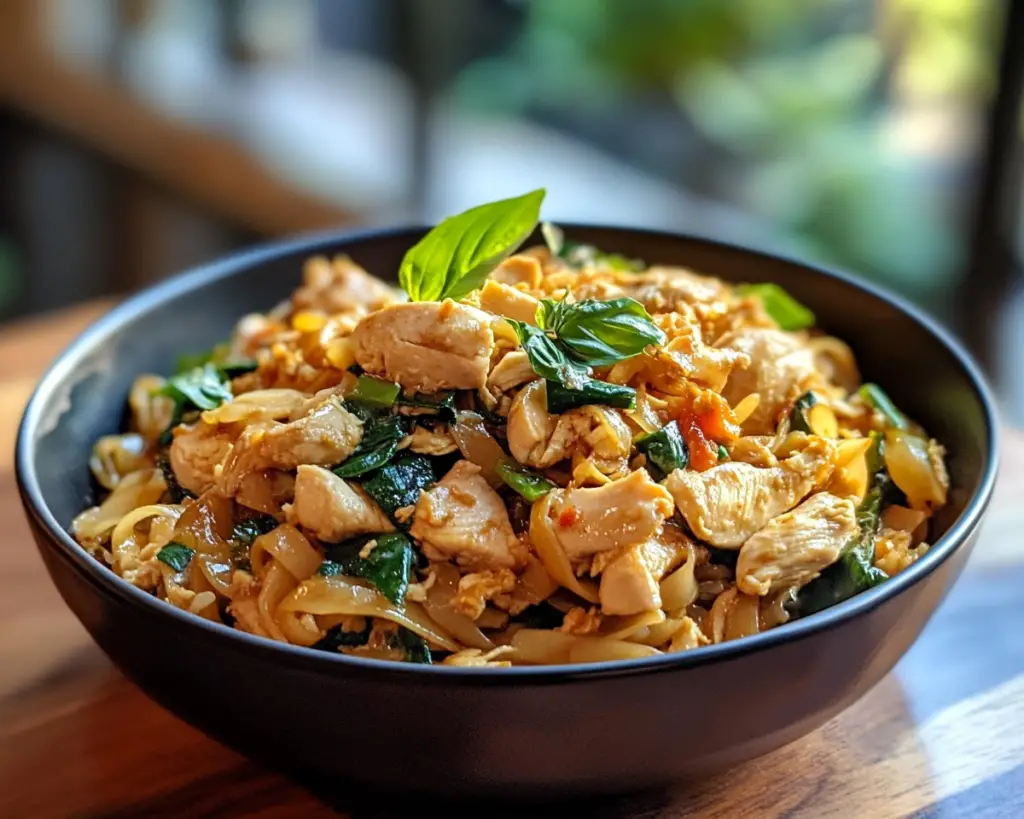
Kuay Tiew Kua Gai, often simply referred to as Thai chicken stir-fried rice noodles, is a popular street food dish that has roots in Thai culinary traditions. The name itself translates to “stir-fried noodles with chicken.” The central ingredient, **flat rice noodles**, brings a chewy texture that perfectly complements the tender chicken pieces. What sets this dish apart is its balance of flavors—sweet, salty, and a hint of spice—thanks to ingredients like soy sauce, garlic, and the essential element of freshness from Thai basil.
The preparation involves quick stir-frying, allowing the flavors to meld beautifully in a matter of minutes. When made correctly, the noodles have a slight char from the high-heat cooking process, adding another layer of taste. The dish is often garnished with fresh bean sprouts and lime for an extra zing, making it perfect for any meal of the day, whether it be lunch, dinner, or a midnight snack.
This dish is not just a treat for your taste buds; it also has versatility in its preparation and presentation. You can easily switch up the proteins, add vegetables, or even adjust the heat level to suit your personal preference. Whether you’re a seasoned cook or just starting, Kuay Tiew Kua Gai can be a rewarding cooking adventure that brings authentic Thai flavors to your home kitchen.
Why You’ll Love This
You might be wondering why you should give Kuay Tiew Kua Gai a try. For starters, you’ll find that this recipe not only satisfies your cravings but also proves to be a fantastic meal prep option. It’s a one-pan dish, saving you time on cleanup while allowing you to whip up a restaurant-quality meal in just 35 minutes! **Eating out can quickly rack up expenses,** but making this delectable dish at home keeps your budget in check while allowing you to indulge in authentic flavors.
Another reason to love this recipe is its adaptability. Whether you need to switch out chicken for tofu to accommodate a vegetarian lifestyle or prefer to load your dish with fresh vegetables, the options are endless. It’s a recipe that invites creativity and encourages you to experiment with different ingredients while maintaining its classic essence. **Unlike many complex dishes**, Kuay Tiew Kua Gai is approachable for beginners, thanks to its straightforward steps and easily available ingredients.
It also provides excellent nutritional value. Chicken is an excellent source of protein, and by including fresh vegetables, you’re enhancing the dish’s health benefits. Adding nutrient-rich ingredients ensures that your meal is satisfying while nourishing your body.
Ingredients You’ll Need
To create this invigorating dish, you’ll need several key ingredients. Here’s a list to guide you:
- Flat rice noodles: The foundation of this dish, these noodles have a soft and chewy texture that soaks up flavors beautifully.
- Chicken breast: Tender and lean, chicken breast cooks quickly. Feel free to substitute with tofu or shrimp for a different protein.
- Garlic: Fresh minced garlic adds a pungent aroma that enhances the overall flavor of the dish.
- Soy sauce: This umami-packed ingredient provides the savory depth characteristic of many Asian dishes.
- Sugar: A small amount balances the flavors, making the dish more complex; use brown sugar for richer undertones.
- Thai basil: This aromatic herb adds a unique flavor; if unavailable, you can use regular basil, but the taste will differ.
- Veggies (bean sprouts, carrots, bell peppers): These not only add nutrition but also a vibrant crunch!
- Lime: Fresh lime juice provides acidity that cuts through the richness of the noodles.
- Vegetable oil: Essential for high-heat stir-frying, ensuring your noodles don’t stick and get that desirable sear.
Each ingredient plays a crucial role in bringing forth the authentic flavors of this Thai classic. You don’t have to worry if something is missing; consider these substitutes:
– **Rice noodles:** If you can’t find flat rice noodles, egg noodles or even spaghetti can be used in a pinch.
– **Chicken:** Any cut of chicken works, but thighs will give you juicier results. You could also opt for sautéed tempeh or seitan for a vegetarian option.
– **Soy sauce:** If you need a gluten-free alternative, use tamari instead.
With these ingredients on hand, you’re well on your way to enjoying a delightful home-cooked meal.
How to Make
Making Kuay Tiew Kua Gai at home is a straightforward process that involves a few simple steps. Here’s how to do it:
- Soak the rice noodles: Start by placing your flat rice noodles in hot water for about 20 minutes or until they soften. This step is crucial as it allows for even cooking when you stir-fry. Make sure not to over-soak them; they should be al dente, ready to absorb heavy flavors. Drain them well and set aside.
- Prepare the chicken: Slice the chicken breast into thin strips for quick cooking. This also allows the flavors to penetrate the meat better. If you are using tofu or another protein, make sure it’s pressed and cut into similar-sized strips. This allows for even cooking.
- Heat the oil: In a large pan or wok, heat around two tablespoons of vegetable oil over medium-high heat. The oil needs to be hot enough for stir-frying but not smoking. A hot pan will ensure that the chicken gets that crispy exterior while staying juicy inside.
- Sauté the garlic: Add minced garlic to the hot oil and sauté for about 30 seconds, or until fragrant. Be careful not to burn the garlic as it can turn bitter, overpowering the dish. The aroma at this stage will surely awaken your senses and build anticipation for the final product.
- Add the chicken: Toss in your sliced chicken and stir-fry for around 5-7 minutes, or until cooked through and slightly charred. If you’re using tofu, cook it until golden brown on all sides. The key is high heat; it creates those beautiful flavors often associated with restaurant-style dishes.
- Combine the noodles: Add the soaked, drained rice noodles to the pan. It’s important to gently toss them with the chicken, ensuring every strand is coated with delicious garlic and that no noodles get stuck together. Stir well and allow them to cook for an additional 2-3 minutes. The noodles will begin to soak up the flavors and become a little crispy.
- Flavor it up: Stir in soy sauce and sugar, making sure to mix everything well. This is your opportunity to adjust the flavors; taste the mixture and see if it needs more soy sauce or perhaps a dash of salt. Cooking at high heat will give you that desirable char and depth of flavor.
- Add vegetables: Toss in your choice of vegetables such as bean sprouts, shredded carrots, or bell peppers, and cook for another 2 minutes. Adding these at the last moment helps maintain their crunchiness, offering a refreshing contrast to the soft noodles.
- Finish with basil: Finally, stir in a generous handful of fresh Thai basil leaves just before serving, allowing their delicate flavor to infuse into the noodles. The vibrant green color will also brighten up your dish, making it visually appealing.
- Serve: Plate your stir-fried noodles hot, garnishing with fresh lime wedges and additional bean sprouts if desired. The final squeeze of lime will elevate this dish, enhancing the overall balance of flavors.
Cooking can be a wonderful experience that not only nourishes the body but also connects you to culinary traditions. Kuay Tiew Kua Gai is an easy yet impressive dish that will leave your family or guests requesting more.
Variations & Substitutions
When it comes to Kuay Tiew Kua Gai, there are numerous variations and substitutions that can be made, each altering the flavor and texture of the dish to suit different tastes and dietary needs.
Veggie-Loaded Option: If you are looking to amp up the nutrition, consider adding more vegetables like broccoli, snap peas, or zucchini. Simply stir-fry the vegetables alongside the chicken for a colorful and nutritious boost. This is perfect for someone who enjoys a plant-forward meal or for families trying to incorporate more veggies into their diets. Not only do these additions increase the fiber content, but they also add vibrant colors and new textures to your dining experience.
Gluten-Free Version: For those maintaining a gluten-free diet, use gluten-free soy sauce or tamari and substitute traditional rice noodles with a gluten-free alternative made from brown rice or zucchini noodles. Be cautious about labels to ensure that all your ingredients align with your dietary requirements. The taste remains intact, offering you the same satisfying flavor without the gluten.
Spicy Kick: If you love some heat, consider adding sliced red chili peppers or a spoonful of chili paste while cooking. This adds not only spice but also a new depth of flavor. It’s perfect for those who love a kick in their meals or feel adventurous in the kitchen. Adjust the heat according to your preference, perhaps starting with a smaller amount and gradually increasing until you reach your ideal level of spice.
Protein Varieties: Experimenting with different types of proteins can elevate your Kuay Tiew Kua Gai experience. Swap out chicken for shrimp or even beef for a different flavor profile. For a vegetarian version, tofu or tempeh can easily replace chicken, allowing you to retain that satisfying protein component. Each variation will create a unique dish while keeping the essence of Kuay Tiew Kua Gai intact.
These variations ensure that everyone can enjoy a delicious plate of Kuay Tiew Kua Gai, no matter their dietary restrictions or culinary preferences.
Common Mistakes to Avoid
Even experienced cooks can run into trouble while preparing Kuay Tiew Kua Gai. However, knowing what pitfalls to watch out for can save your dinner from going awry.
One common mistake is overcooking the noodles. Ensure that you don’t soak the rice noodles for too long; they should remain slightly firm to the bite. Overcooked noodles can become mushy and lose their appeal. It is best to follow the soaking instructions on the package, and remember that they will continue cooking once added to the hot pan.
Another frequent issue is not using enough oil. Ensure that the oil is sufficiently heated to prevent the noodles from sticking to the pan. A hot pan creates the necessary high heat for stir-frying, promoting that gorgeous color and flavor. Incorporating just the right amount of oil helps to achieve the perfect sear on the chicken and noodles.
Lastly, be cautious about not adjusting the seasoning throughout the cooking process. Always taste as you go! Adding soy sauce or sugar gradually allows you to customize the dish to your liking. A meal prepared without tasting is often bland, missing the beautifully balanced flavors that make Kuay Tiew Kua Gai so desirable.
By being mindful of these pitfalls, you’ll create a truly delicious dish that’s sure to impress.
Storage, Freezing & Reheating Tips
Kuay Tiew Kua Gai is relatively easy to store, making it a great option for meal prep or leftovers. If you find yourself with extra portions, follow these practical storage tips:
For short-term storage, place the leftovers in an airtight container and store in the refrigerator for up to three days. Make sure to cool the noodles completely before sealing them to prevent condensation and keep the dish as fresh as possible.
If you want to store it for a longer period, consider freezing the dish. Place the cooled noodles in a freezer-safe container or resealable plastic bag, and they can last up to three months. It’s a great way to have a quick meal on hand for busy evenings.
When ready to eat, simply thaw overnight in the refrigerator for best results, or reheat directly from frozen. You can reheat in a pan over medium heat, adding a splash of water or soy sauce to help it regain its original texture. Stir frequently to ensure even heating. Alternatively, you can use a microwave; simply cover the dish and heat it in short intervals until warm.
Always prioritize food safety when storing and reheating. Avoid leaving the dish out for too long at room temperature, as this can lead to bacteria growth. By following these storage guidelines, you’ll enjoy flavorful Kuay Tiew Kua Gai for days to come.
Frequently Asked Questions
What can I serve with Kuay Tiew Kua Gai?
Kuay Tiew Kua Gai is a complete meal on its own, thanks to the combination of protein, carbohydrates, and veggies. However, if you’re looking to round out your meal, consider serving it with a light salad or some fresh spring rolls. This adds a refreshing crunch and makes for a well-rounded dining experience.
Can I make this dish vegetarian?
Absolutely! You can easily make Kuay Tiew Kua Gai vegetarian by substituting chicken with tofu, tempeh, or even mushrooms. Opt for plant-based soy sauce or tamari to keep the dish gluten-free as well. The cooking method remains the same, allowing you to enjoy a delicious meal without meat.
Can I use other noodles in this recipe?
Yes, although flat rice noodles are traditional, you can experiment with other types of noodles such as egg noodles, udon, or even whole-wheat pasta. Just remember to adjust cooking times as needed to achieve the desired texture. Each type of noodle brings its unique characteristics to the dish.
How spicy is Kuay Tiew Kua Gai?
The level of spiciness in Kuay Tiew Kua Gai largely depends on your personal preference. The traditional dish isn’t typically spicy but can be adjusted to your liking by adding fresh chilies, chili paste, or other hot sauces during cooking. Taste-testing as you go helps you find that perfect balance.
Can I make this dish ahead of time?
Yes, Kuay Tiew Kua Gai can be made ahead of time and stored in the refrigerator for up to three days. For meal prep enthusiasts, this is convenient. Just make sure to allow it to cool completely before storing. To reheat, refer to the reheating tips mentioned earlier for the best results.
Conclusion:
In summary, Kuay Tiew Kua Gai is not just a dish; it’s an experience filled with vibrant flavors and delightful textures. Its simplicity makes it accessible for cooks of all levels, while its flexibility allows for endless customization. Whether you’re enjoying a simple weeknight dinner or hosting friends for a culinary adventure, this Thai chicken stir-fry will surely impress.
Don’t hesitate to adapt the recipe to suit your taste. Take the leap, and make this dish your own—it’s an opportunity to explore, create, and enjoy! So gather your ingredients, and let the art of cooking take you to Thailand today. Happy cooking!